
- Key findings
- AI-Related Mistakes Are Widespread and Impact Most Organizations
- Inaccurate Information and Missed Context Are the Most Common AI Mistakes
- AI Mistakes Disrupt Workflows and Damage Relationships Across the Organization
- AI Mistakes Lead to Tangible Business Costs and Workflow Inefficiencies
- Gen Z Employees Are More Prone to AI-Related Mistakes
The rapid adoption of artificial intelligence (AI) in the workplace has brought about significant opportunities for efficiency and innovation. However, this shift has also introduced new challenges, particularly mistakes made by employees who rely on AI tools.
To better understand the scope of this issue, Resume.org surveyed 1,146 U.S. managers with at least one direct report.
Key findings
AI adoption is widespread, but mistakes caused by direct reports using AI tools are common and carry significant business consequences. About 70% of managers observed their direct reports making AI-related errors, most often due to the tool providing inaccurate information. These mistakes impact workflow and client relationships and can result in direct financial losses, with costs to the business, sometimes exceeding $50,000. Younger employees are perceived as more prone to AI mistakes. To mitigate risk, companies should implement robust AI guidelines and invest in targeted training. Addressing these challenges will protect brand reputation, reduce costs, and maximize the benefits of AI in the workplace.
AI-Related Mistakes Are Widespread and Impact Most Organizations
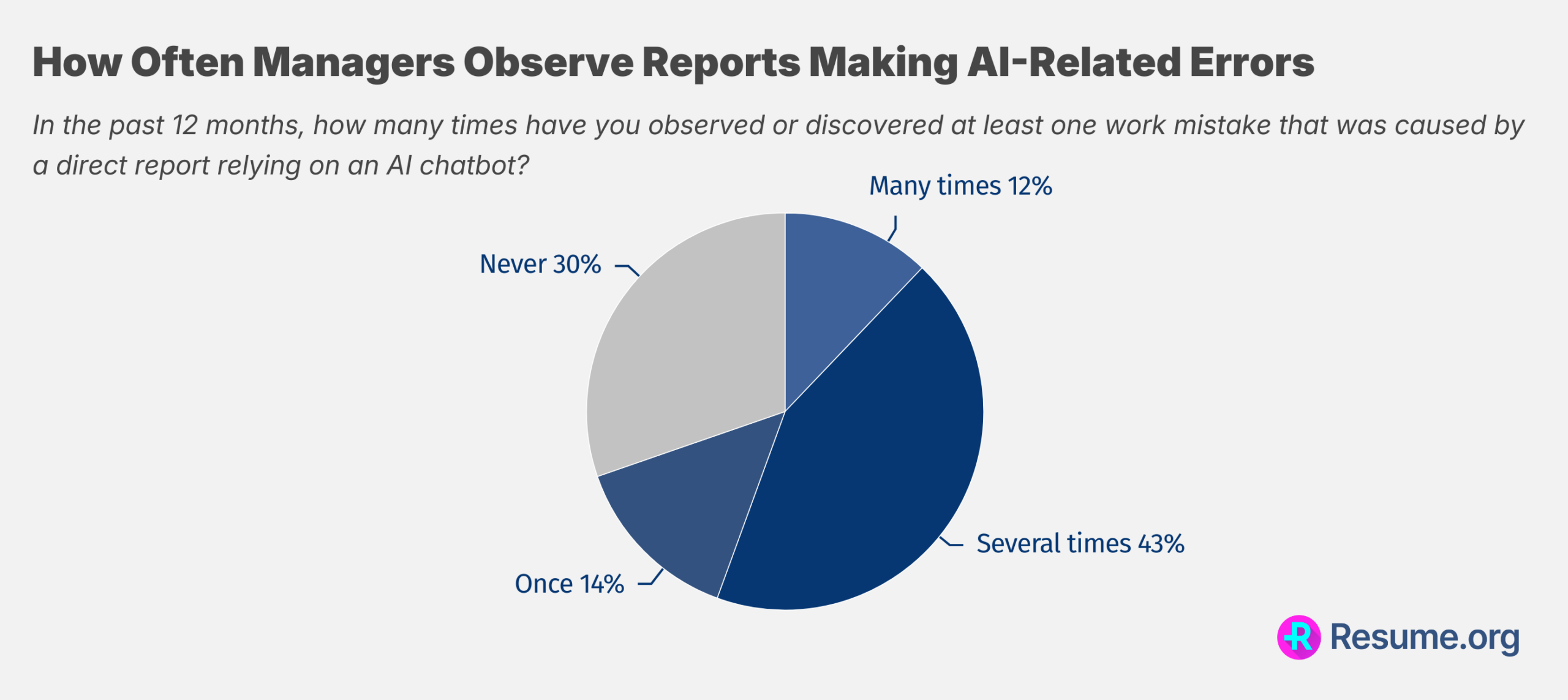
The data reveals that AI-related mistakes are far from rare. About 70% of managers reported witnessing at least one AI-related error by their direct reports in the past year. Notably, these incidents are often recurring: 12% reported seeing these mistakes many times, and 43% observed such mistakes several times. This pattern underscores that AI-related mistakes are not isolated events, but rather a persistent feature in many organizations.
“Most AI-related mistakes stem from over-trust and under-scrutiny,” says Kara Dennison, Head of Career Advising at Resume.org. “Employees treat AI outputs as finished work rather than as a starting point. Current AI tools are very good at generating fluent content, but they don’t understand context, business nuance, risk, or consequences. That gap shows up in factual errors, missing constraints, poor judgment calls, and tone misalignment.”
“AI is reliable when used as an assistant, not a decision-maker. Without human judgment and clear processes, speed becomes a risk, and efficiency gains can turn into costly mistakes.”

Inaccurate Information and Missed Context Are the Most Common AI Mistakes
A closer examination of the types of AI-related mistakes observed by managers provides valuable insight into the specific challenges posed by AI adoption. The most frequently reported errors involve the inclusion of inaccurate information and the omission of important context, nuance, or constraints.
Of managers who reported AI mistakes in the past 12 months, 58% have witnessed direct reports submitting work that contained factual inaccuracies generated by AI tools, while more than half observed mistakes where AI failed to account for critical contextual factors.
Other prevalent issues include the production of low-quality content (41%), and the provision of poor recommendations (35%). Communication breakdowns, such as unclear or inappropriate messaging, were also observed by over a third of respondents. Less frequently, but still significant, were mistakes that worsened conflicts or sensitive situations (18%) and those that raised confidentiality, privacy, or compliance concerns (29%).
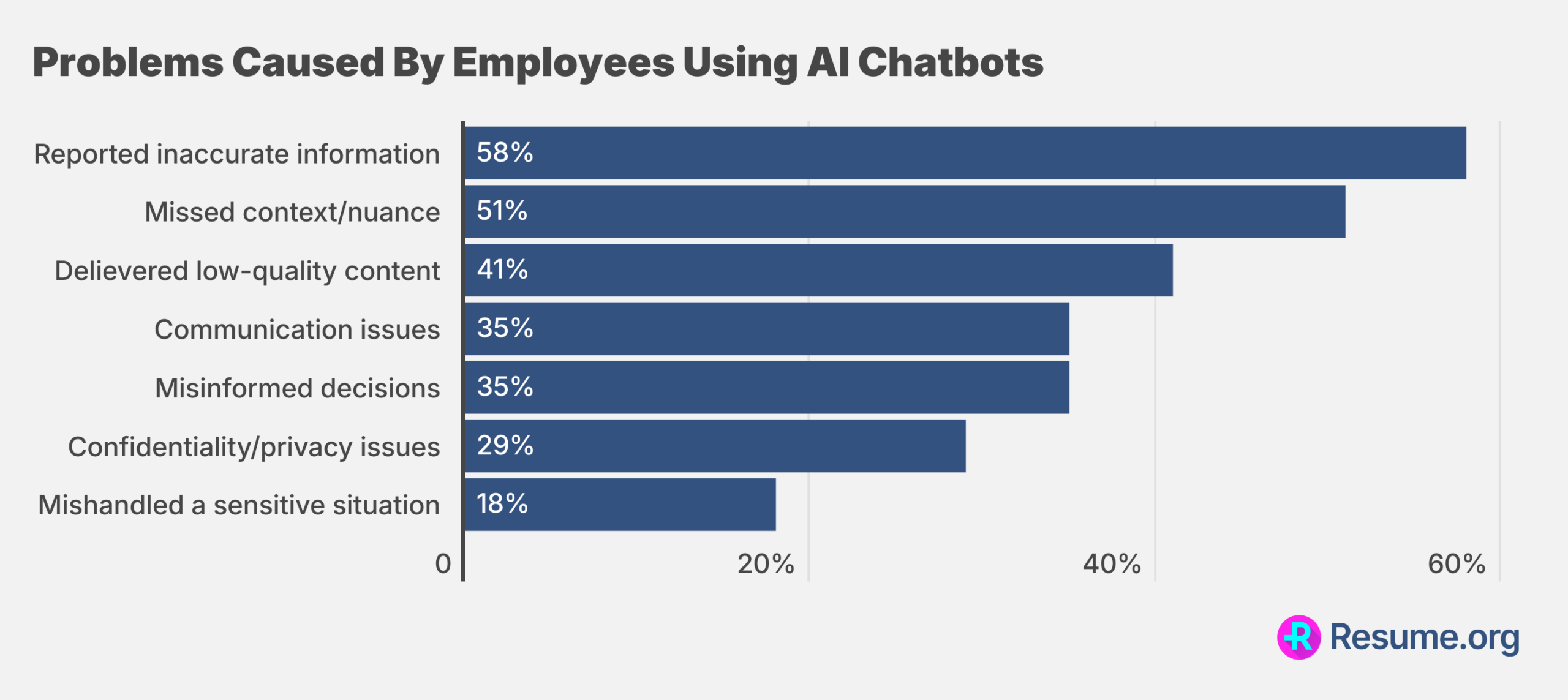
These findings highlight the inherent limitations of current AI technologies, particularly in their ability to interpret complex, nuanced, or context-dependent tasks. While AI can generate outputs quickly, it often lacks the discernment and judgment required for high-stakes or sensitive work.
AI Mistakes Disrupt Workflows and Damage Relationships Across the Organization
The impact of AI-related mistakes extends well beyond the individual employee responsible for the error. These mistakes can disrupt workflows and strain relationships throughout the organization, affecting a wide range of stakeholders. According to survey data, 58% of managers report being personally affected by AI-related mistakes made by their direct reports.
Clients are notably affected, with nearly 40% of managers reporting that these external stakeholders have experienced negative effects from AI-related mistakes. Internally, 44% of managers report that other coworkers have been affected, while 24% note that superiors have also experienced negative consequences. Vendors and suppliers are also not immune, with 20% of managers citing impacts on these external partners.
The widespread distribution of these impacts underscores how AI-related mistakes can trigger a cascade of additional work and relationship-management challenges.
“Many organizations adopted AI faster than they set clear guidelines or training, leaving employees unsure when to rely on it and when to challenge it. AI works best as a support tool. Problems arise when it replaces human judgment instead of reinforcing it. Employees, especially early in their careers, may not yet have the expertise to spot subtle inaccuracies or flawed recommendations,” says Dennison.
AI Mistakes Lead to Tangible Business Costs and Workflow Inefficiencies
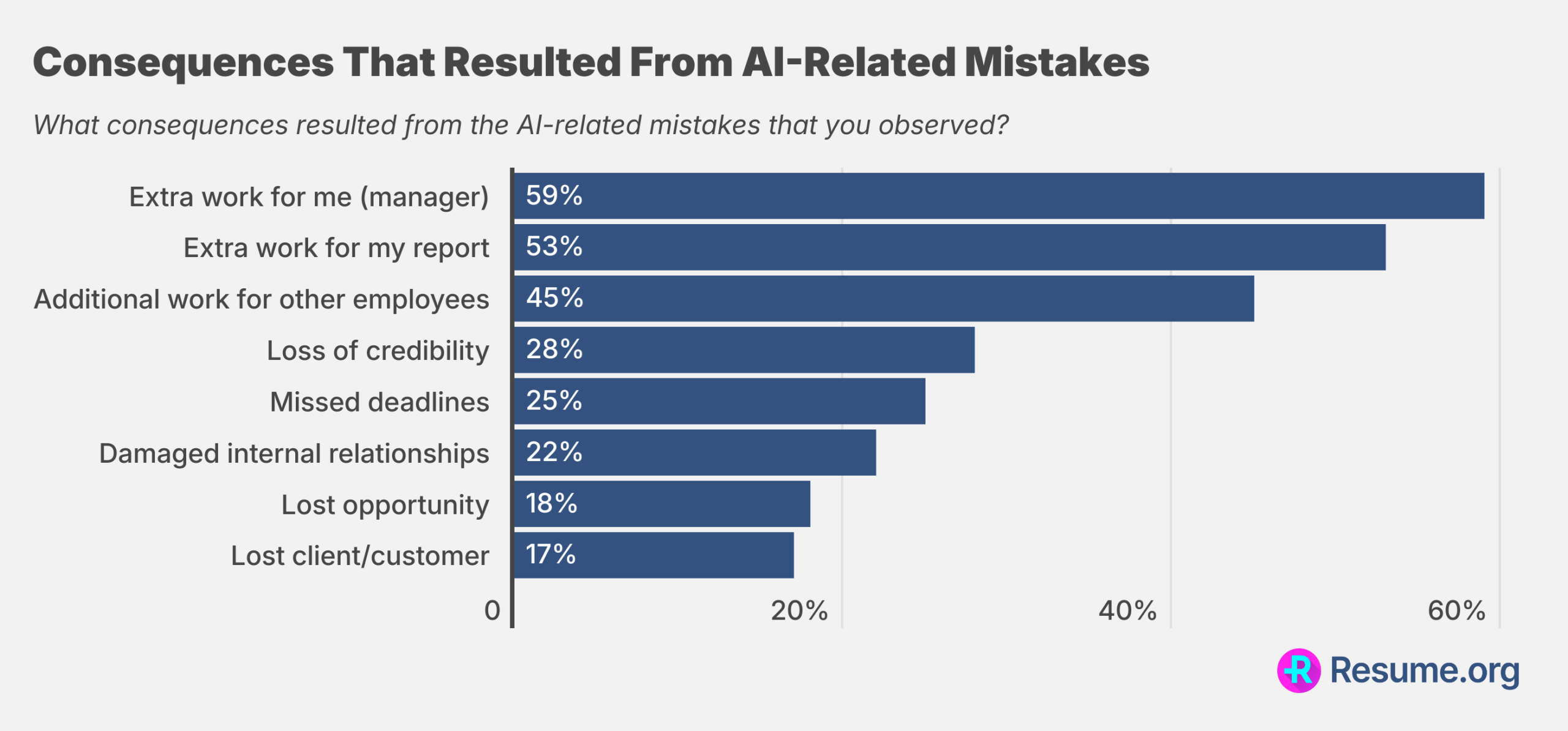
The business impact of AI-related mistakes is both tangible and significant. Managers report a range of consequences, from workflow inefficiencies to direct financial losses. The most prevalent outcome is the creation of extra work, with 59% of managers indicating that they personally had to invest additional time to correct or redo work affected by AI errors. Similarly, 53% report that their direct reports had to undertake extra work, and 45% note that other coworkers were drawn into the remediation process. These inefficiencies not only reduce productivity but also divert resources from higher-value activities.
Missed deadlines are another common consequence, cited by 25% of managers. Such delays can have cascading effects on project timelines, client satisfaction, and overall business performance. Damaged internal relationships (22%), loss of credibility or brand damage (28%), and lost opportunities (18%) further illustrate the broad spectrum of risks associated with AI mistakes.
“To get the most benefit from AI chatbots, employees should use them as accelerators, not decision-makers. AI works best for drafting, summarizing, and exploring options, while humans remain responsible for validation, context, and final judgment,” explains Dennison.
Financial Losses Exceed $50,000 For Some Organizations
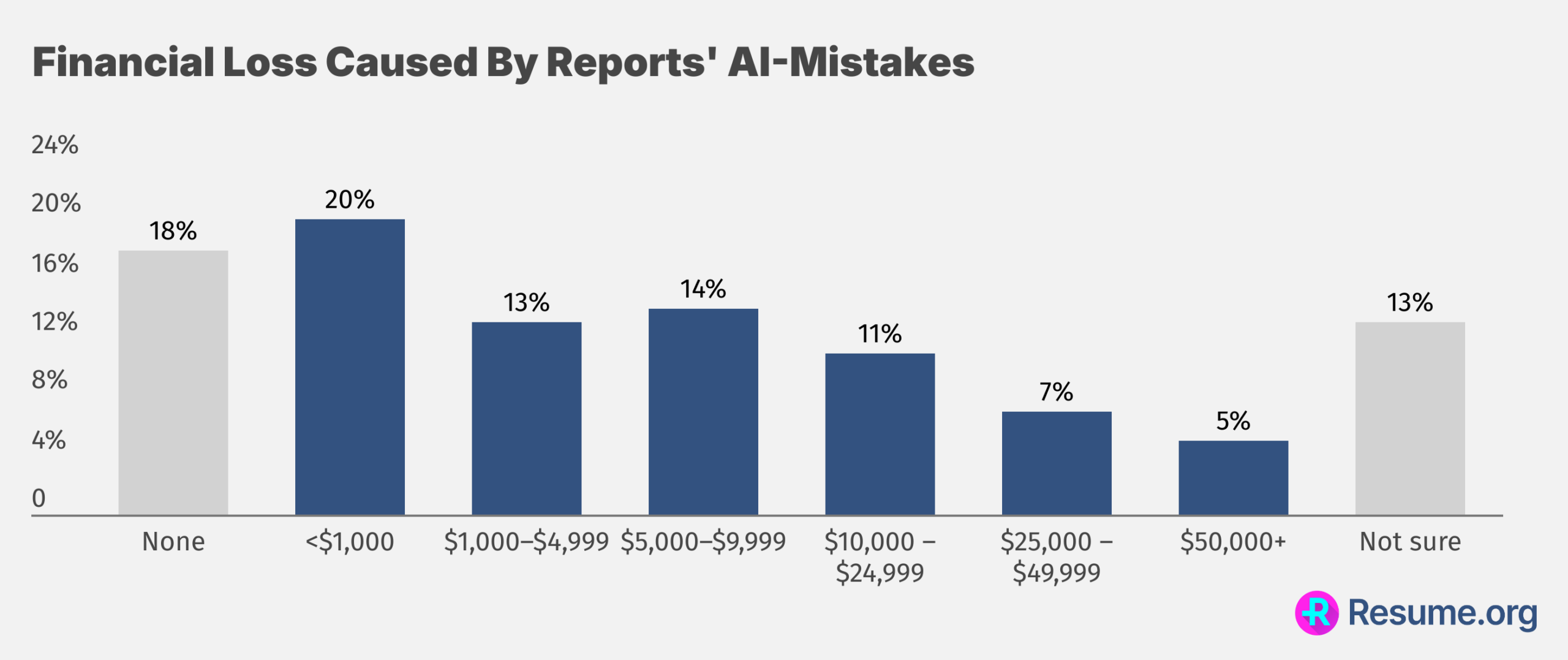
Monetary costs associated with AI-related mistakes are nontrivial. Nearly one in five managers report that these errors have cost their business more than $10,000, with 5% indicating losses exceeding $50,000. These figures provide a compelling business case for investing in AI risk management, including preventive measures, training, and oversight. The data makes clear that the costs of inaction can be substantial, affecting both the bottom line and the organization’s long-term competitiveness.
Gen Z Employees Are More Prone to AI-Related Mistakes
Over one-third of managers (34%) identified Gen Z (ages 18 to 29) as the most error-prone group, while 26% pointed to Millennials (ages 30 to 46). In contrast, Gen X (ages 47 to 61) and Baby Boomers (ages 62+) were cited less frequently, at 18% and 9% respectively. Only 12% of managers reported seeing no clear difference by age.
For HR and learning leaders, the findings underscore the importance of addressing both real and perceived skill gaps. Targeted interventions, such as enhanced onboarding, peer mentoring, and scenario-based training, can help younger employees build confidence and competence in AI tool usage.
“Younger workers aren’t necessarily more careless, but they’re often using AI more frequently and earlier in their workflows. There is also a training gap. Organizations often assume younger employees intuitively understand AI, yet provide little guidance on verification, risk, or appropriate use cases. As a result, AI may be treated as an answer engine rather than a support tool,” says Dennison.
Methodology: This survey was conducted in January 2026 by Resume.org on the Pollfish platform. The survey consisted of 1,146 U.S. managers. To qualify for the survey, respondents had to meet specific demographic criteria, including employment status, age, education, job title, income, and company size.
Pollfish employs multiple quality assurance procedures, including attention checks and respondent validation measures, to ensure the collection of high-quality survey data. Additional details on Pollfish’s sampling methods and quality controls are available on Pollfish’s website.
Percentages are rounded to the nearest whole number. As a result, totals may not equal 100%, and combined figures may differ slightly from the sum of rounded values.
Media inquiries can be directed to Kelly Baker, [email protected].
Resume.org offers free, HR approved resume templates to help you create a professional resume in minutes. Choose from several template options and even pre-populate a resume from your profile.