

-
Theater Resume Examples and Templates [Download in App]
- Stage Actor
- Stage Manager
- Lighting Designer
- Costume Designer
- Sound Engineer
- Stage Director
- Props Master
- Set Designer
- Theater Technician
- Dramaturg
- Choreographer
- Musical Director
- Makeup Artist
- Box Office Manager
- Scenic Painter
- Usher Coordinator
- Lighting Technician
- Casting Assistant
- Producer
- House Manager
- Theater Text-Only Resume Examples
- How To Write a Theater Resume
- How To Pick the Best Theater Resume Template
- Frequently Asked Questions: Theater Resume Examples and Advice
Key Takeaways
- Emphasize your niche in the industry: Whether you’re an actor, director, stage manager, or costume designer, clarify your specialty right away in your summary to help employers or casting directors quickly understand your focus.
- Showcase achievements with context: Include specific productions, venues, awards, or recognitions that demonstrate the scope and quality of your past work.
- Tailor for readability and ATS: Use theater-relevant keywords and keep formatting simple so that both human reviewers and Applicant Tracking Systems (ATS) can easily scan your resume.
Theater Resume Examples and Templates [Download in App]
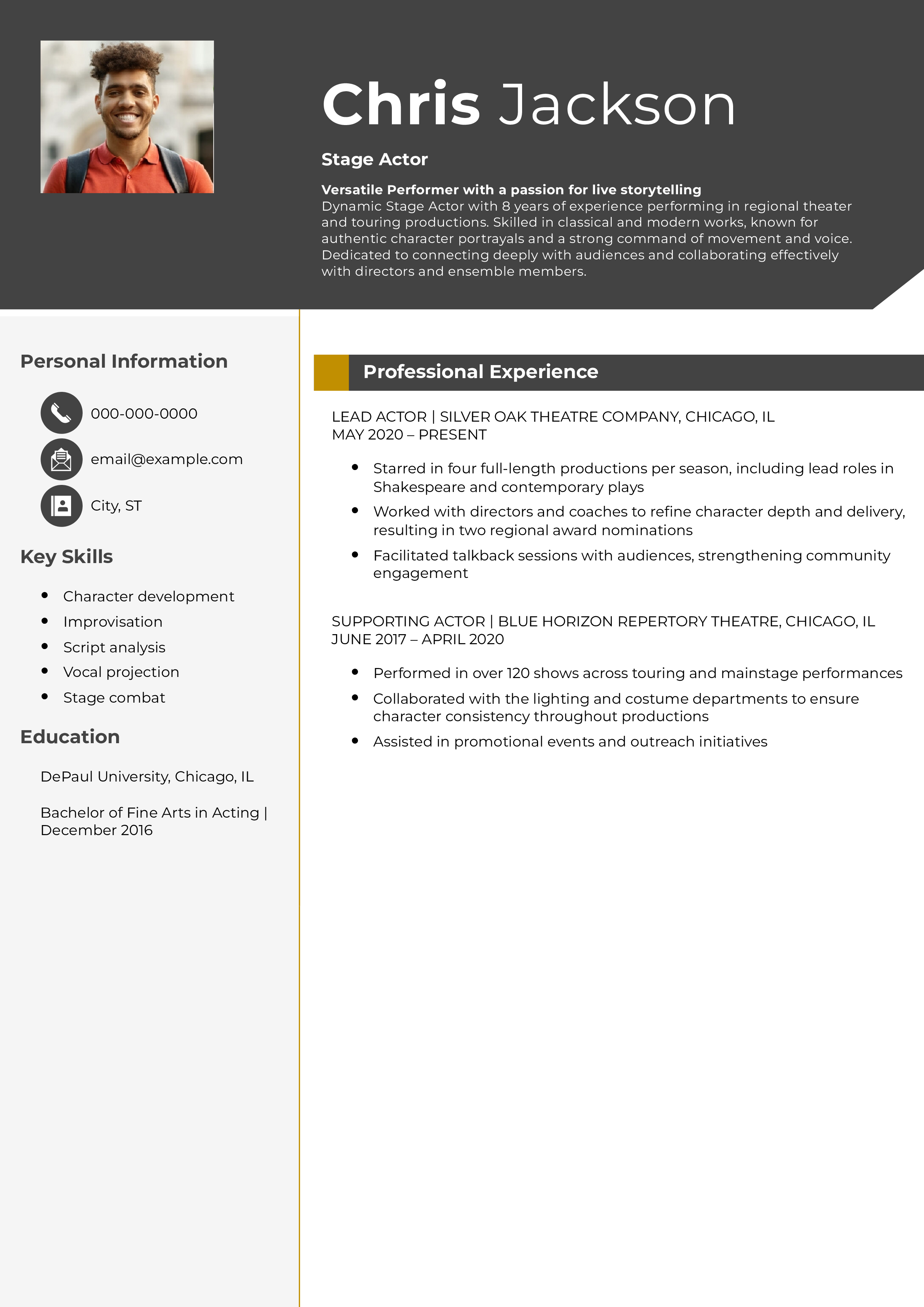
Stage Actor Resume Example
Why this stage actor resume example is strong:
This resume effectively presents performance experience while emphasizing versatility and depth of training. The clean format highlights key skills and major credits. Including audience engagement and collaboration shows a well-rounded performer. Learn how to create a resume layout that highlights your most relevant experience.
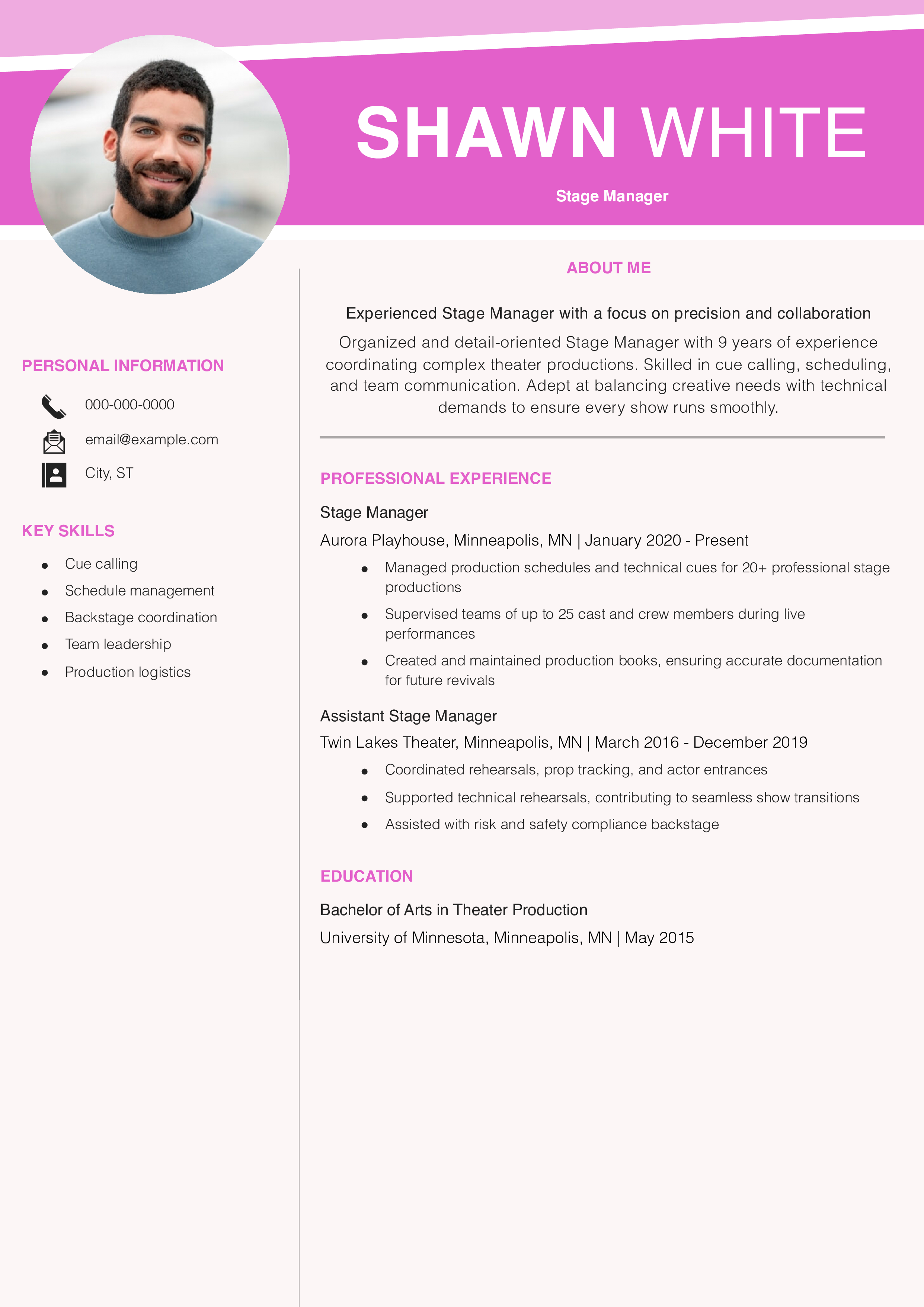
Stage Manager Resume Example
Why this stage manager resume example is strong:
This resume demonstrates strong leadership and organizational skills critical for stage management. The inclusion of measurable outcomes, such as the number of productions and team size, adds credibility. Discover how to format achievements for clarity.
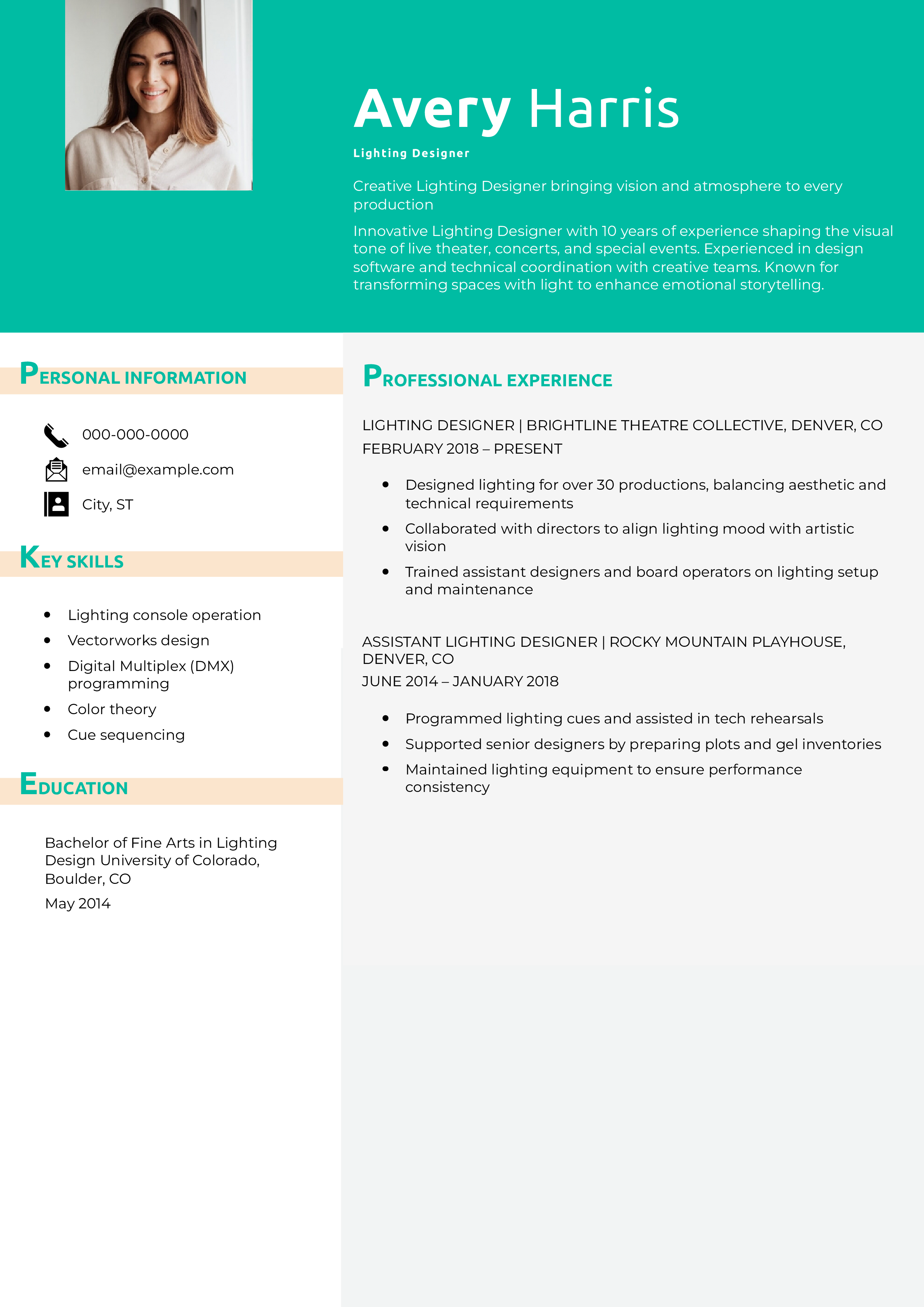
Lighting Designer Resume Example
Why this lighting designer resume example is strong:
This resume effectively balances technical and creative aspects, showcasing both artistic contribution and software proficiency. It presents career growth clearly, from assistant to lead designer. Find out more about listing technical skills strategically.
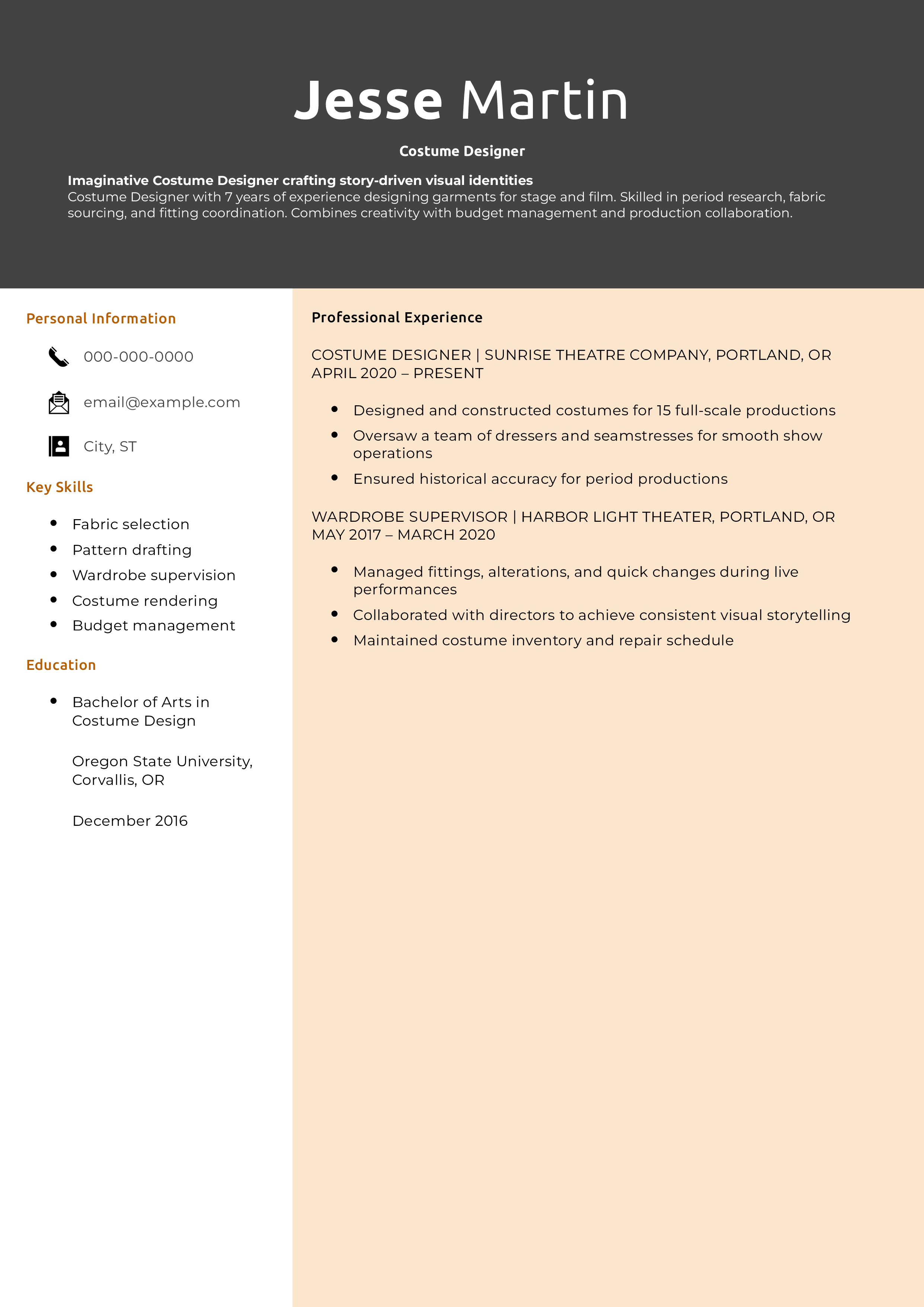
Costume Designer Resume Example
Why this costume designer resume example is strong:
This resume highlights creativity and practical experience, balancing artistry with production management. The focus on collaboration and research shows versatility. Learn how to tailor creative resumes.
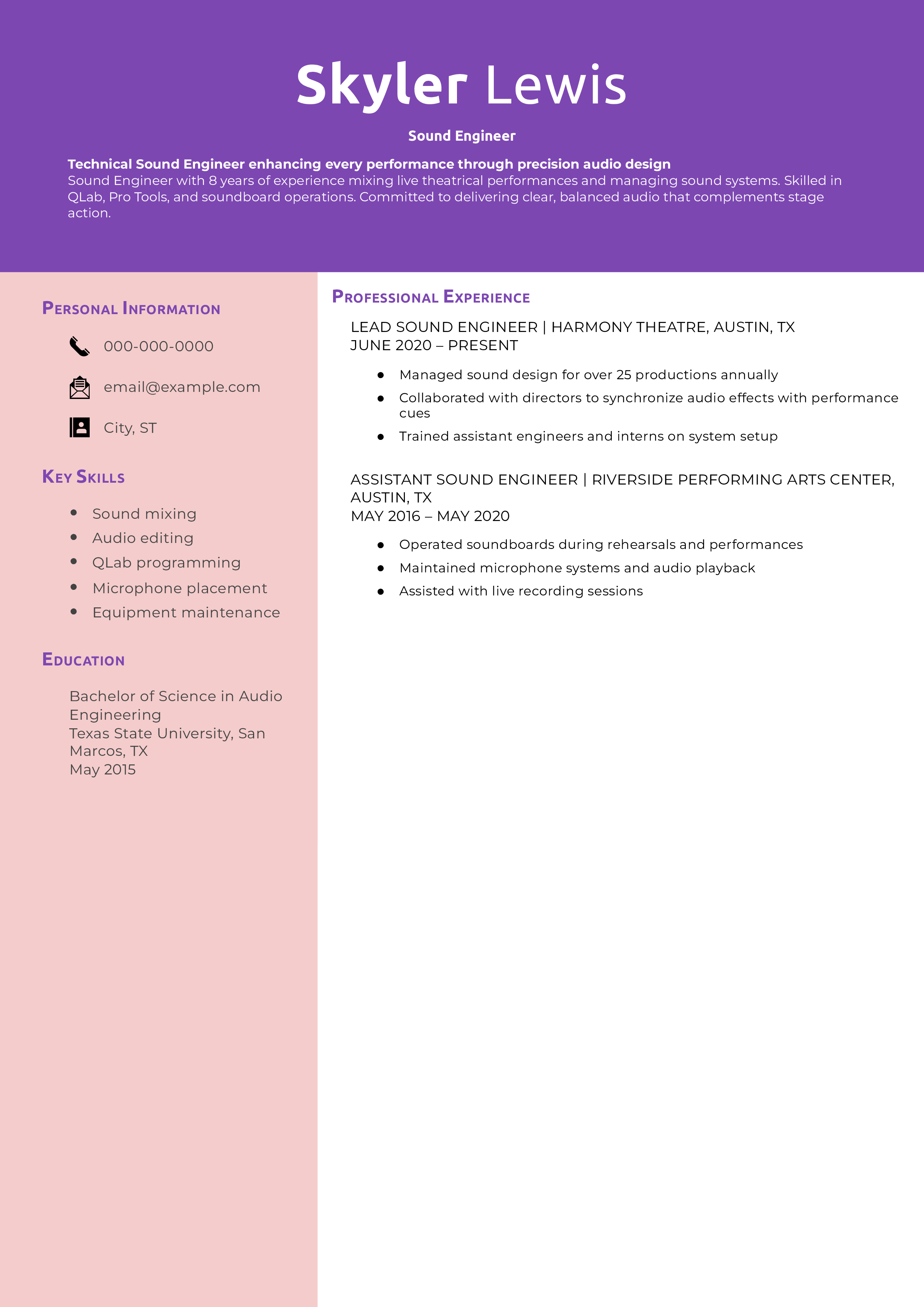
Sound Engineer Resume Example
Why this sound engineer resume example is strong:
This resume combines technical expertise with collaboration and consistency. The focus on mentorship and precision reflects leadership. Review how to highlight technical experience.
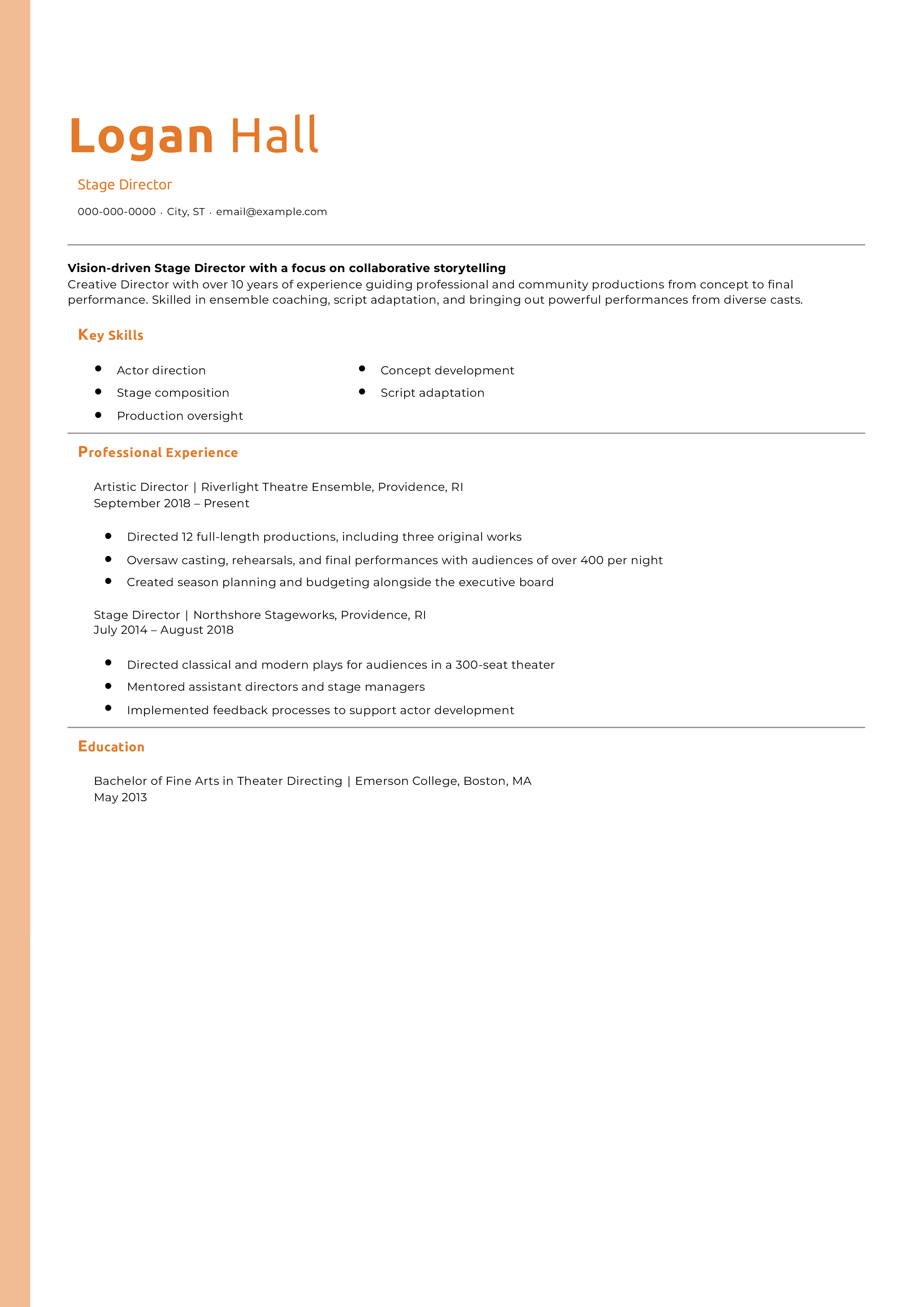
Stage Director Resume Example
Why this stage director resume example is strong:
This resume showcases both creative leadership and administrative responsibilities, demonstrating the comprehensive scope of a director’s role. It clearly shows progression from director to artistic leader. Here’s how to showcase promotions and evolving roles.
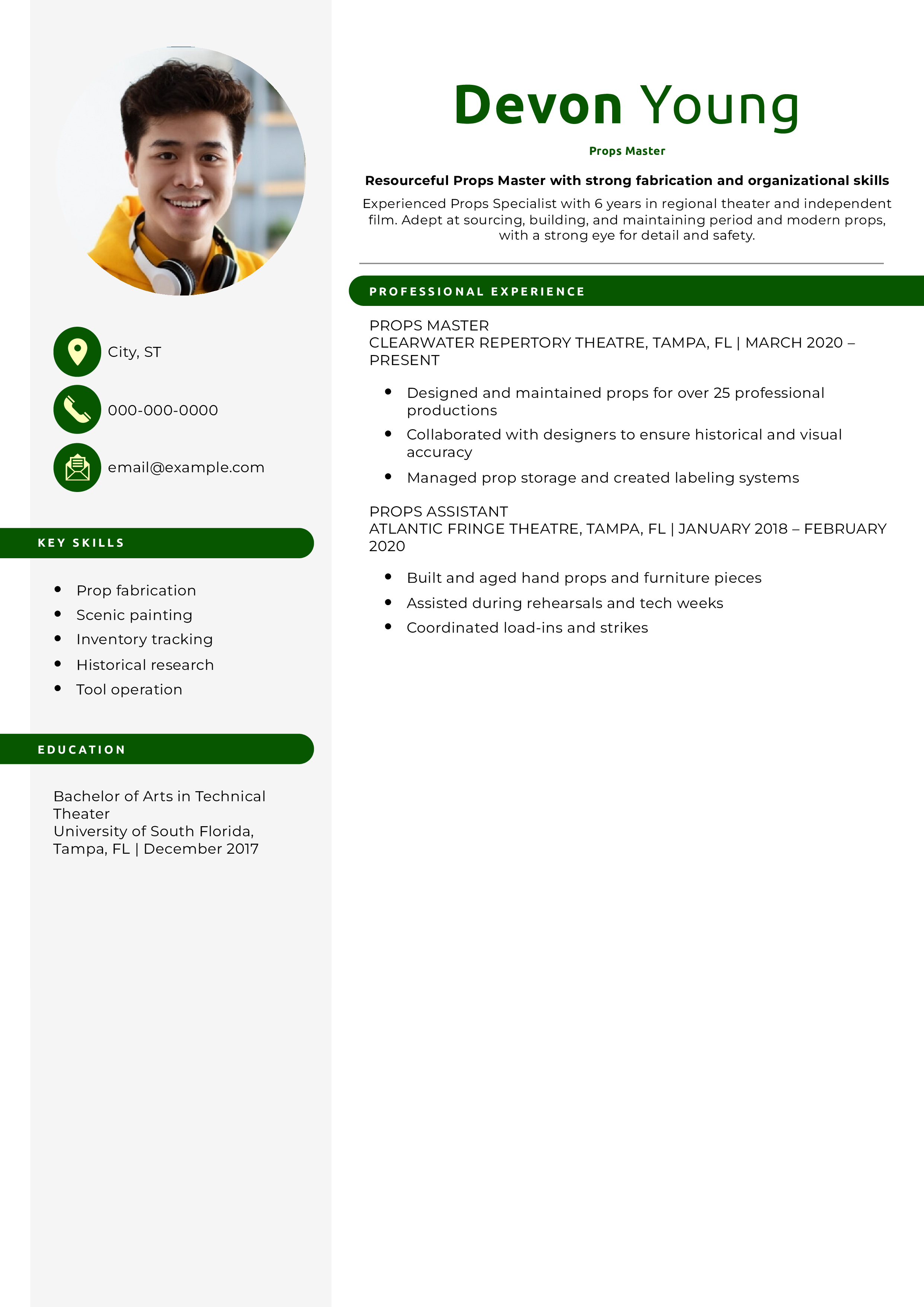
Props Master Resume Example
Why this props master resume example is strong:
This resume highlights both technical expertise and organizational precision, with a clear trajectory of increasing responsibility. Read how to write effective resume summaries that reflect your unique skill set.
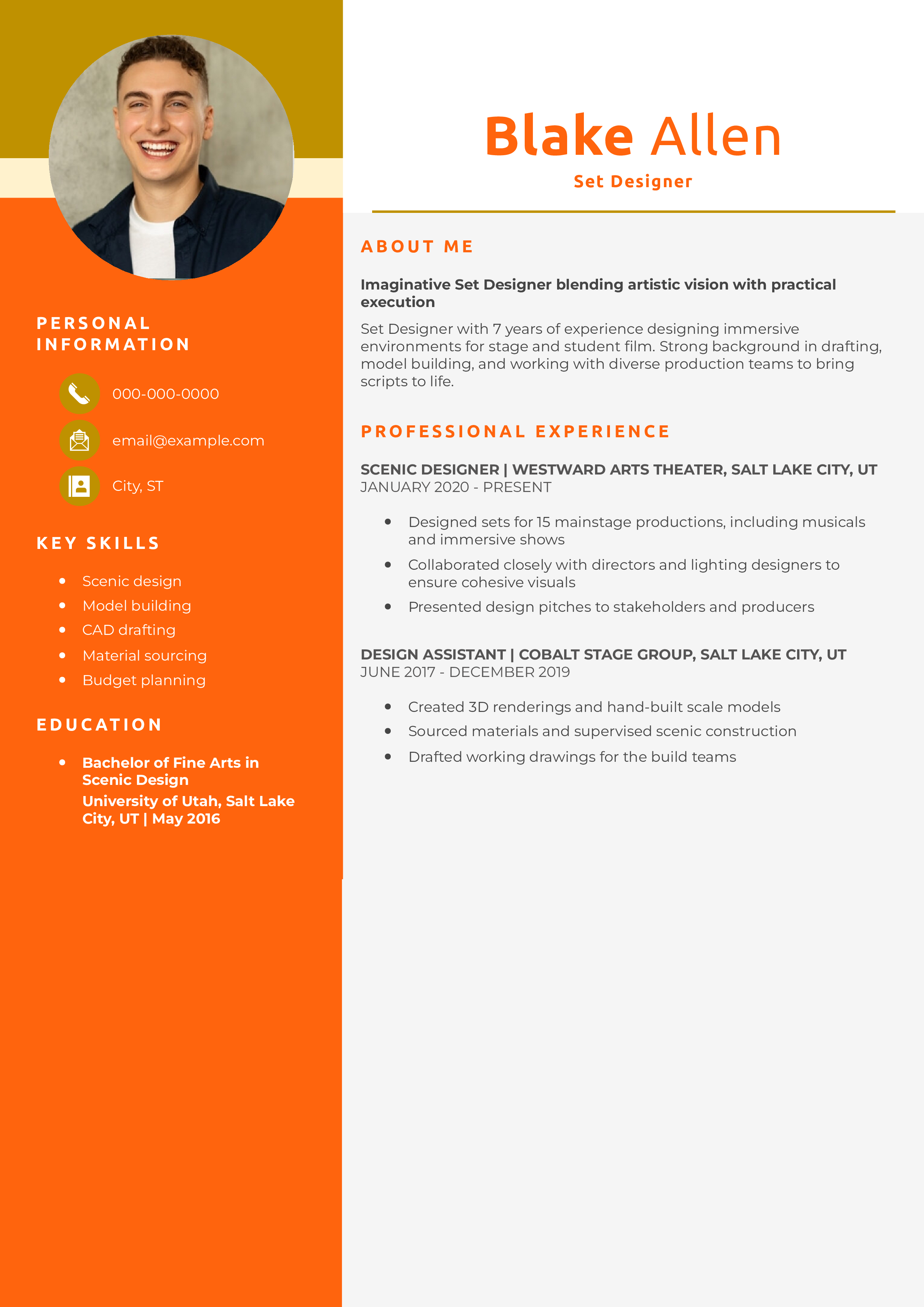
Set Designer Resume Example
Why this set designer resume example is strong:
This resume showcases design expertise and collaboration, making it clear that the candidate works well across departments. Learn more about formatting experience sections to make your projects shine.
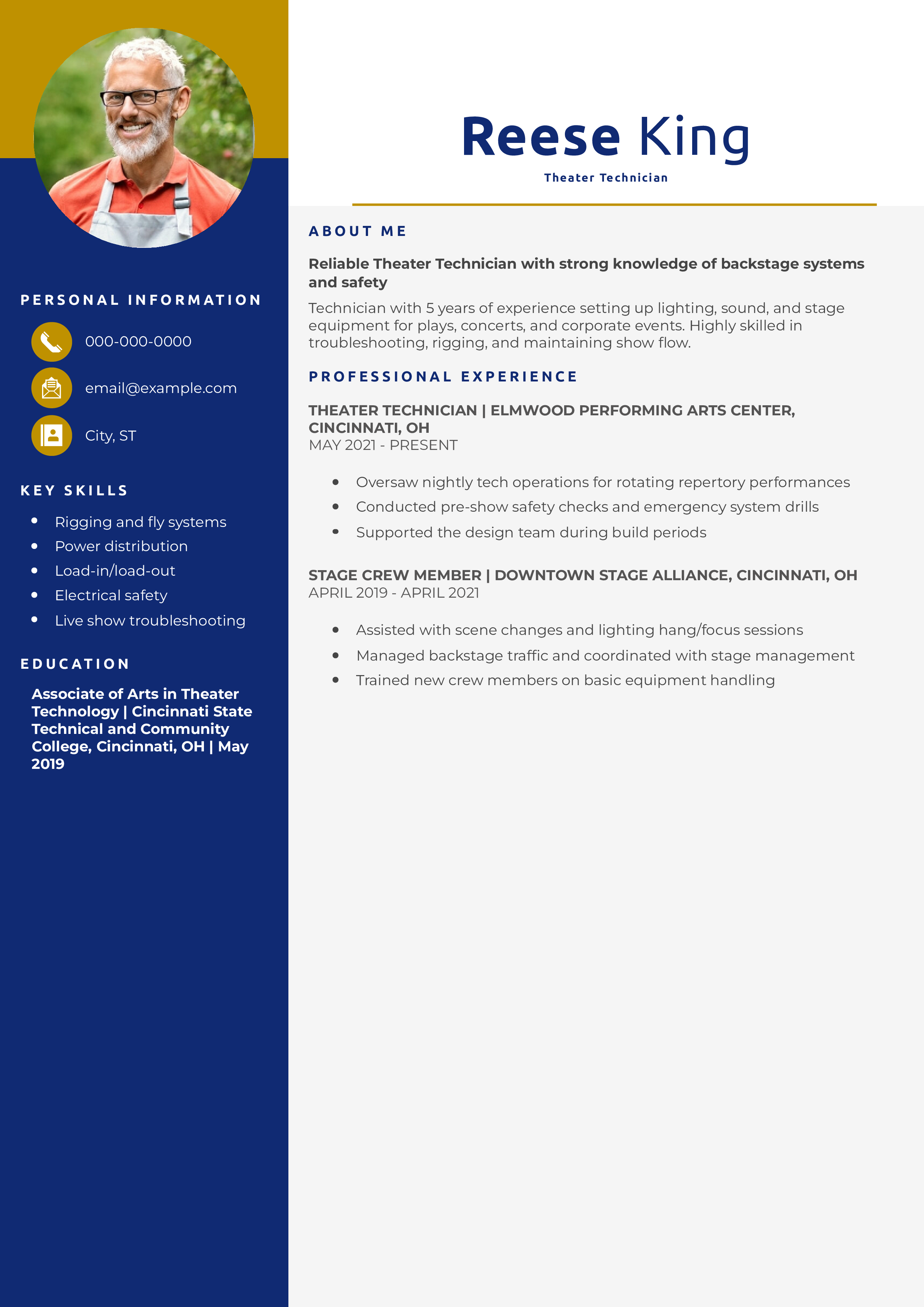
Theater Technician Resume Example
Why this theater technician resume example is strong:
This resume is clear and specific, showing practical skills and upward movement from crew to technician. Review more about presenting technical experience.
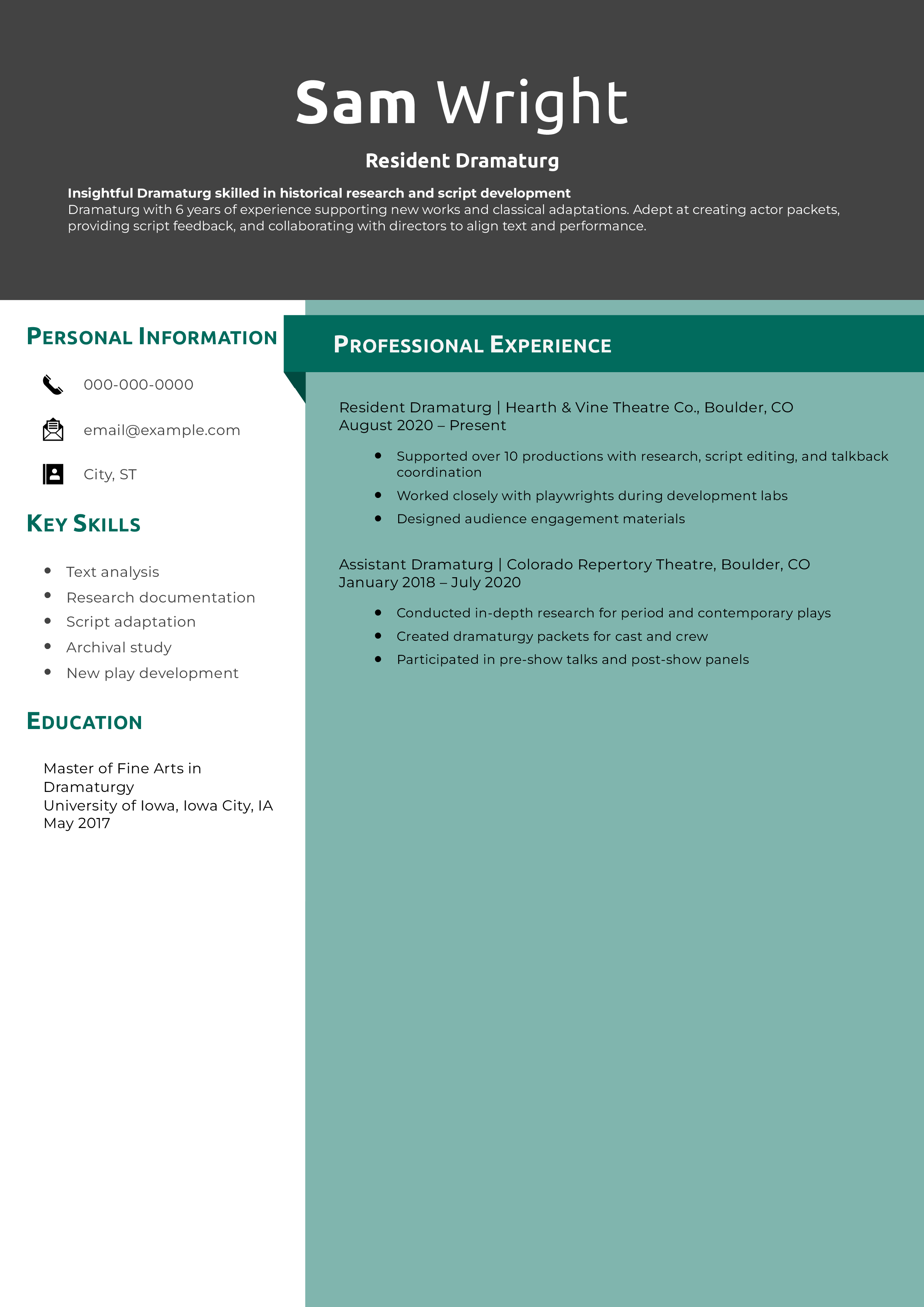
Dramaturg Resume Example
Why this dramaturg resume example is strong:
The resume conveys a deep knowledge of and collaboration, making it ideal for new play development roles. Discover how to highlight academic and artistic credentials.
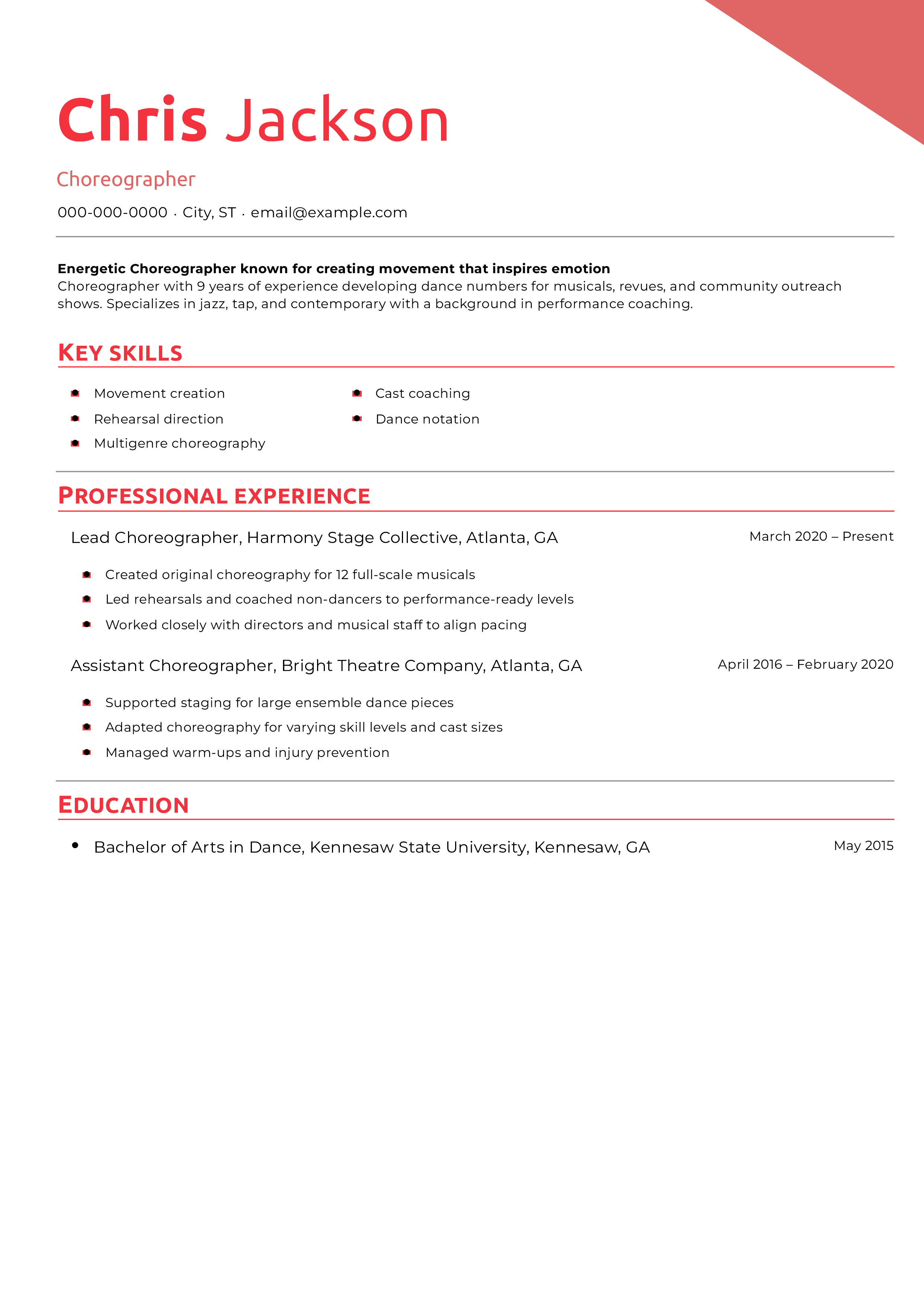
Choreographer Resume Example
Why this choreographer’s resume example is strong:
This resume showcases diverse experience and clear creative leadership. It also demonstrates adaptability, which is key for working with varied casts. Review how to show transferable creative skills.
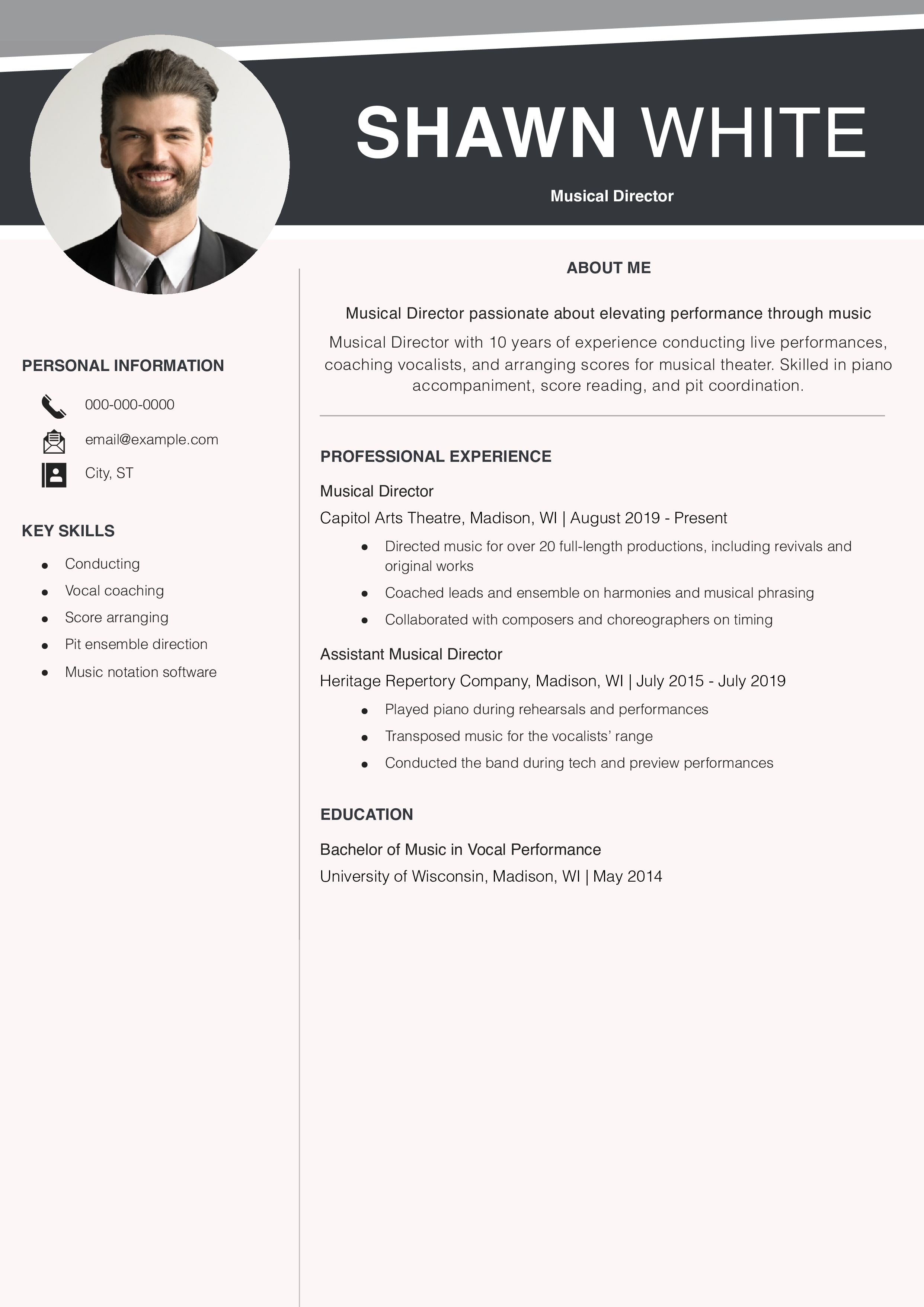
Musical Director Resume Example
Why this musical director’s resume example is strong:
This resume balances musical expertise with leadership and collaboration across departments. It’s ideal for musical theater companies. Here’s how to tailor your musical credentials.
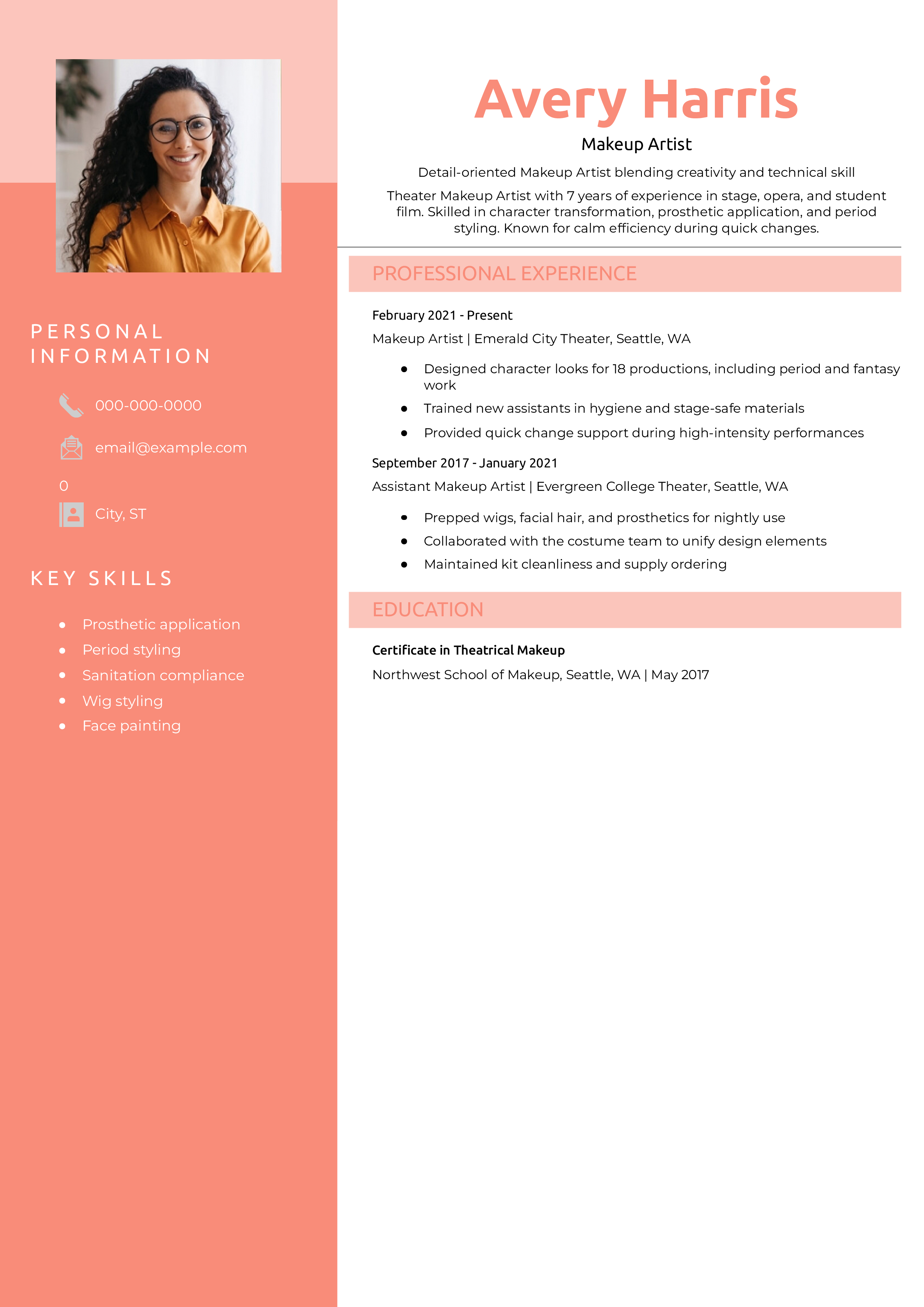
Makeup Artist Resume Example
Why this makeup artist resume example is strong:
This resume clearly communicates expertise in theater-specific needs like quick changes and prosthetics. Learn how to craft a visually detailed role description.
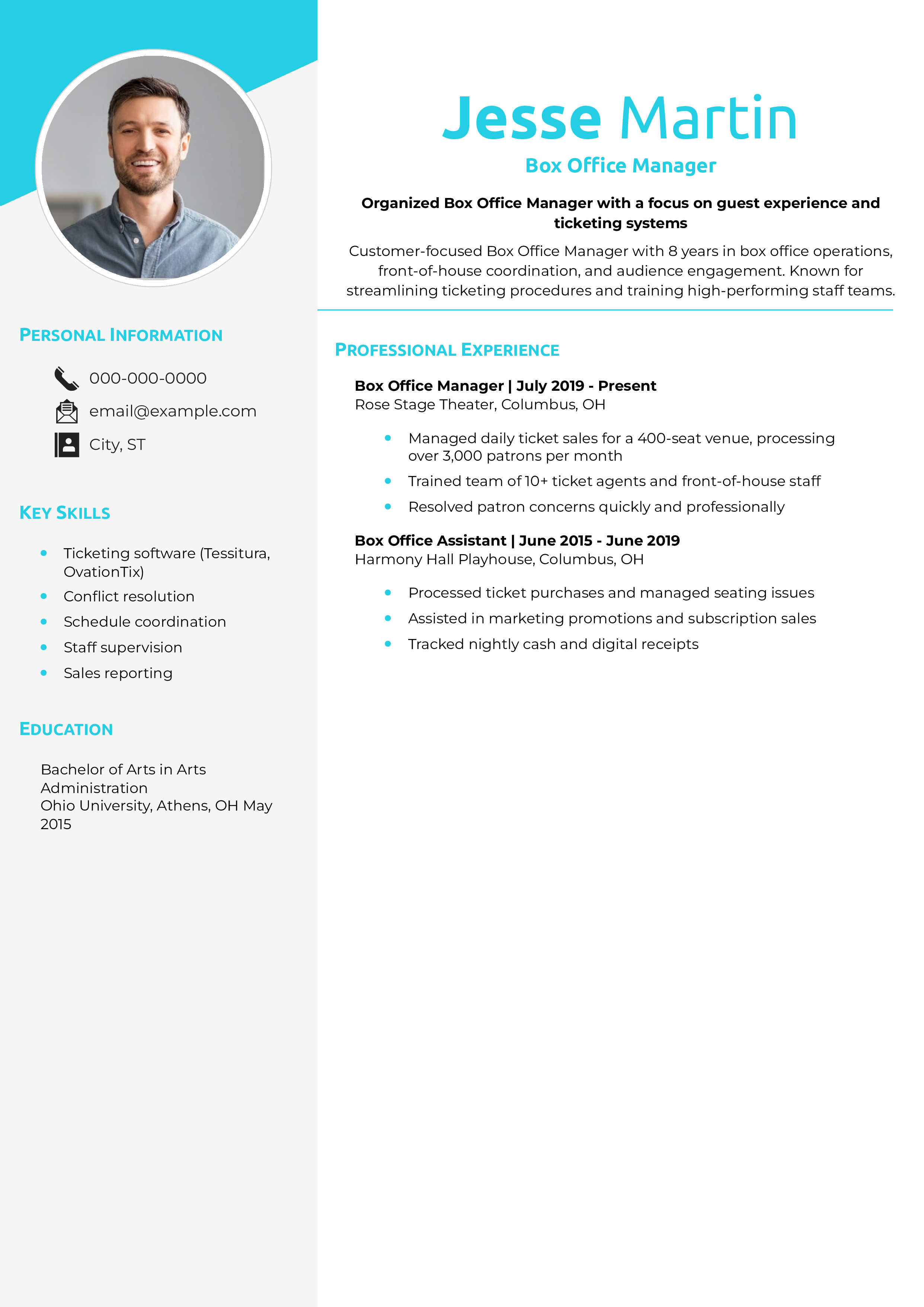
Box Office Manager Resume Example
Why this box office manager resume example is strong:
This resume demonstrates leadership, sales experience, and strong audience service skills. It’s well-organized and measurable. Use numbers to strengthen your resume.
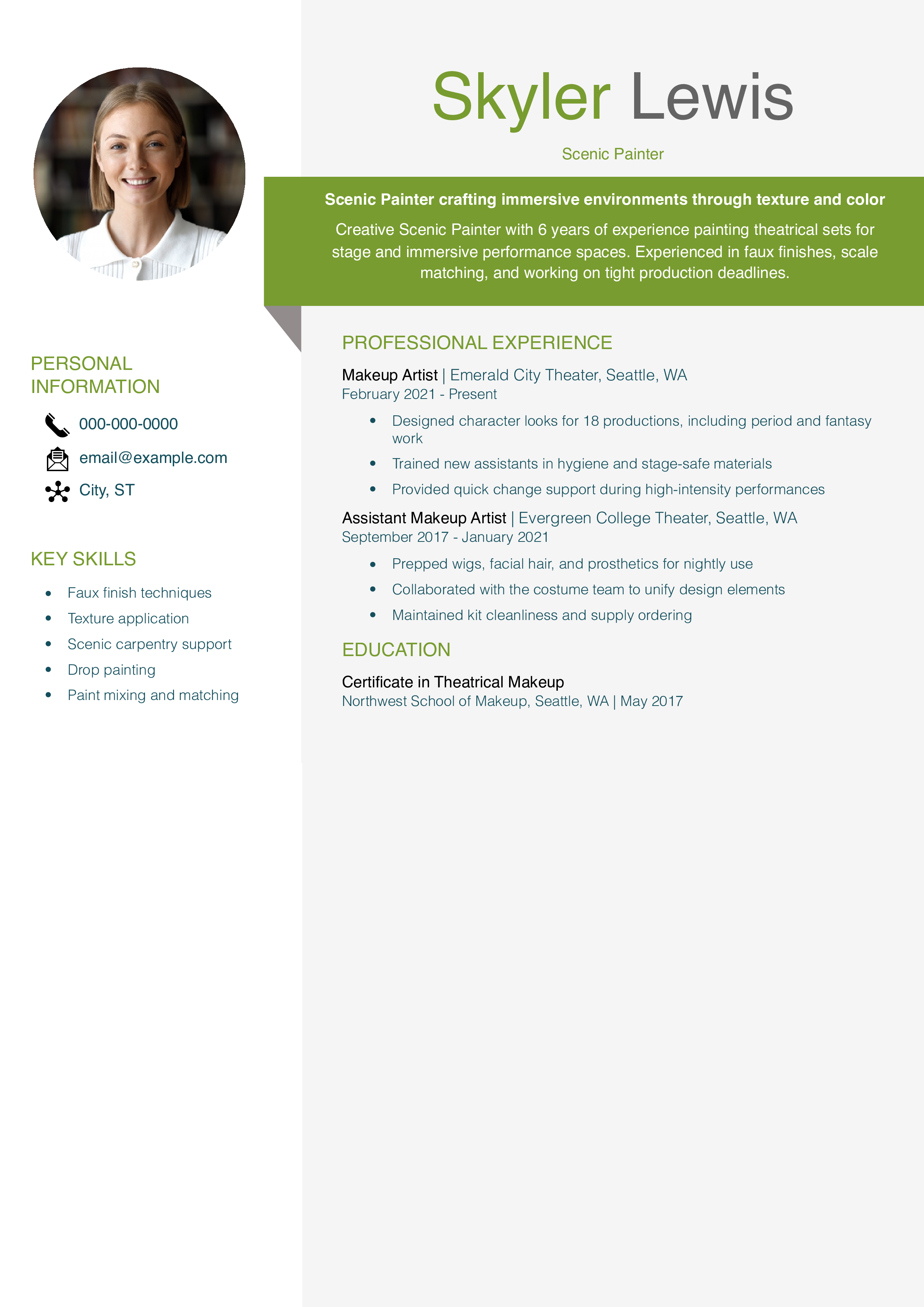
Scenic Painter Resume Example
Why this scenic painter resume example is strong:
This resume showcases artistic expertise and team experience, vital for scenic work. Position your hands-on experience effectively.
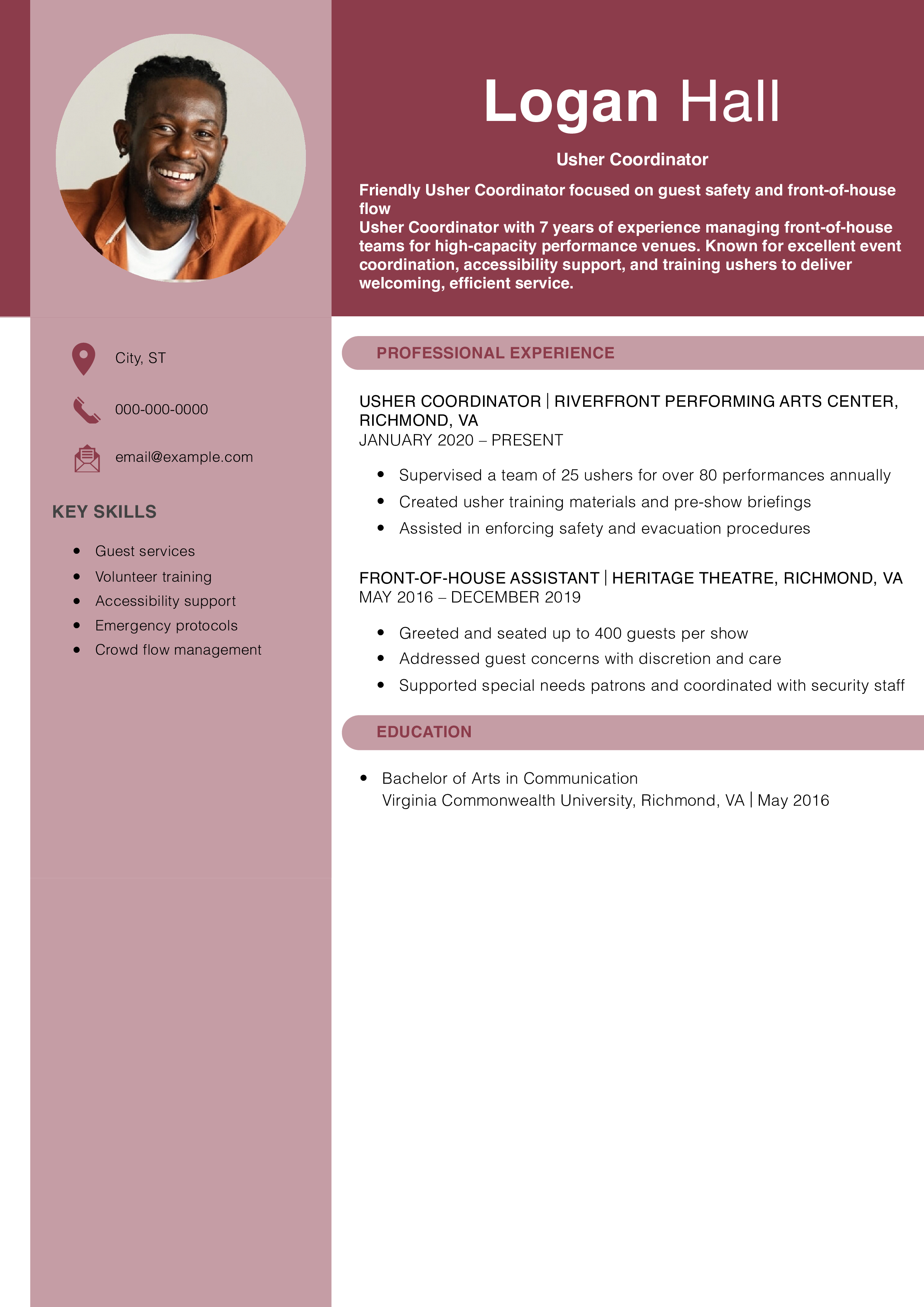
Usher Coordinator Resume Example
Why this usher coordinator resume example is strong:
This resume highlights both logistical and customer service expertise, two critical elements for usher leadership roles. Learn more about balancing service and management on a resume.
Lighting Technician Resume Example
Why this lighting technician resume example is strong:
The resume clearly emphasizes technical skills, equipment knowledge, and field experience, all of which are necessary for a hands-on role like this. Explore how to effectively showcase your hard skills.
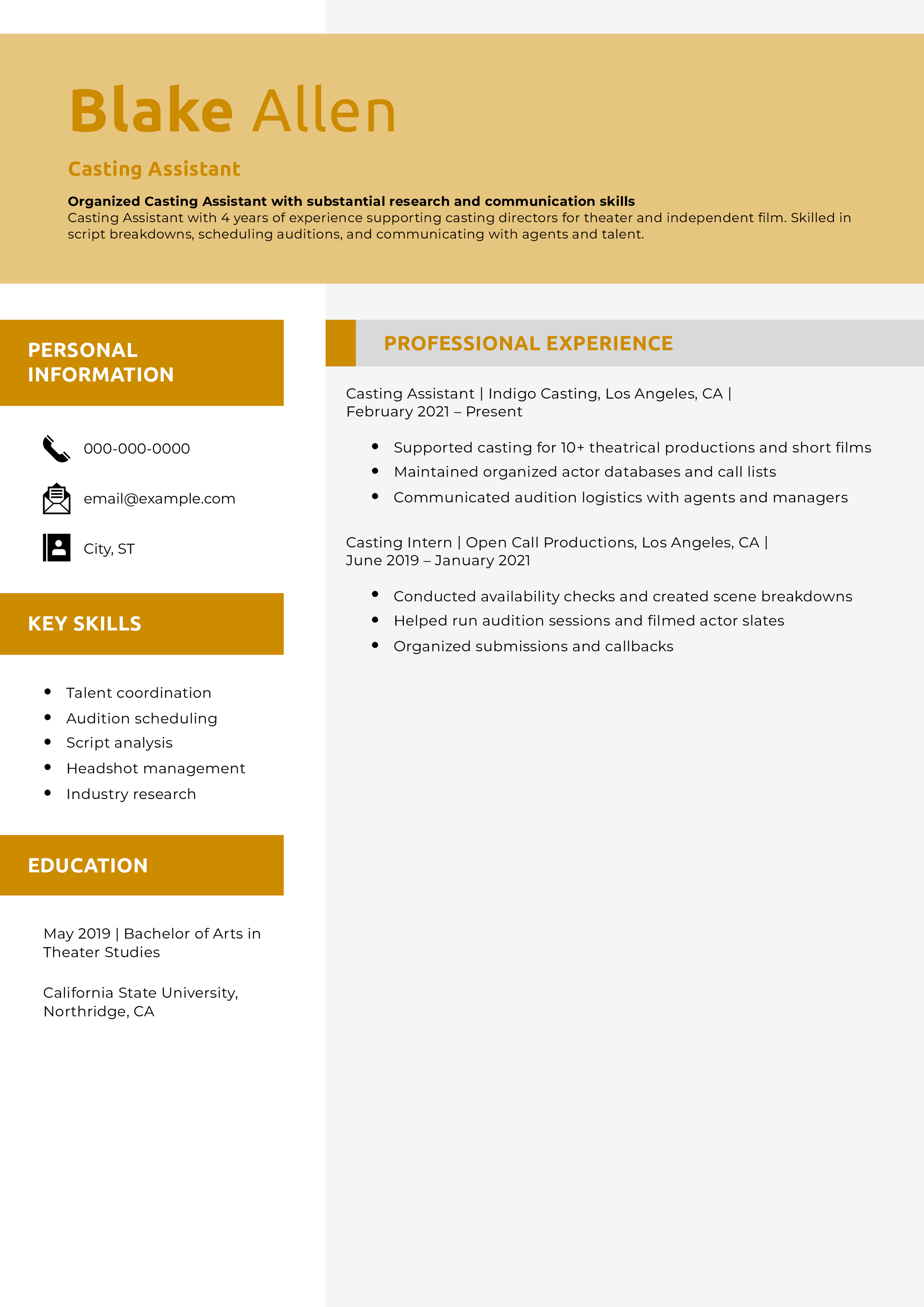
Casting Assistant Resume Example
Why this casting assistant resume example is strong:
The resume is efficient and clearly outlines support work essential in casting offices. It shows research and communication skills. Read more about listing entry-level experience that stands out.
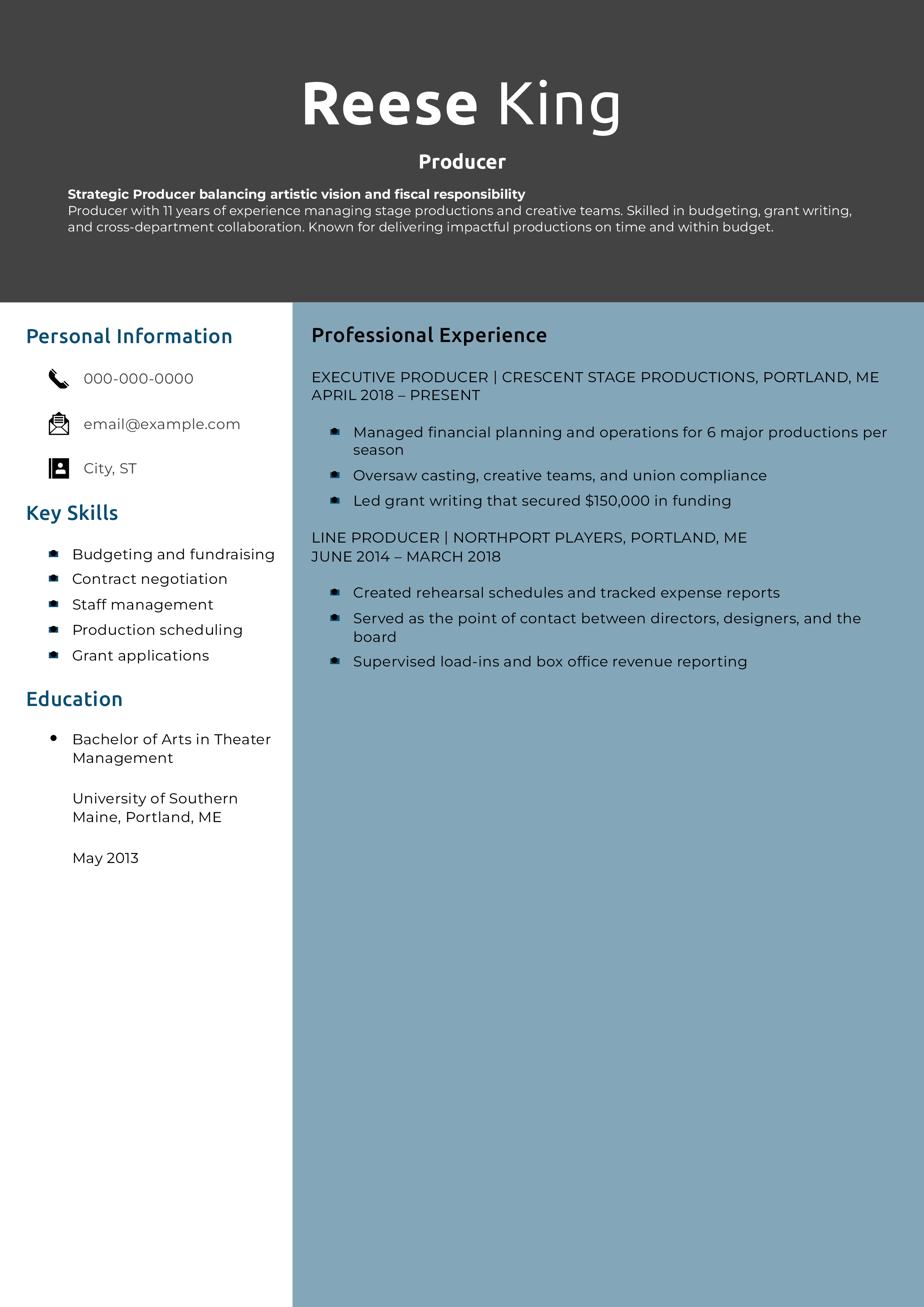
Producer Resume Example
Why this producer resume example is strong:
This resume clearly communicates high-level production management and successful fundraising, two core skills for producers. Learn how to format experience for leadership roles.
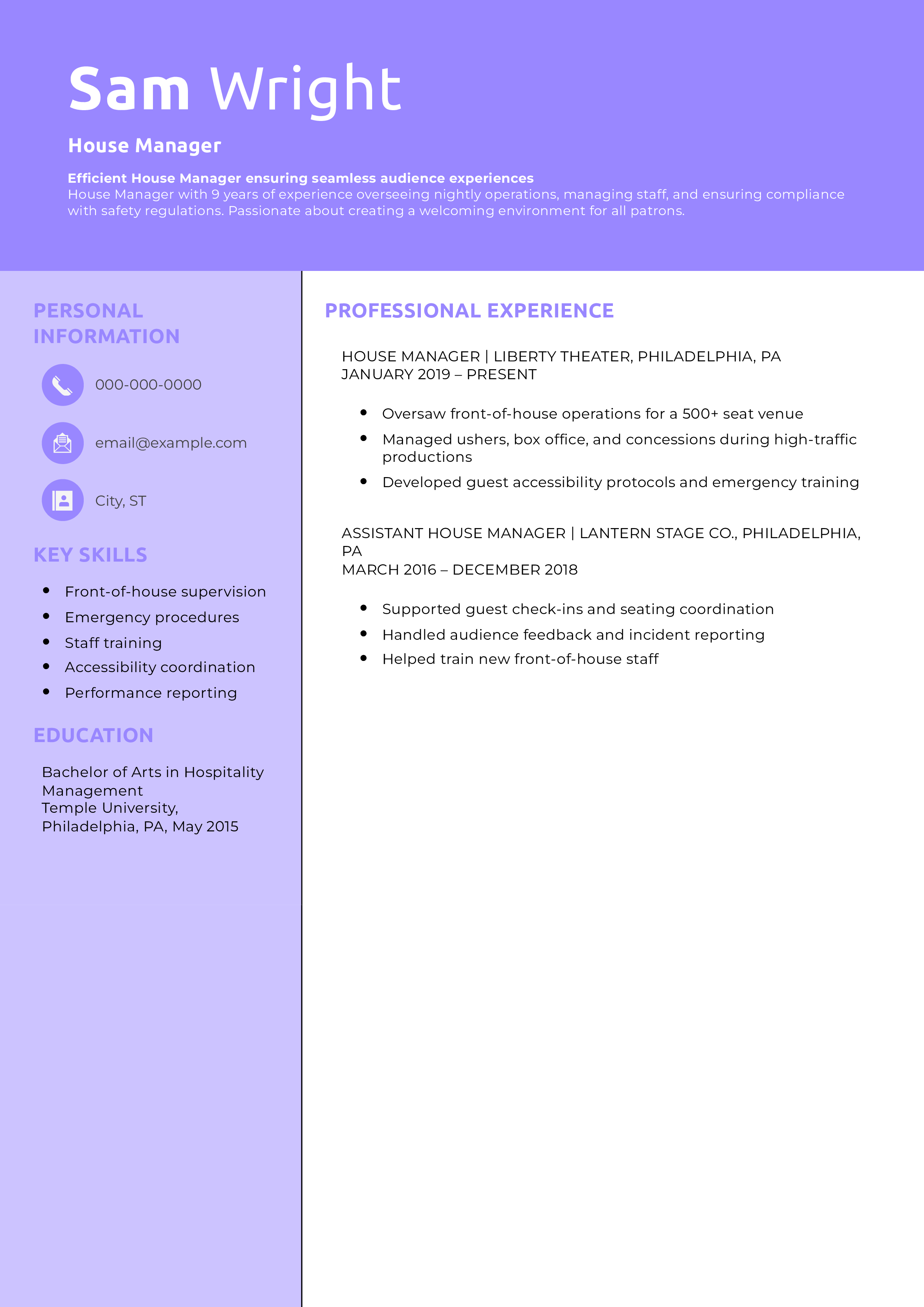
House Manager Resume Example
Why this house manager resume example is strong:
The resume focuses on logistics, leadership, and guest services, all vital in-house management. It also highlights accessibility efforts, which show foresight and care. This guide shows you how to present hospitality and theater crossover skills.
Theater Text-Only Resume Examples
How To Write a Theater Resume
1. Select a suitable layout and design for your theater resume
When you’re building a theater resume, appearance matters, but clarity matters more. Your layout should echo your professionalism and artistic sensibility without being flashy or hard to read. Whether you’re applying for a backstage crew role or auditioning for a lead acting role, your resume must effectively communicate your experience and strengths.
Aim for a simple, vertical format that organizes your work by category — acting credits, directing credits, technical theater work, or design experience. Prioritize a clear font, logical structure, and easy-to-skim headers. If you’re an actor, use standard formatting for performance credits (role, production, company, director). Designers or stage technicians should ensure that they highlight the types of productions and the complexity of their contributions. Headshots, portfolios, or reels can be referenced, but they should not overshadow the content of your resume.
2. Write a compelling profile summarizing your theater qualifications
A well-written summary gives casting directors or hiring committees a quick glimpse into your professional identity. In just a few lines, present your background, your area of focus, and what makes your work memorable.
Be specific. Mention the kinds of productions you’ve worked on, your years of experience, any awards or recognitions, and your key strengths. Avoid overly general statements like “hardworking” or “passionate.” Let your accomplishments do the talking.
Strong summary example for a theater professional
Versatile stage actor with 7 years of experience performing in classical and contemporary productions in regional and touring theaters. Known for powerful character work, vocal precision, and dynamic stage presence. Equity member with multiple supporting and lead credits in award-winning plays.
Weak summary example for a theater professional
I am an experienced actor who loves the stage. I’ve done many types of plays and always bring energy and commitment to my roles.
3. Incorporate a results-focused work history section for your theater resume
Your experience section is the core of your resume. Whether you’re on stage, behind the scenes, or leading the creative process, your past work should highlight both your skills and the scale of your contributions.
Actors typically list roles with the format: Role – Production – Theater Company – Director. Technicians and designers may prefer: Title – Production – Theater – Year, followed by a few key responsibilities or highlights. Wherever possible, include measurable details, such as the number of performances, audience size, award nominations, or special reviews.
Strong experience example for a theater professional
Stage Manager | “A Midsummer Night’s Dream” | Open Sky Theatre Company | Brooklyn, NY | January 2022 – March 2022
- Managed all technical cues, actor tracking, and backstage coordination for 15 sold-out performances
- Coordinated with lighting and sound teams to execute over 200 cues with zero missed transitions
- Maintained prompt books and rehearsal reports, ensuring smooth communication between creative and technical departments
Weak experience example for a theater professional
Stage Manager | Open Sky Theatre Company
- Ran shows
- Helped during rehearsals
- Communicated with the crew
4. List your education and any pertinent certifications for a theater professional
Your education section should spotlight any formal training or degrees relevant to theater, such as a Bachelor of Fine Arts (BFA) in acting, design, or technical theater. If you attended a notable conservatory, acting school, or design program, include it. You can also mention masterclasses, workshops, or intensives, especially if taught by recognized industry professionals.
Certifications like CPR/First Aid (useful for stage managers), rigging safety, or union memberships (such as Actors’ Equity Association) should also be noted.
Education example for a theater professional
Bachelor of Fine Arts in Acting
University of North Carolina School of the Arts | Winston-Salem, NC
Certifications:
- Actors’ Equity Association (AEA) Member
- OSHA 10-Hour General Industry Certification | 2023
- Intimacy Direction Workshop | Theatrical Intimacy Education | 2022
5. Highlight your essential abilities and technical proficiencies for a theater resume
In the theater world, your skills matter just as much as your credits. Use this section to capture technical abilities, performance strengths, and backstage proficiencies depending on your role.
Break this down by category if needed: performance skills (for actors), technical proficiencies (for crew or designers), and tools or software experience (for stage managers, designers, and such).
| Over 20 hard and soft skills for theater resumes | |
|---|---|
| Audition preparation | Blocking notation |
| Costume construction | Cue calling |
| Dance (ballet, jazz, tap) | Dialect work |
| Digital sound editing | Drafting and model making |
| Ensemble collaboration | Fabric dyeing and distressing |
| Fight choreography | Follow spot operation |
| Lighting design | Line memorization |
| Makeup and prosthetics | Microphone wiring |
| Musical theater performance | Script analysis |
| Set design | Stage carpentry |
| Stage management software (e.g., Show Cue System, QLab) | Voice and speech coaching |
How To Pick the Best Theater Resume Template
Theater resumes need to be practical, clean, and formatted according to industry norms. This is not the place for flashy visuals or colorful graphics. Your resume is often submitted alongside a headshot or a portfolio, where creativity can truly shine. For your resume, simplicity wins.
Select a template that enables readers to find what they’re looking for quickly. Acting resumes often follow strict industry formats, especially in union auditions. Stick to a single-page format if possible, and list your experience in clearly labeled sections. For behind-the-scenes or production roles, you can use two pages if necessary, especially if you have extensive technical credits or leadership roles to include.
Look for templates with strong section headings, logical organization, and a clean, readable font. Ensure the layout accommodates multiple categories of experience without appearing cluttered. Your goal is to make your qualifications easy to scan and impossible to overlook.
Resume.org offers free, HR-approved resume templates to help you create a professional resume in minutes.
Build Your ResumeFrequently Asked Questions: Theater Resume Examples and Advice
Common action verbs for theater resumes include:
| Action verbs | |
|---|---|
| Adapted | Collaborated |
| Coordinated | Created |
| Directed | Designed |
| Engineered | Interpreted |
| Led | Managed |
| Performed | Prepared |
| Produced | Rehearsed |
| Scheduled | Scripted |
| Supervised | Teched |
| Trained | |
These verbs help highlight your contributions, whether you’re on stage, backstage, or in a creative leadership role.
To align your theater resume with a specific role, read the job or casting breakdown carefully. Note the genre, company values, required skills, and preferred experience. Then, adjust your summary and experience to reflect what that production or company values most.
Use their language where appropriate — if they’re seeking someone with “strong collaborative energy,” choose experience that reflects ensemble work or coordination across departments. Include relevant training, performance styles, or technical skills that fit their needs.
The best format for a theater resume depends on your role in the industry:
- Actors: Use the industry-standard actor resume format, listing roles under categories like stage, musical theater, or film. Include your name, union status, contact info, and representation if applicable.
- Stage managers, technicians, and designers: Use a reverse chronological or functional resume format. Include sections for work history, education, certifications, and technical skills.
Avoid graphics or color. Keep everything black and white. The emphasis should be on your credits, training, and capabilities — not the template design.
Resume.org offers free, HR approved resume templates to help you create a professional resume in minutes. Choose from several template options and even pre-populate a resume from your profile.