


With the guide below, you can write a resume that helps you get interviews for a job in law enforcement.

Key Takeaways

  • Brainstorm your career highlights in a separate document or blank sheet of paper. This free-form thinking will help you remember details that speak to the law enforcement role that interests you.
  • Whether you’re applying for a patrol officer or chief of police, use your resume to show you can promote public safety and help deter criminal activity.
  • In the experience section, describe positive work outcomes (with numbers when possible) to illustrate your impact on prior departments and communities.

Law Enforcement Resume Examples and Templates [Download in App]

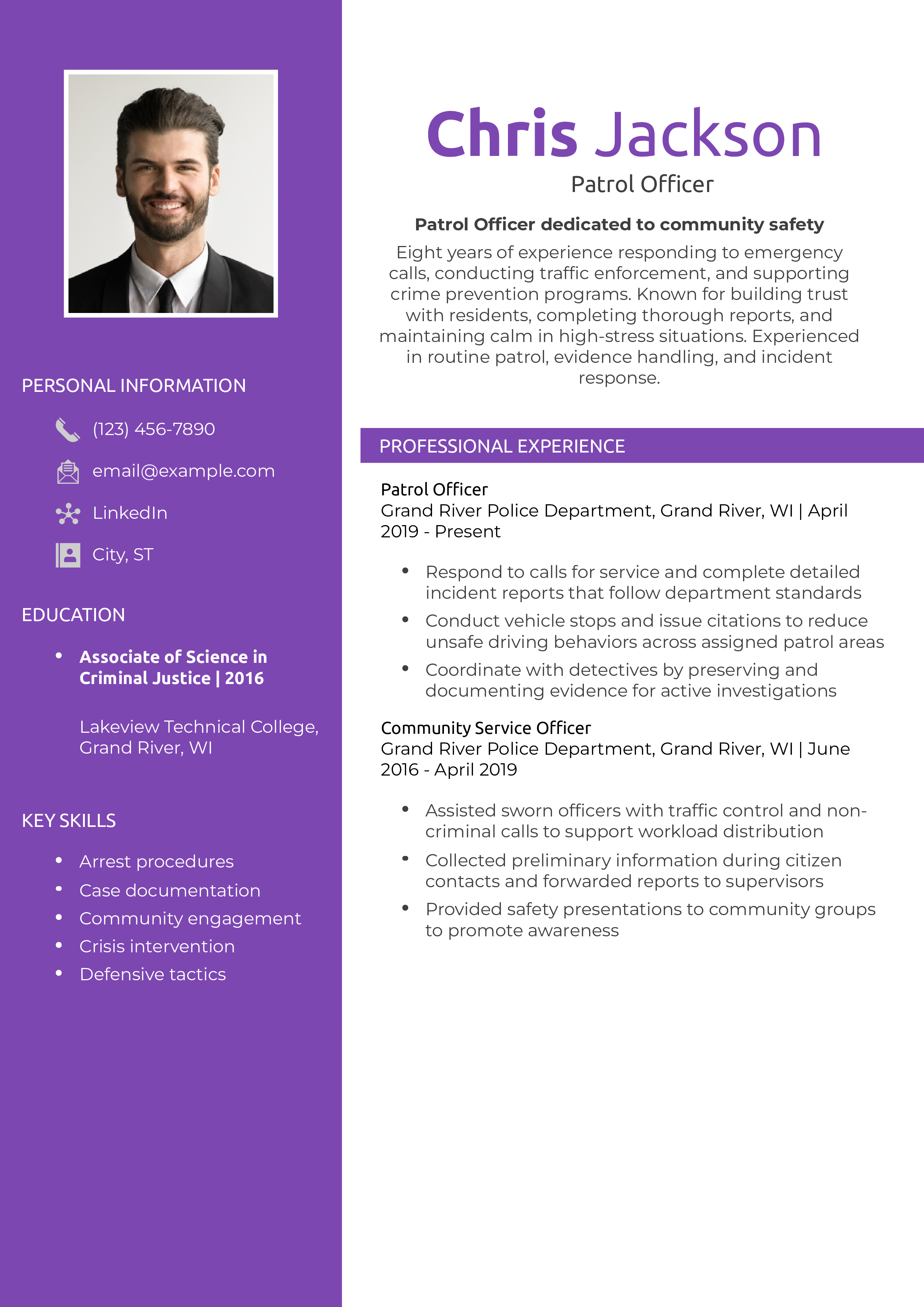
Patrol Officer Resume Example

Why this patrol officer resume example is strong:

This resume clearly shows Jackson’s progression from community service to full patrol officer responsibilities. The layout makes it easy to follow and emphasizes both public safety and procedural accuracy. Learn more about building a resume with clear organization in these resume format examples.

Key Tips:

  • Include local outreach efforts to show community impact
  • Use a clean layout that prioritizes the most recent and relevant experience

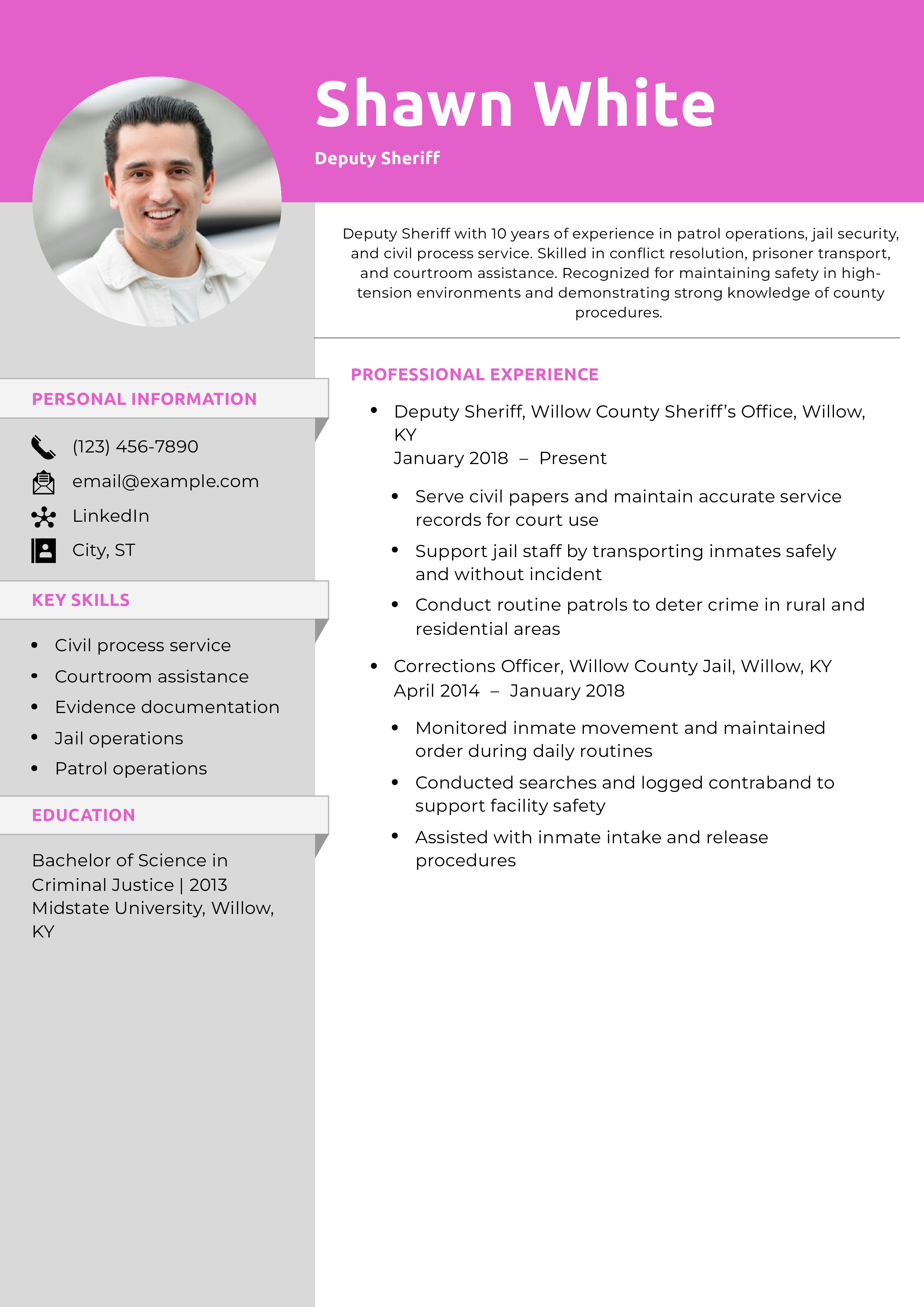
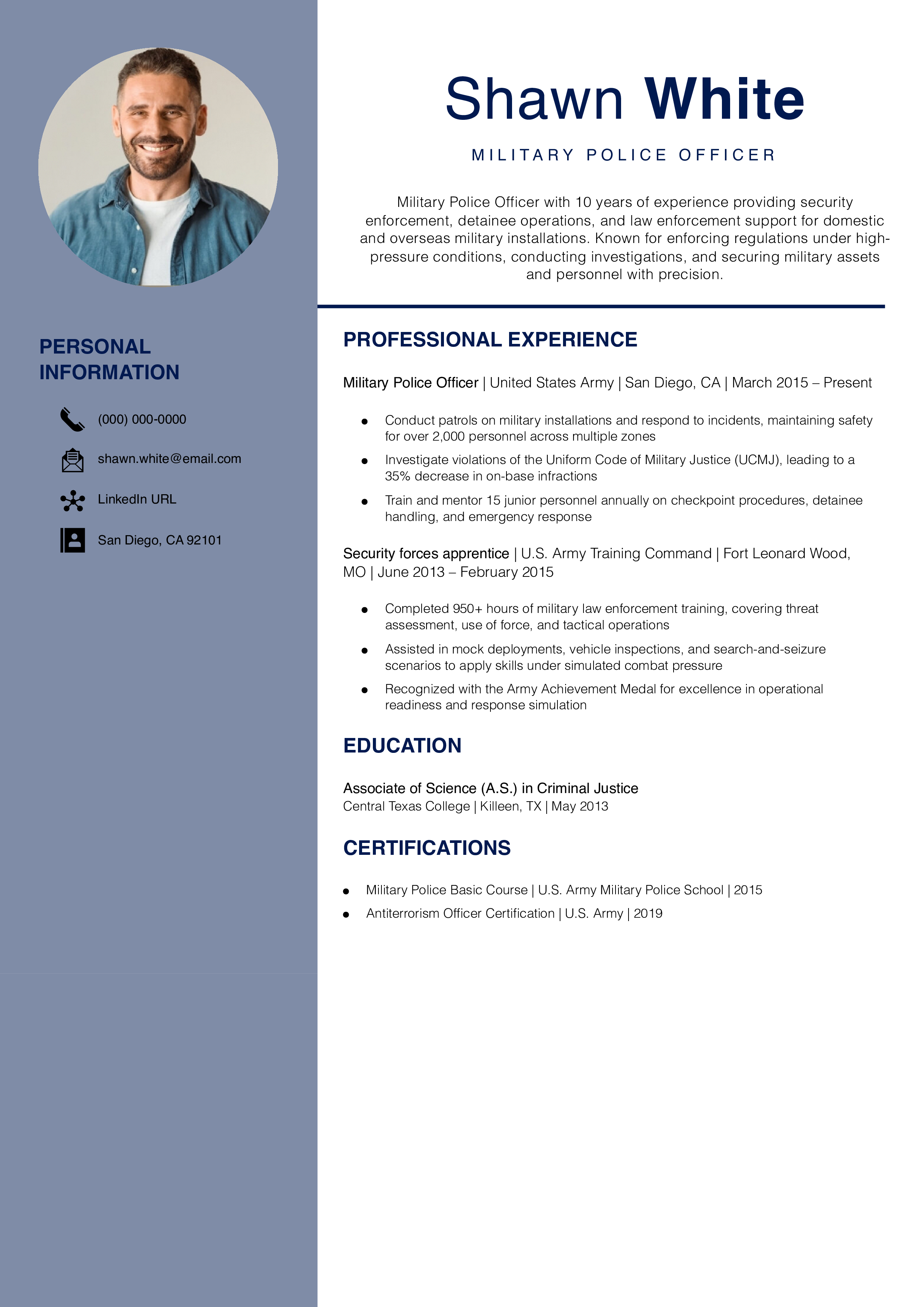
Deputy Sheriff Resume Example

Why this deputy sheriff resume example is strong:

White’s resume shows his growth from correctional officer to field deputy, clearly demonstrating a firm grasp of both aspects of the sheriff’s office duties. The emphasis on civil service and courtroom support adds depth. For tips on building a resume with strong progression and clarity, review how to build a resume.

Key Tips:

  • Show range by highlighting both jail and field experience
  • Keep job descriptions short and action-oriented

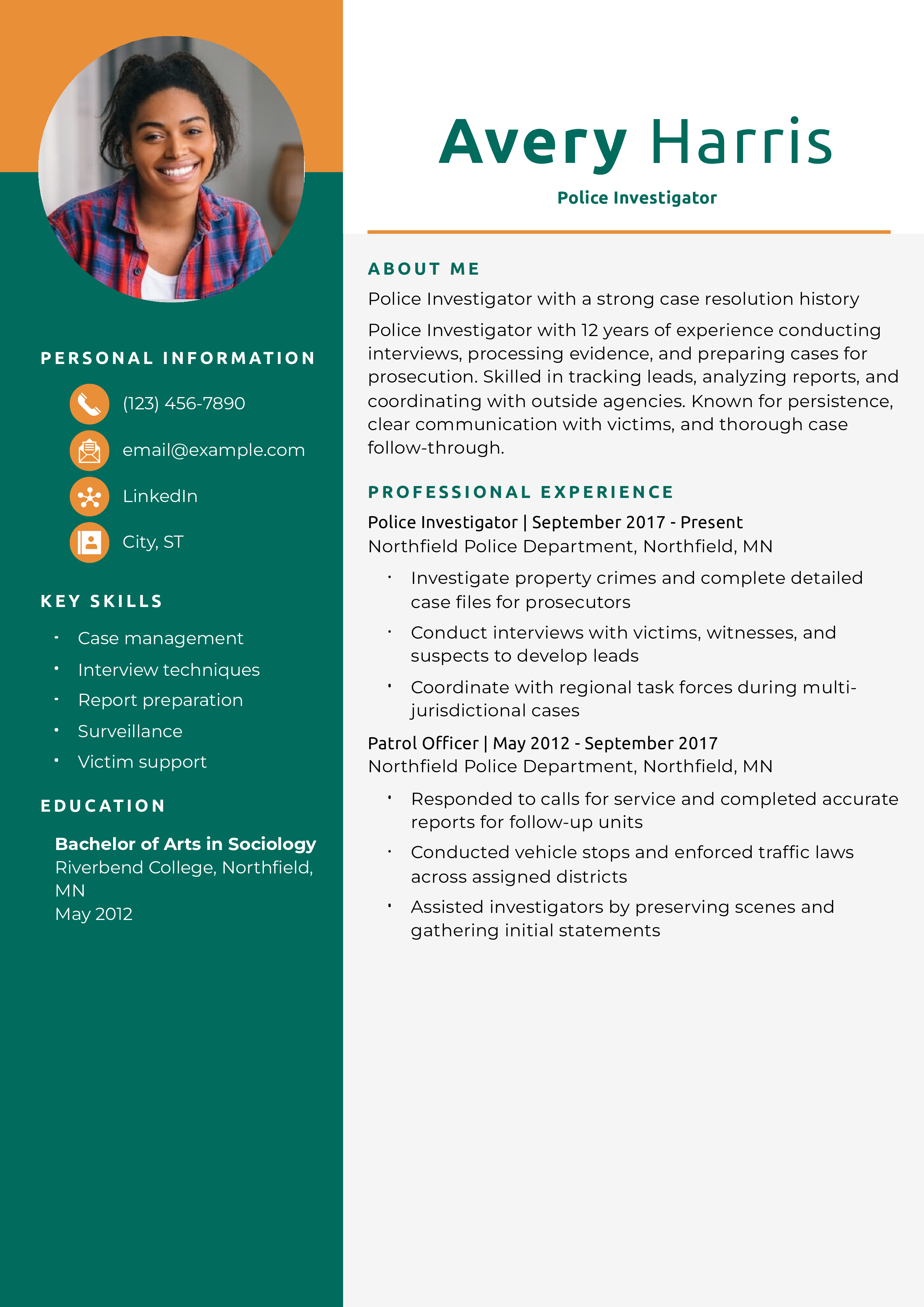
Police Investigator Resume Example

Why this police investigator resume example is strong:

Harris presents a clear case for promotion readiness with experience in both patrol and investigations. The summary and work history emphasize legal compliance, attention to detail, and interdepartmental collaboration. For guidance on showing growth through job roles, explore this resource on how to list promotions on a resume.

Key Tips:

  • Use investigative-specific keywords like “interviewed,” “coordinated,” and “processed.”
  • Show collaboration with task forces or external agencies

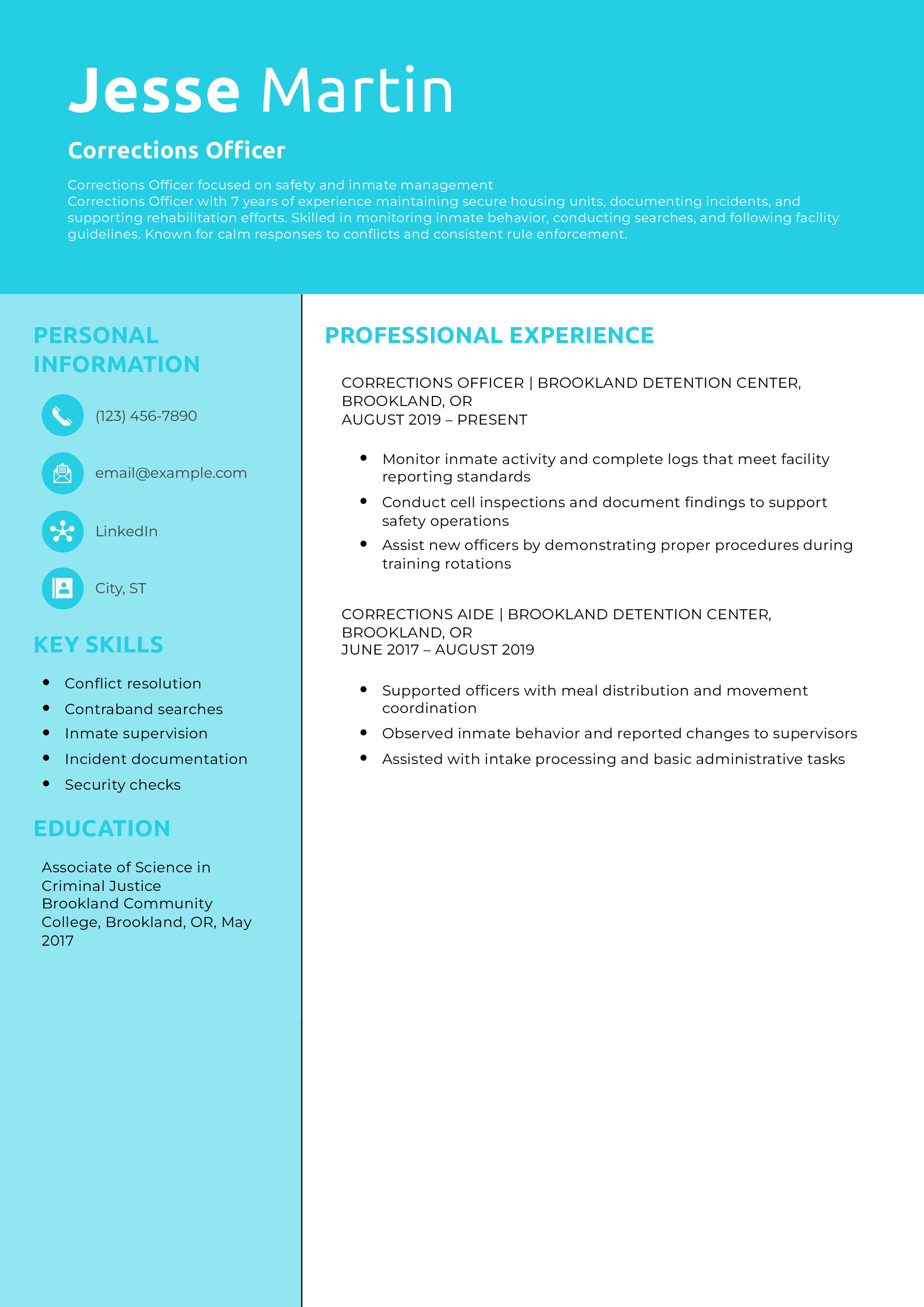
Corrections Officer Resume Example

Why this corrections officer resume example is strong:

Martin’s resume shows steady career advancement and a strong grasp of daily correctional duties. The structure is easy to scan, with bullet points that outline responsibilities in detail. If you’re unsure how long your resume should be or what to include, check out this guide on how long should a resume be.

Key Tips:

  • Focus on safety, compliance, and facility-specific procedures
  • Include any mentoring roles or leadership tasks

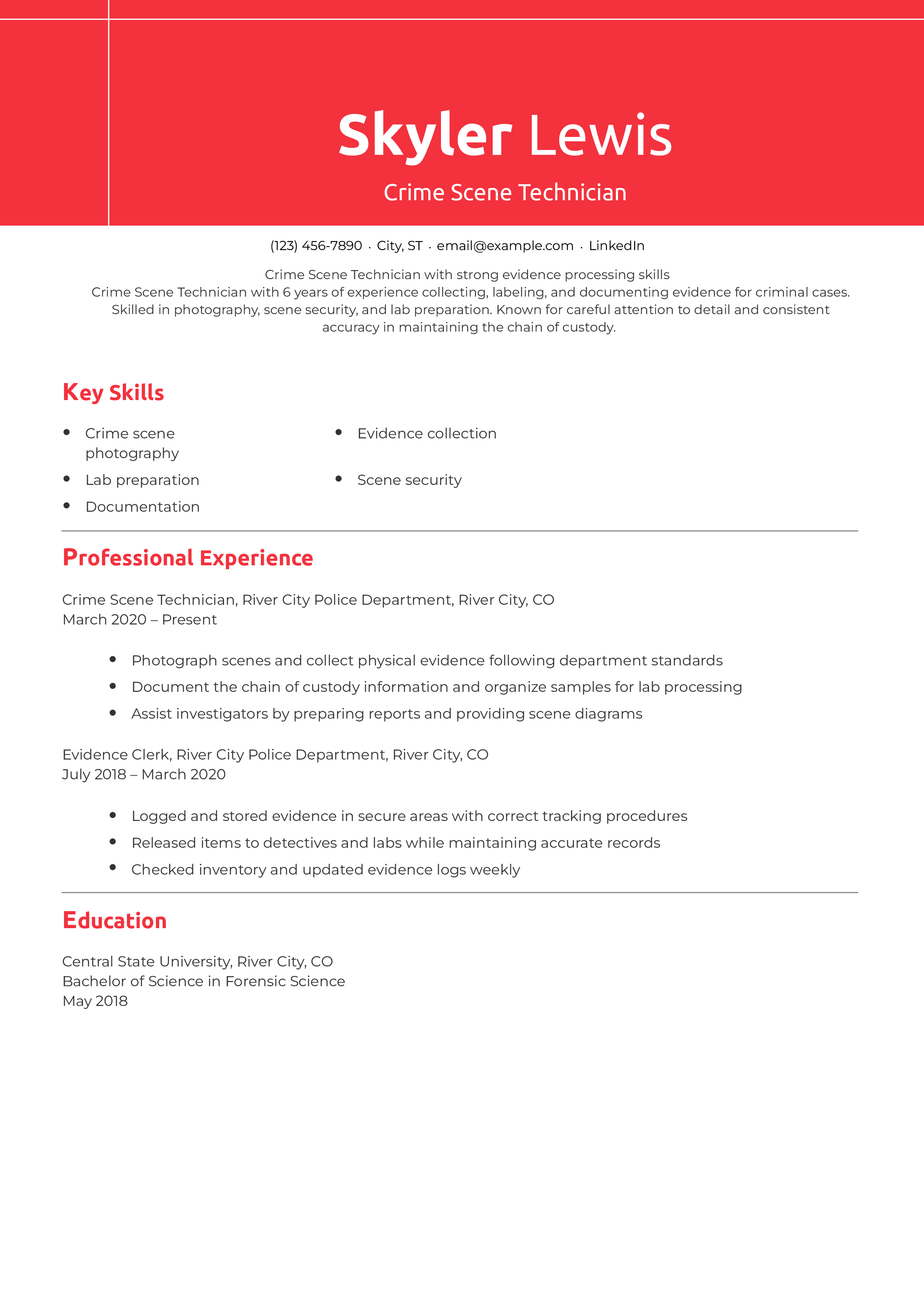
Crime Scene Technician Resume Example

Why this crime scene technician resume example is strong:

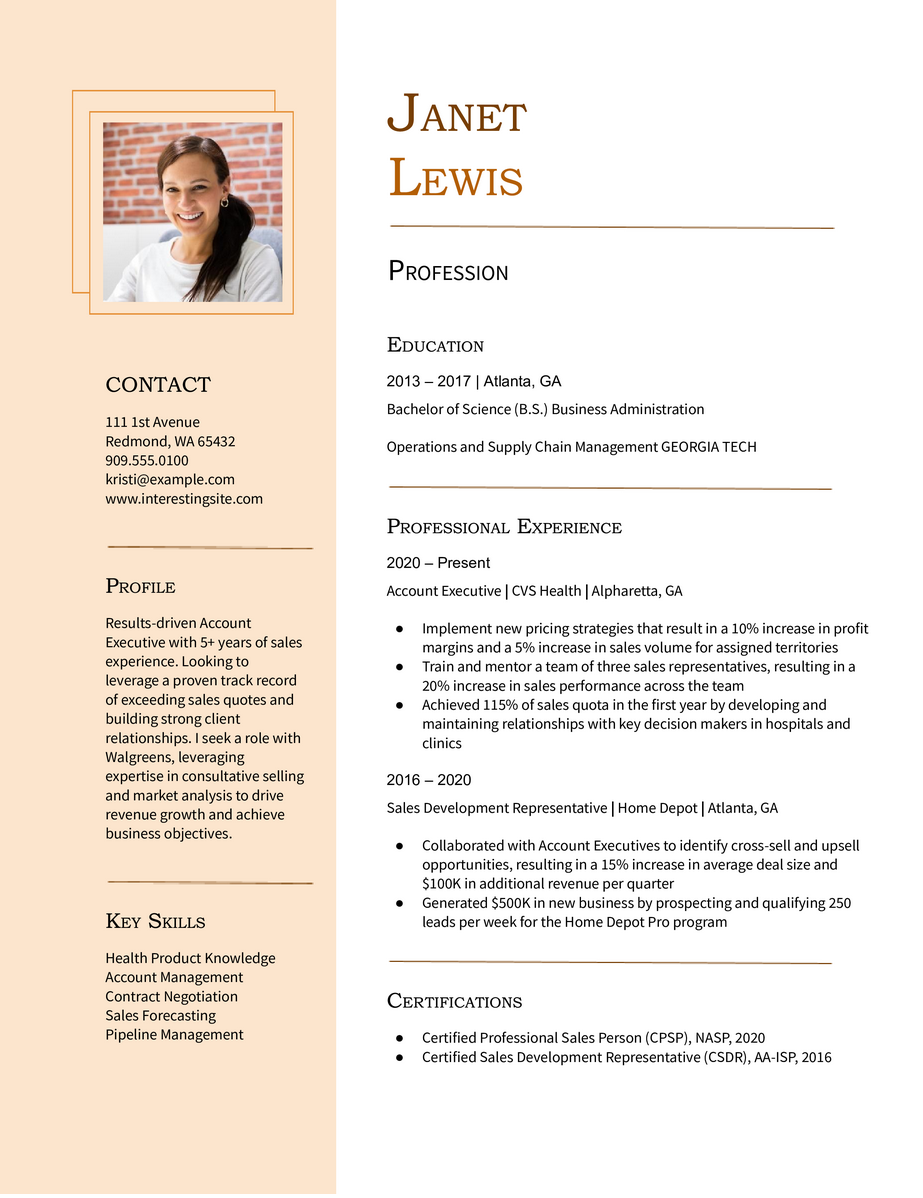
Lewis’s resume emphasizes both lab and field duties, showing a strong understanding of technical accuracy and procedural documentation. The skills and work history sections support the resume’s technical focus. For guidance on how to present your degrees and technical training, visit this guide to how to list your education on a resume.

Key Tips:

  • Highlight technical proficiencies and certification-based skills
  • Use industry-specific language to show expertise in evidence handling

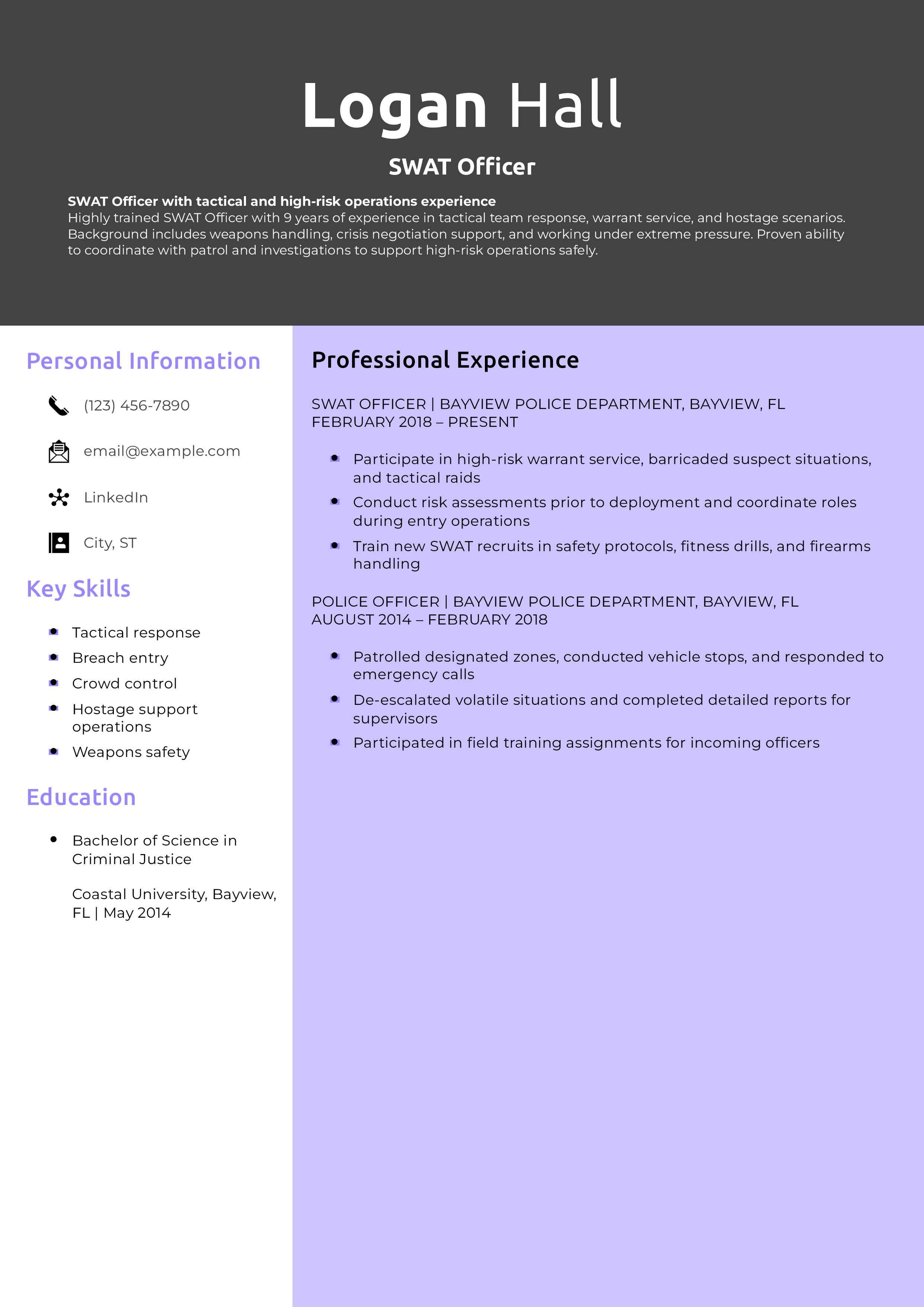
SWAT Officer Resume Example

Why this SWAT officer resume example is strong:

This resume stands out by showing the transition from general law enforcement to specialized tactical operations. Logan’s experience is focused and measurable, with specific references to duties that align with SWAT responsibilities. For more tips on selecting the best way to present your experience, check out this guide to resume format examples.

Key Tips:

  • Focus on team-based tactical duties and measurable safety outcomes
  • List training or instruction responsibilities to show leadership potential

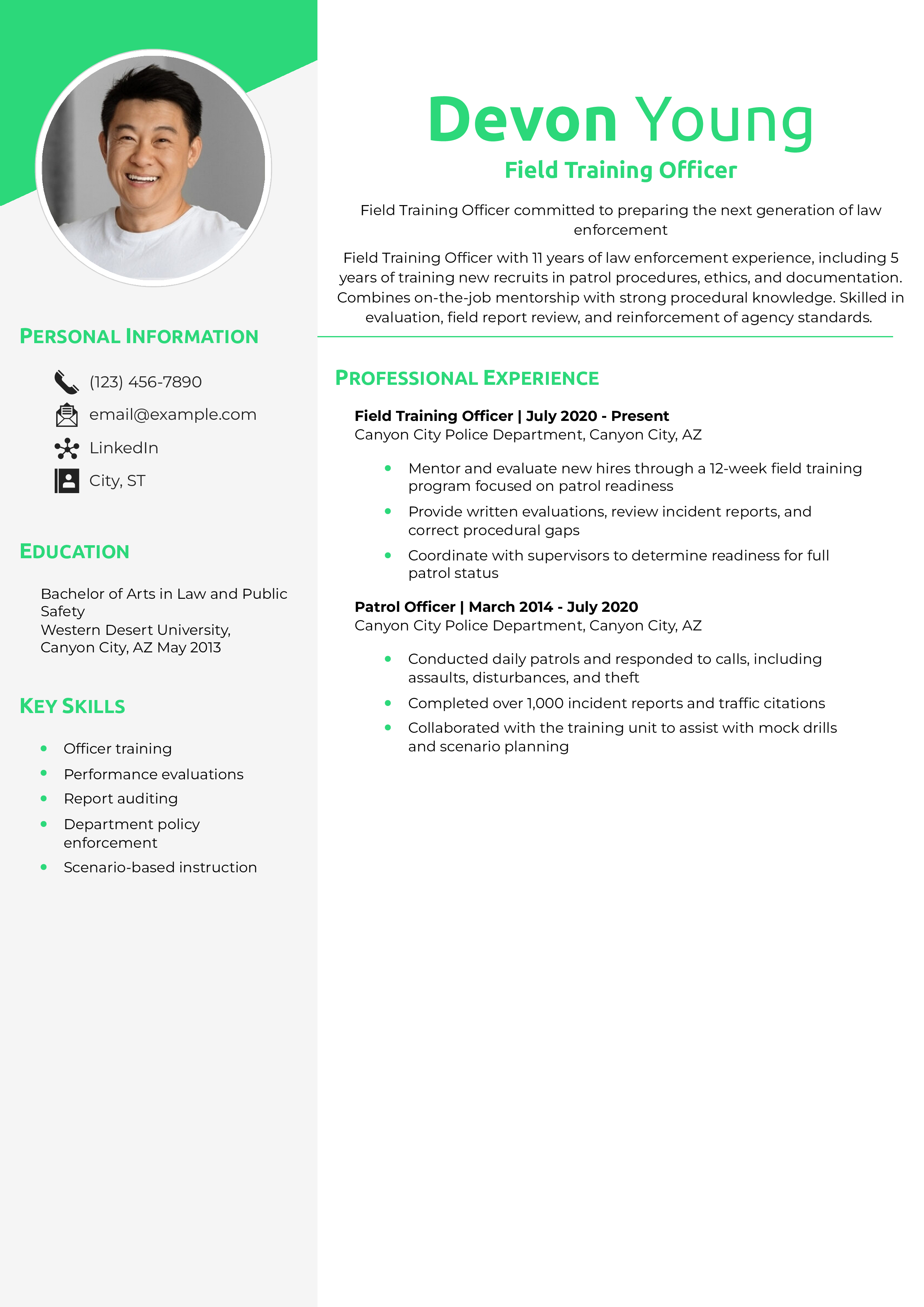
Field Training Officer Resume Example

Why this field training officer resume example is strong:

Devon’s resume highlights clear experience in mentorship and report review, which are essential for FTO roles. The layout makes it easy to distinguish training from patrol experience. For anyone unsure how to emphasize instructional roles on a resume, this resource on how to build a resume offers a strong foundation.

Key Tips:

  • Focus on your role as a mentor and your contributions to onboarding
  • Quantify how many recruits you’ve trained or evaluated

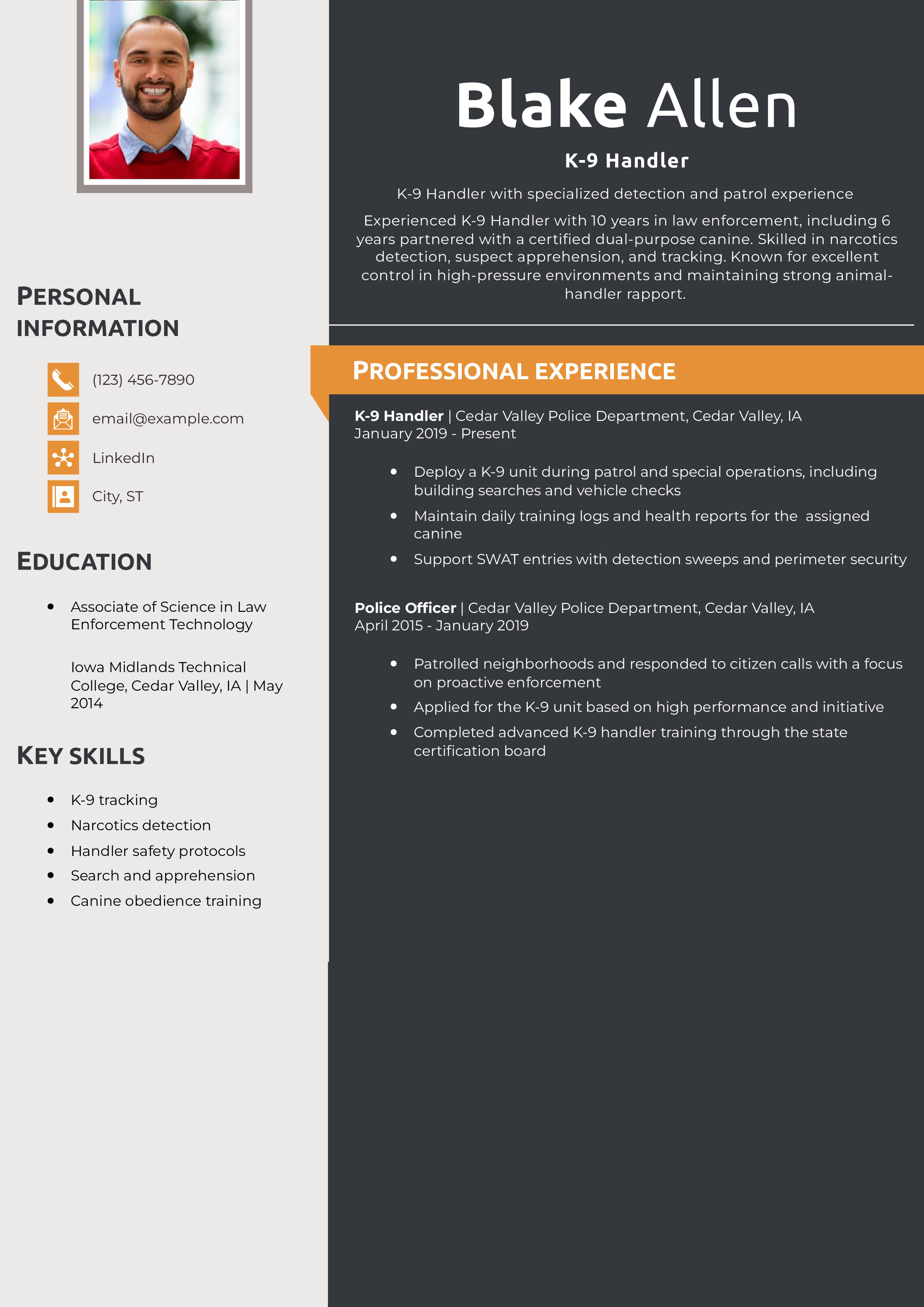
K-9 Handler Resume Example

Why this K-9 handler resume example is strong:

Blake’s resume effectively communicates dual expertise—traditional law enforcement and specialized K-9 handling. The bullet points focus on measurable activities like deployments and partnerships. For more on tailoring resumes to specialized units, explore this breakdown of how to write a resume with no experience or limited direct history, which also applies to new specialties.

Key Tips:

  • Mention handler training and certifications
  • Emphasize results of deployments (e.g. narcotics finds, suspect location)

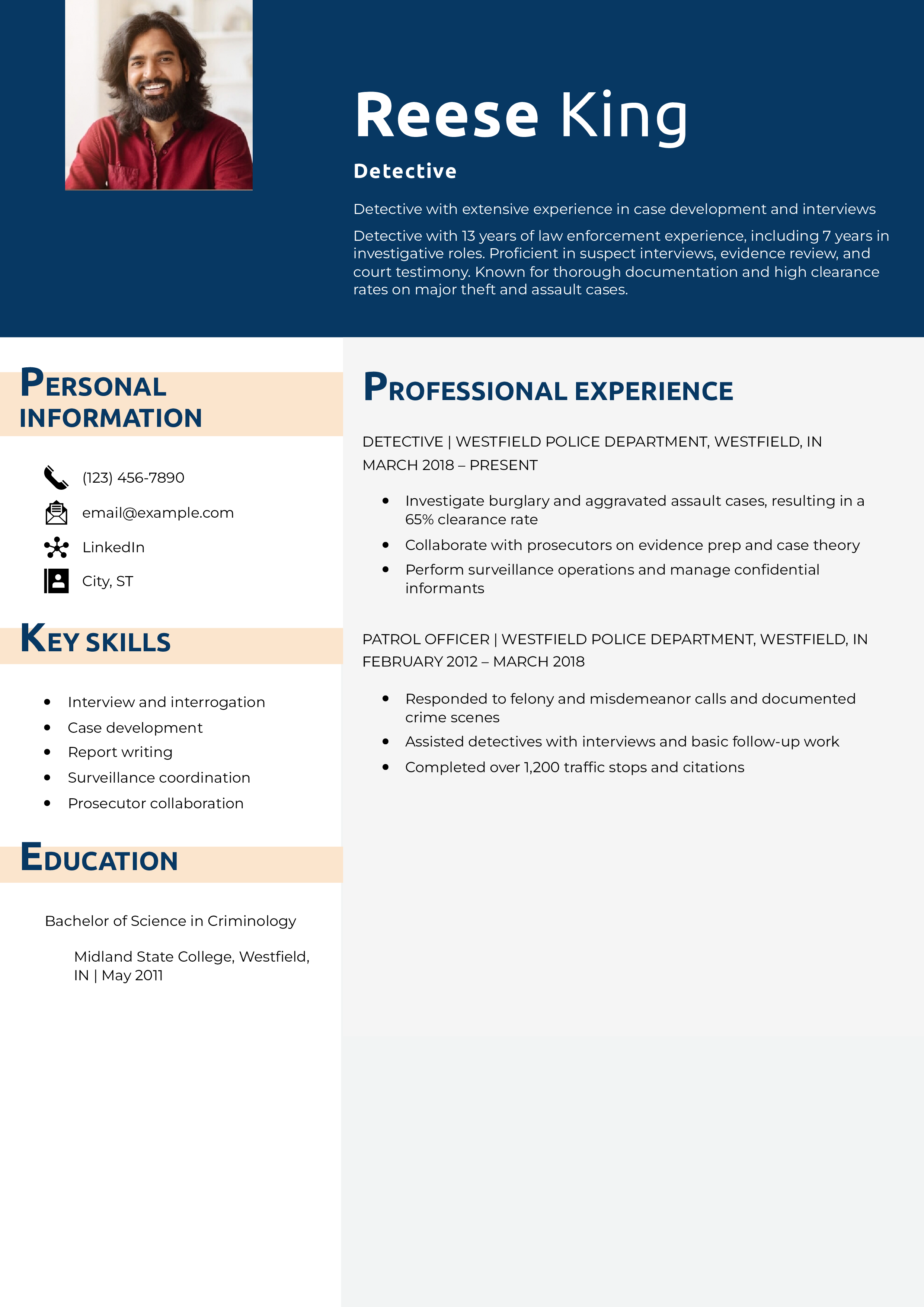
Detective Resume Example

Why this detective resume example is strong:

Reese’s resume is strong because it highlights specialization in criminal investigation while demonstrating a consistent law enforcement career. The summary and experience show how patrol experience directly supported investigative success. For further tips on how to show career progress on your resume, check out these resume format examples.

Key Tips:

  • Use terms like “clearance rate” or “court prep” to align with investigative duties
  • Show your collaboration with legal teams and external agencies

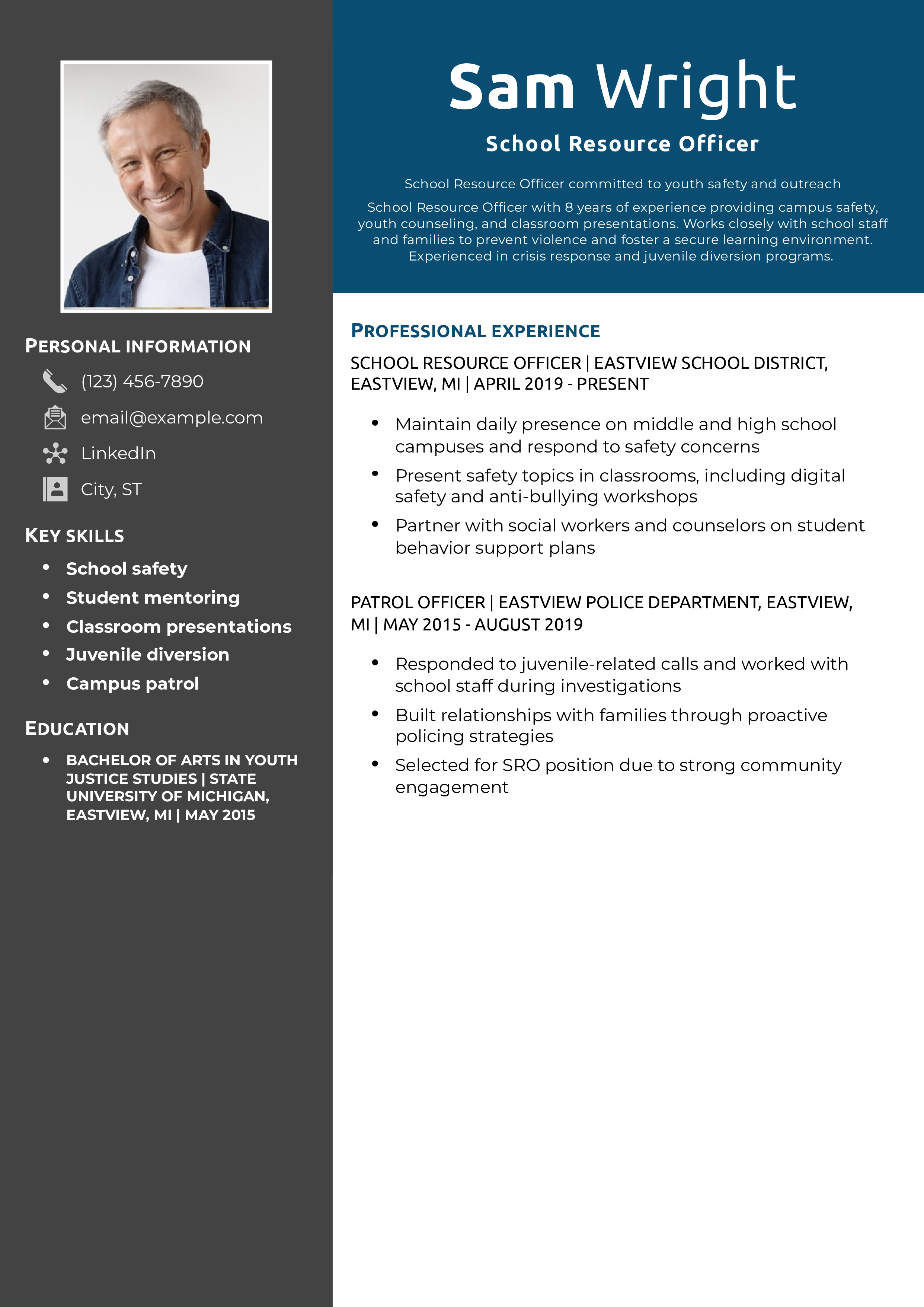
School Resource Officer Resume Example

Why this school resource officer resume example is strong:

Sam’s resume stands out by emphasizing student safety, youth education, and inter-agency cooperation. The transition from patrol to school resource work is well explained, and the skills are tailored to an educational setting. To see how to craft a summary or highlight education work, review this resource on how to format your resume.

Key Tips:

  • Emphasize student-related roles, mentorship, and collaboration
  • Include educational outreach programs and behavioral support initiatives

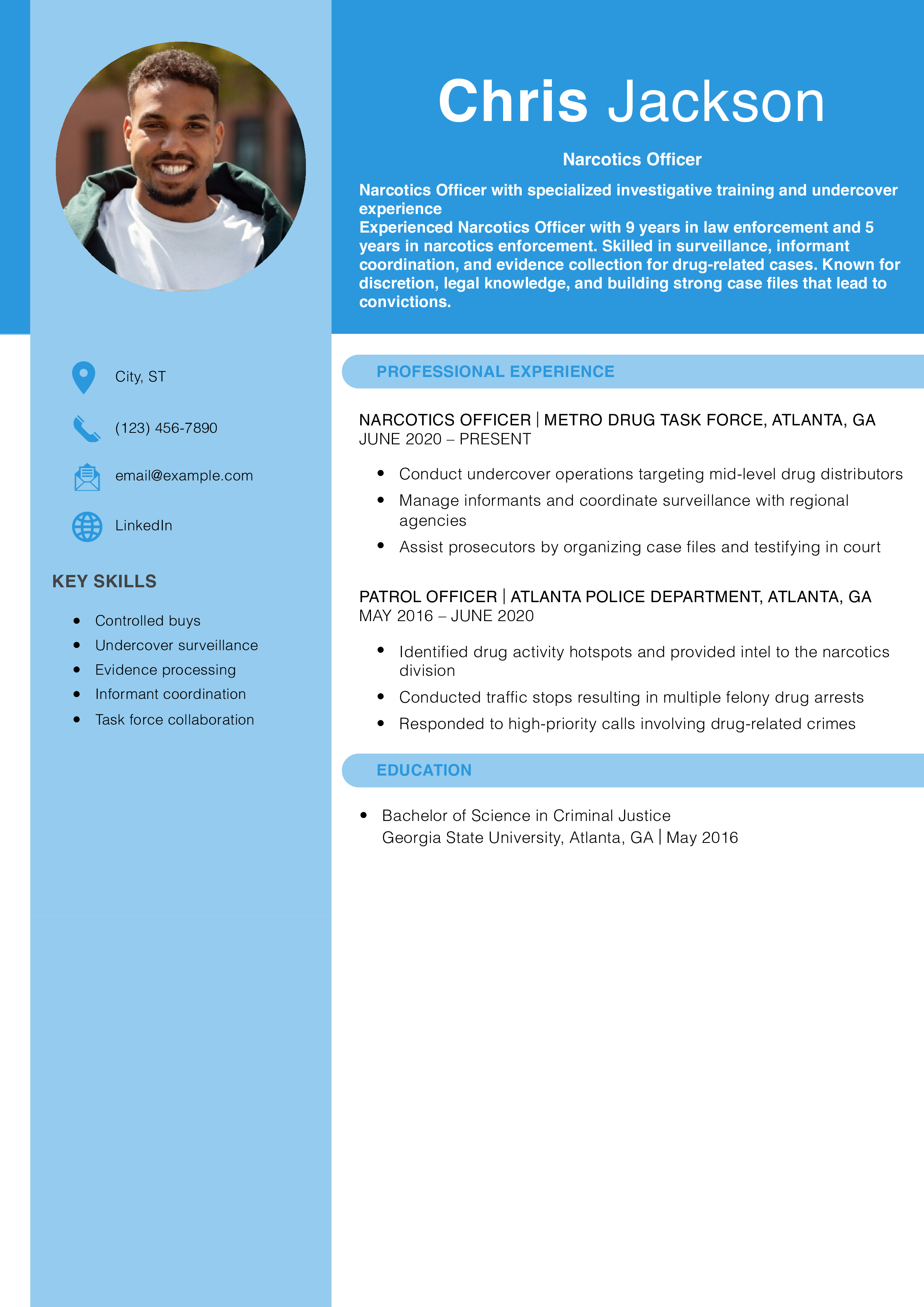
Narcotics Officer Resume Example

Why this narcotics officer resume example is strong:

Jackson’s resume clearly outlines his specialization in narcotics enforcement, using precise terminology and accomplishments that reflect task force operations. The reverse-chronological layout provides a seamless career narrative. To better understand which format will highlight your expertise, visit the resume format examples.

Key Tips:

  • Use law enforcement-specific language when describing investigations
  • Highlight legal coordination and courtroom experience when applicable

Community Policing Officer Resume Example

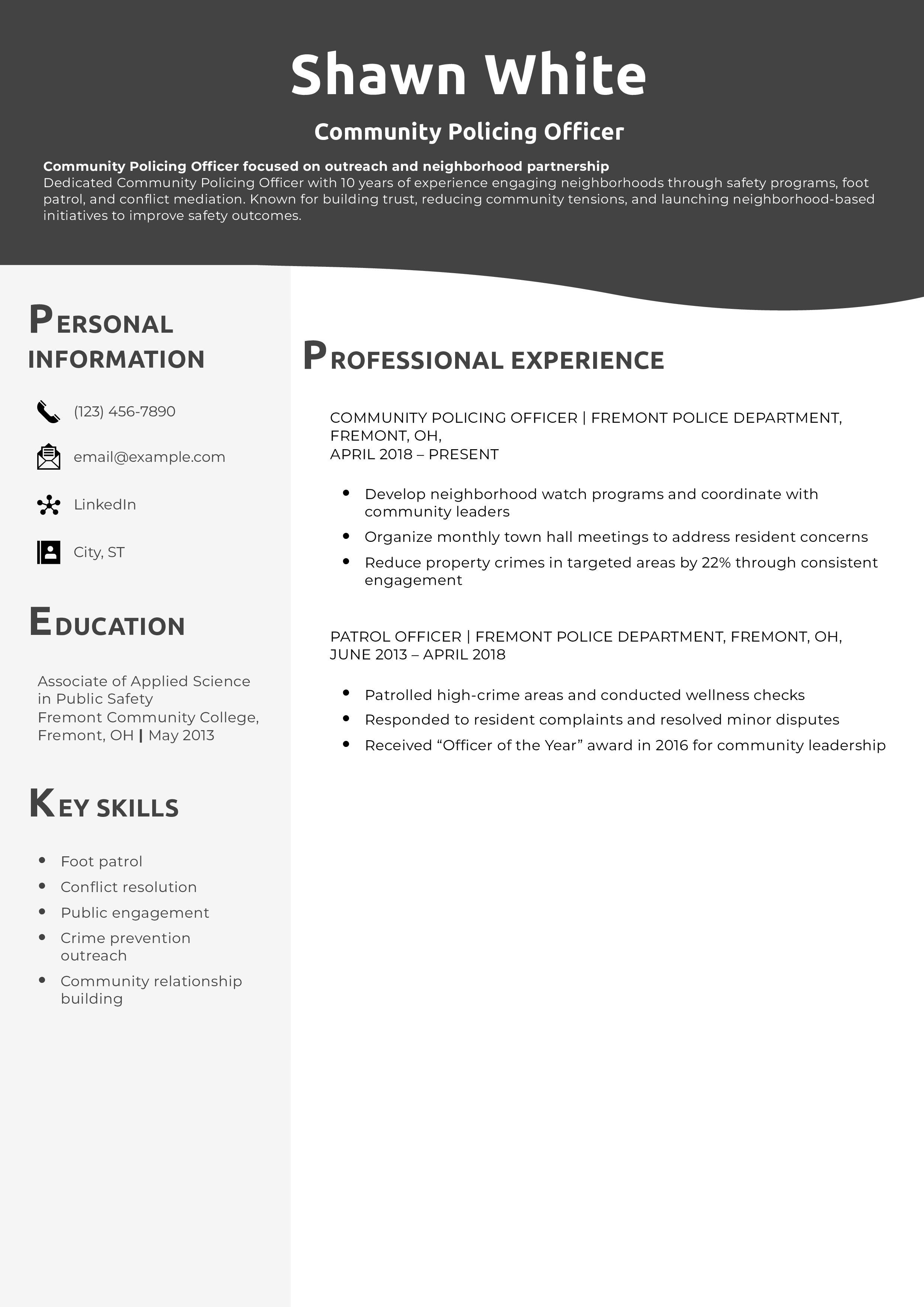
Why this community policing officer resume example is strong:

White’s resume focuses on the relational side of policing. It clearly outlines contributions to public trust and local crime reduction. The experience section connects patrol duties to long-term outreach, showing a full picture. For advice on showcasing versatile experience like this, explore how to build a resume.

Key Tips:

  • Include statistics when showing community impact
  • Emphasize relationship building and outreach efforts

Probation Officer Resume Example

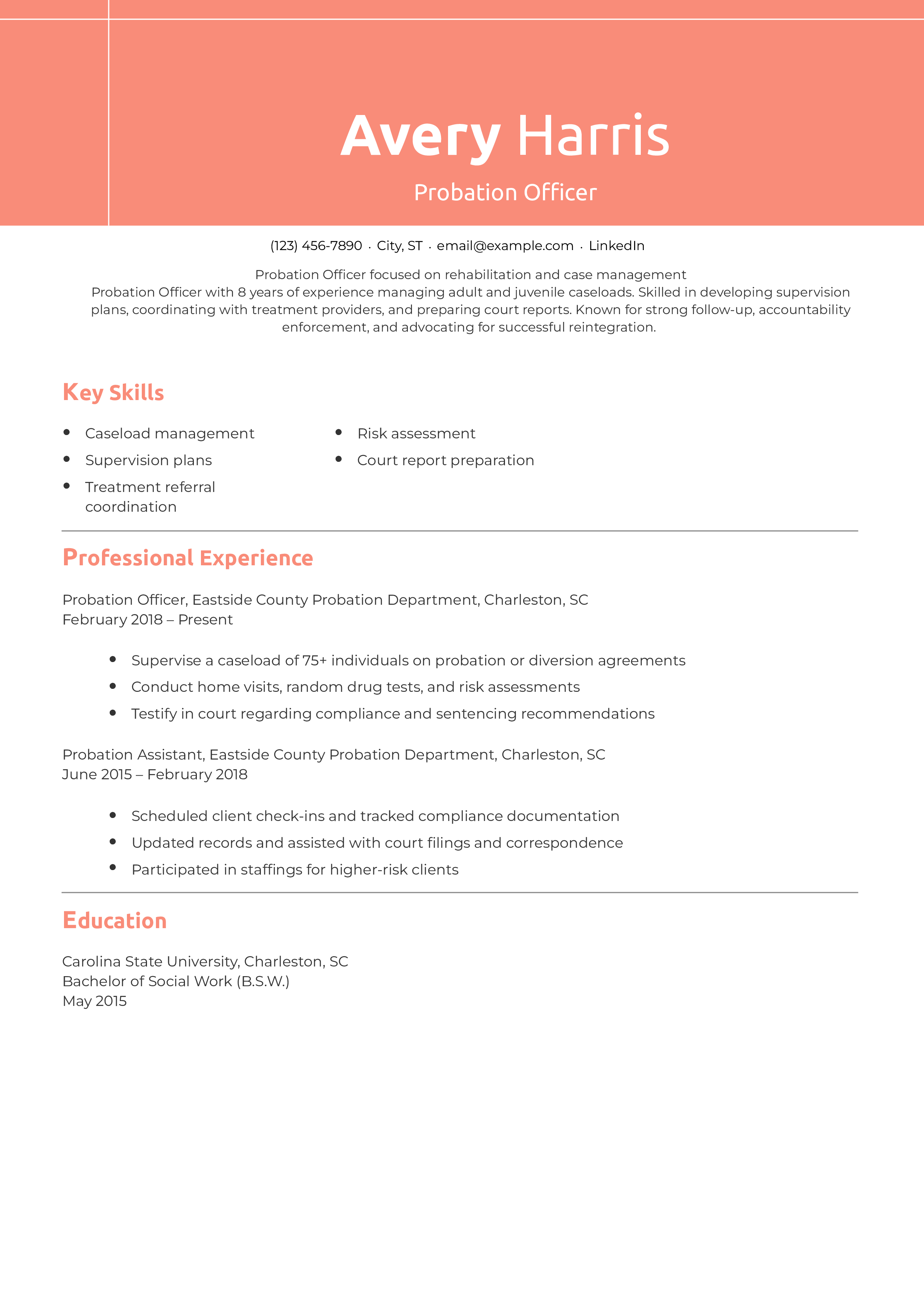
Why this probation officer resume example is strong:

Harris’s resume highlights both fieldwork and administrative aspects of probation management. The language is formal and focused, matching the expectations for this role. To ensure your resume reflects this level of detail, check out how to format your resume.

Key Tips:

  • Show familiarity with legal documentation and compliance standards
  • Highlight client outcomes, such as successful completions or referrals

Airport Police Officer Resume Example

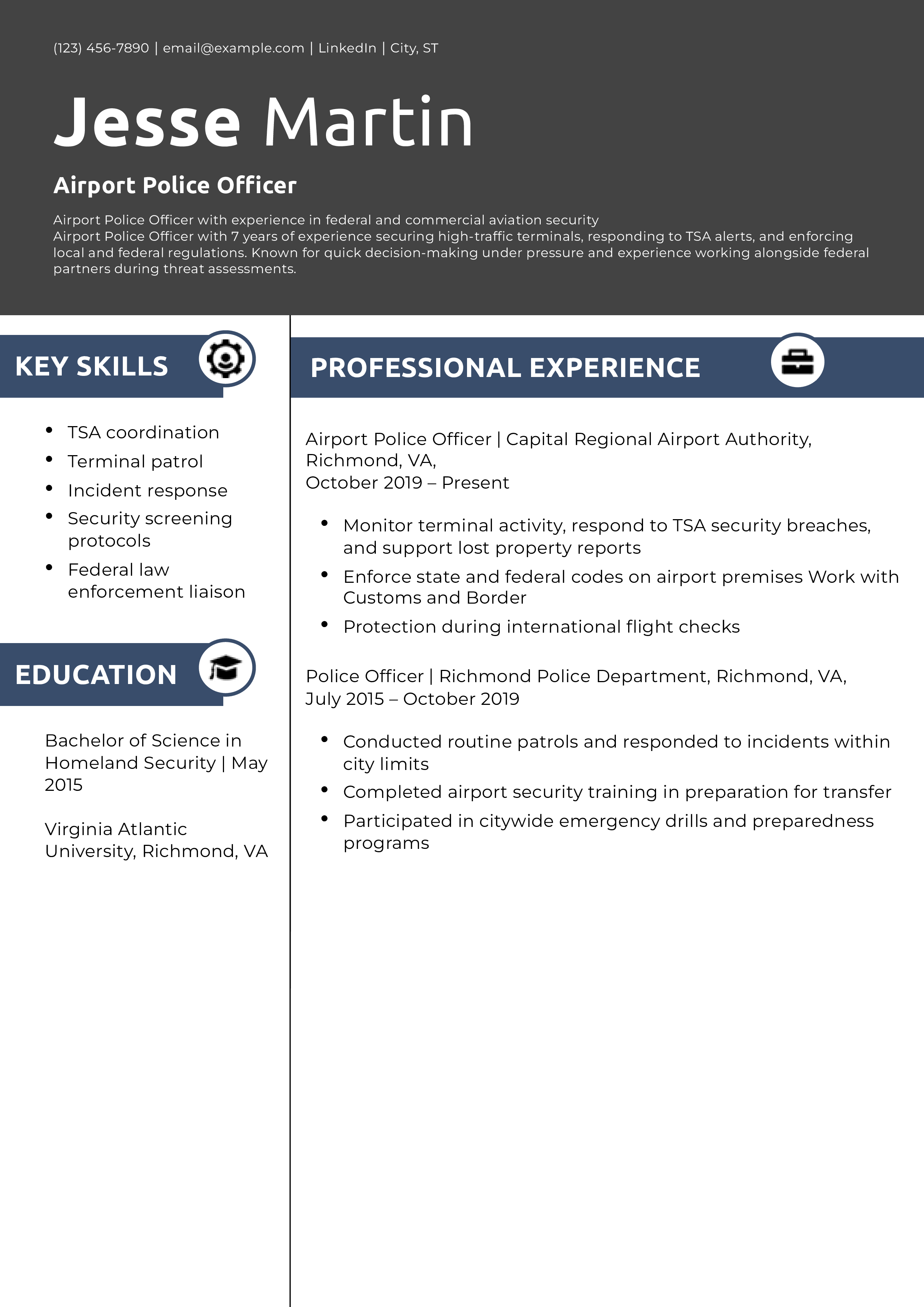
Why this airport police officer resume example is strong:

Martin’s resume demonstrates his specialization in aviation security, including work with federal agencies. His progression from city policing to airport safety is logical and clearly explained. For more help building resumes with unique roles, see these resume format examples.

Key Tips:

  • Emphasize any TSA or federal collaboration experience
  • List specialized training related to transportation security

Game Warden Resume Example

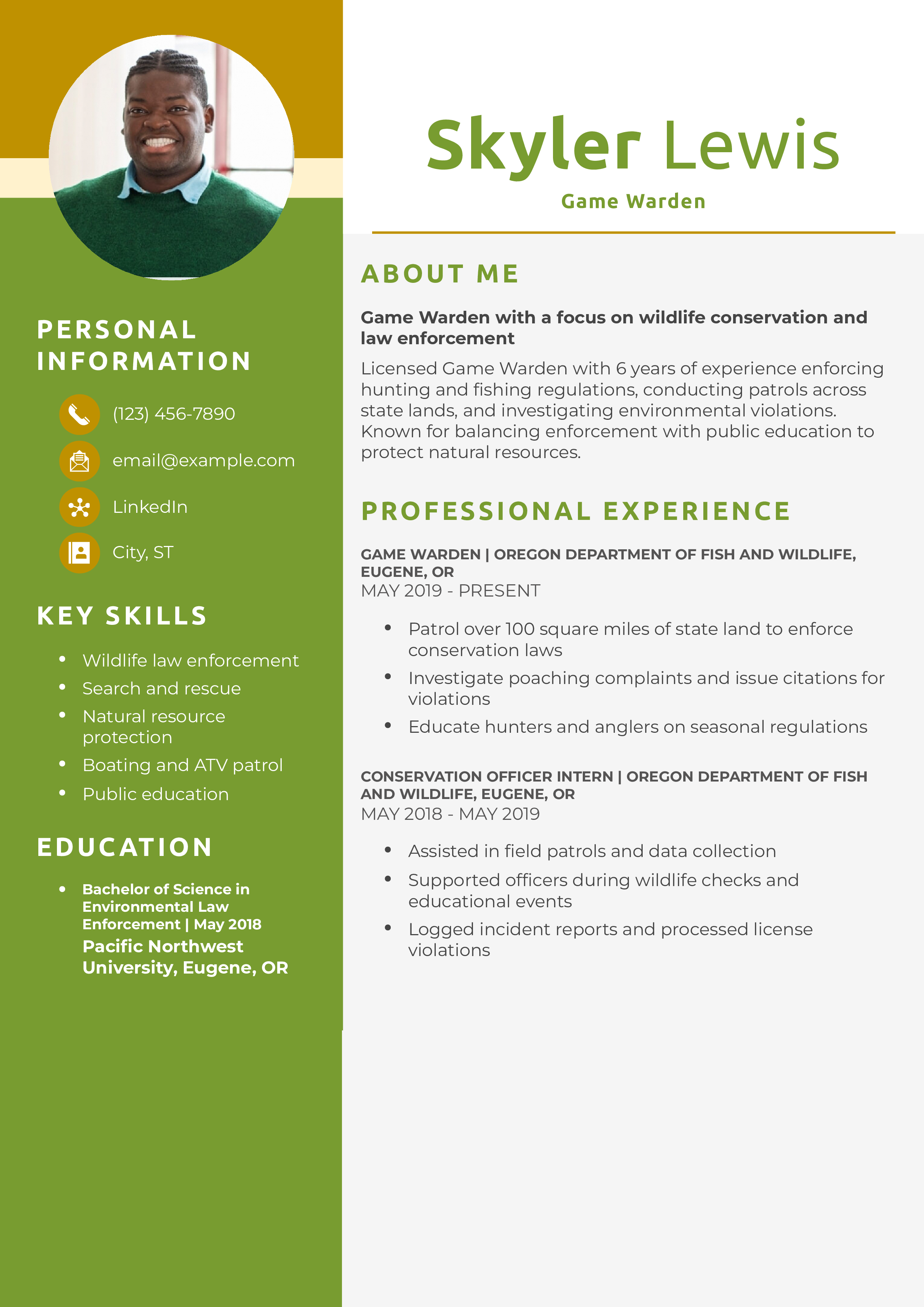
Why this game warden resume example is strong:

Lewis’s resume shows field-specific experience in wildlife enforcement, with a clear educational background supporting it. The experience section uses detailed, mission-aligned language. If you’re unsure how to format early career experience, read this guide on how to write a resume with no experience, which also applies to internships.

Key Tips:

  • Highlight fieldwork experience, even if from internships
  • Use terminology specific to natural resource enforcement

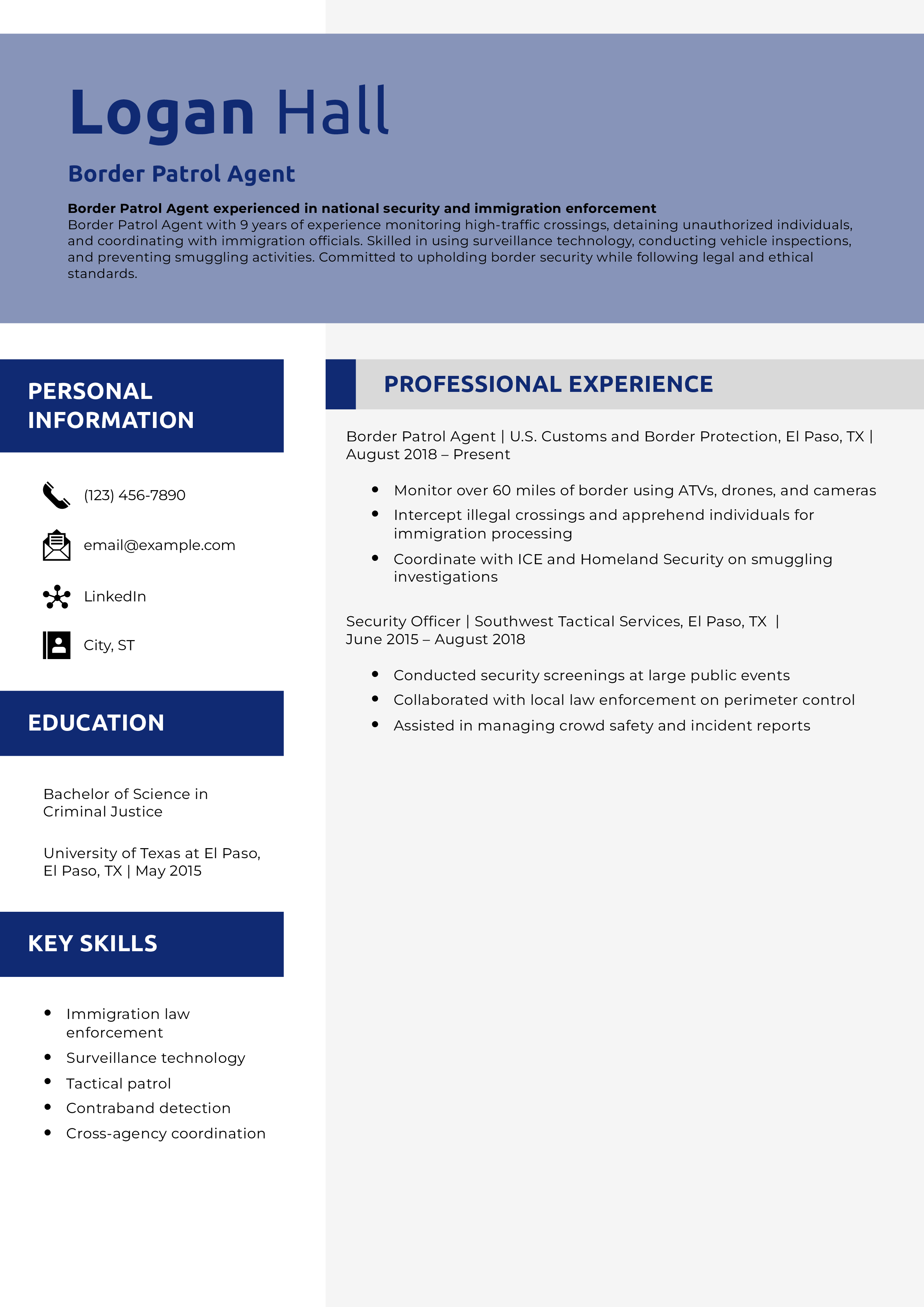
Border Patrol Agent Resume Example

Why this border patrol agent resume example is strong:

Hall’s resume emphasizes field readiness and familiarity with cross-agency collaboration, both critical for border enforcement roles. The work history includes specific tools and operations, which help paint a complete picture. For additional help with resume structure and flow, check out these resume format examples.

Key Tips:

  • Include enforcement partnerships with agencies like ICE or DHS
  • Mention specific border tech tools (drones, sensors, etc.) when relevant

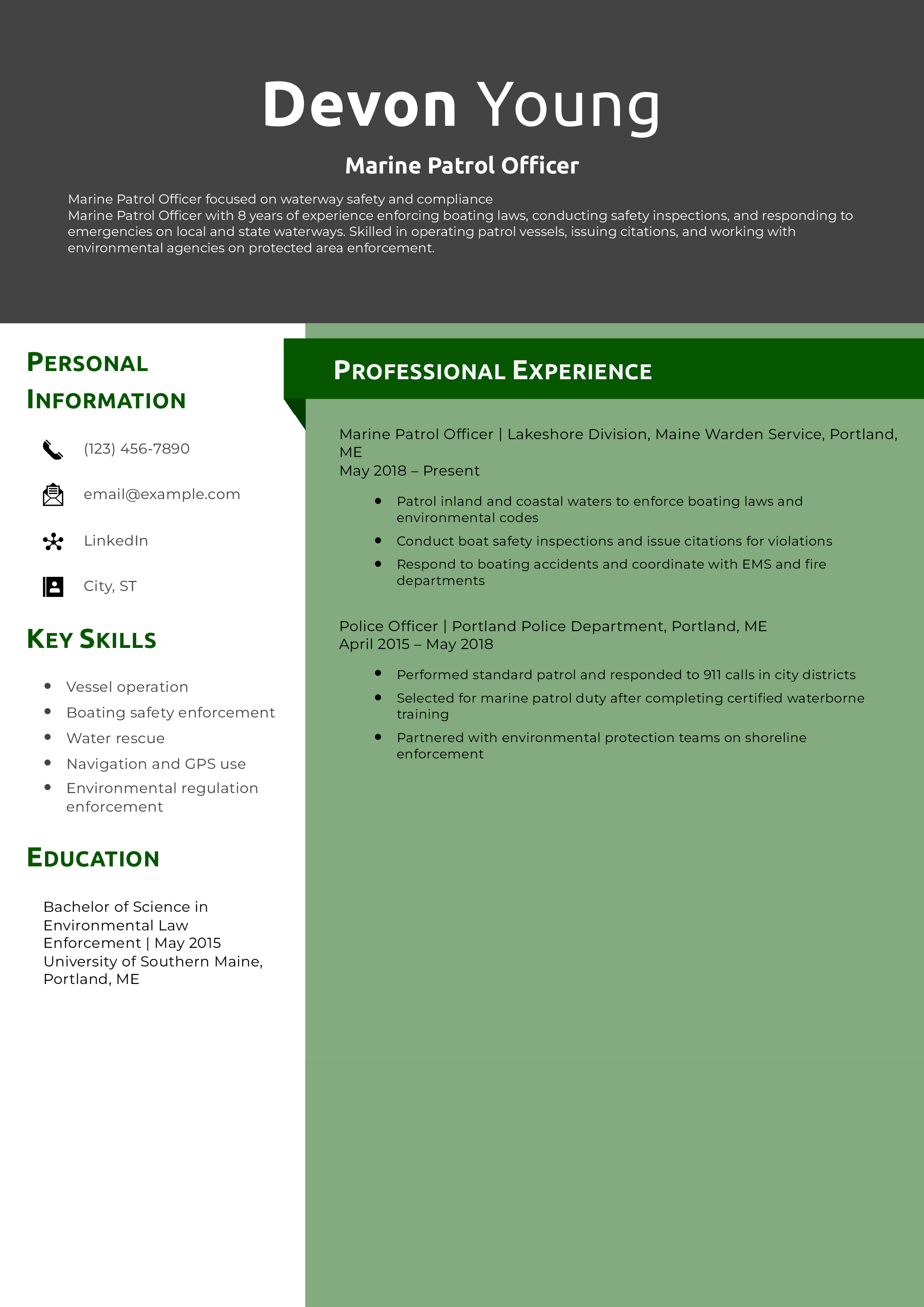
Marine Patrol Officer Resume Example

Why this marine patrol officer resume example is strong:

Young’s resume presents highly relevant maritime experience along with strong crossover from urban policing. Each bullet point reinforces safety and environmental law enforcement. For guidance on organizing both field and civilian roles, review this breakdown of how to build a resume.

Key Tips:

  • Include water-based certifications and rescue training
  • Show partnerships with environmental or wildlife organizations

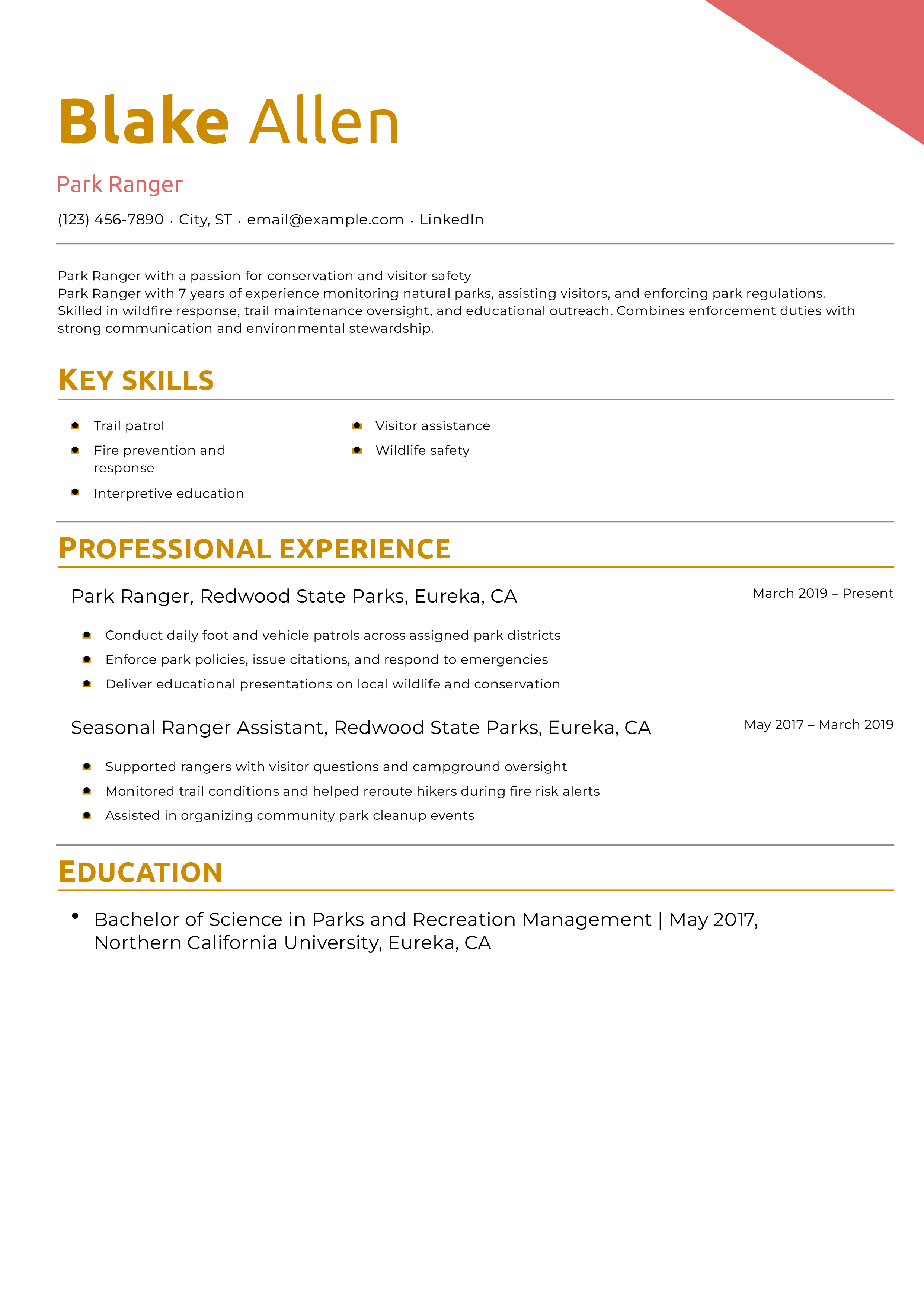
Park Ranger Resume Example

Why this park ranger resume example is strong:

Allen’s resume balances law enforcement responsibilities with education and service. The experience demonstrates both independence and teamwork in remote settings. To create a resume that blends public service and law enforcement like this one, check out how to build a resume.

Key Tips:

  • Show your knowledge of conservation and public safety policy
  • Include public engagement and educational programming where relevant

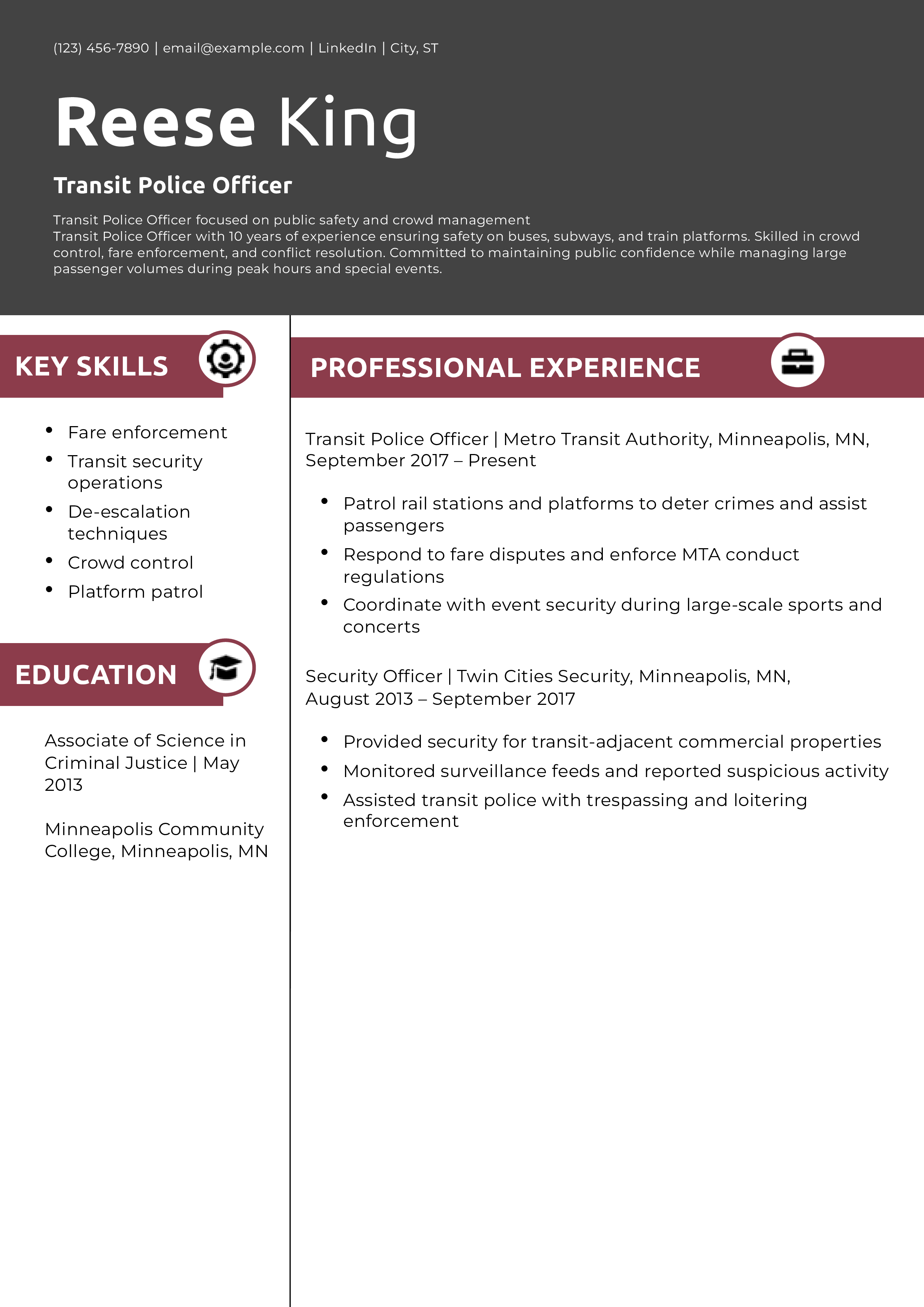
Transit Police Officer Resume Example

Why this transit police officer resume example is strong:

King’s resume reflects real-world experience in fast-paced, public-facing environments. The focus on safety, enforcement, and transit-specific knowledge makes it a great example for similar roles. For a deep dive into choosing the right layout for transit or security jobs, visit these resume format examples.

Key Tips:

  • Emphasize roles that involve high public interaction
  • Mention crowd management during events or emergencies

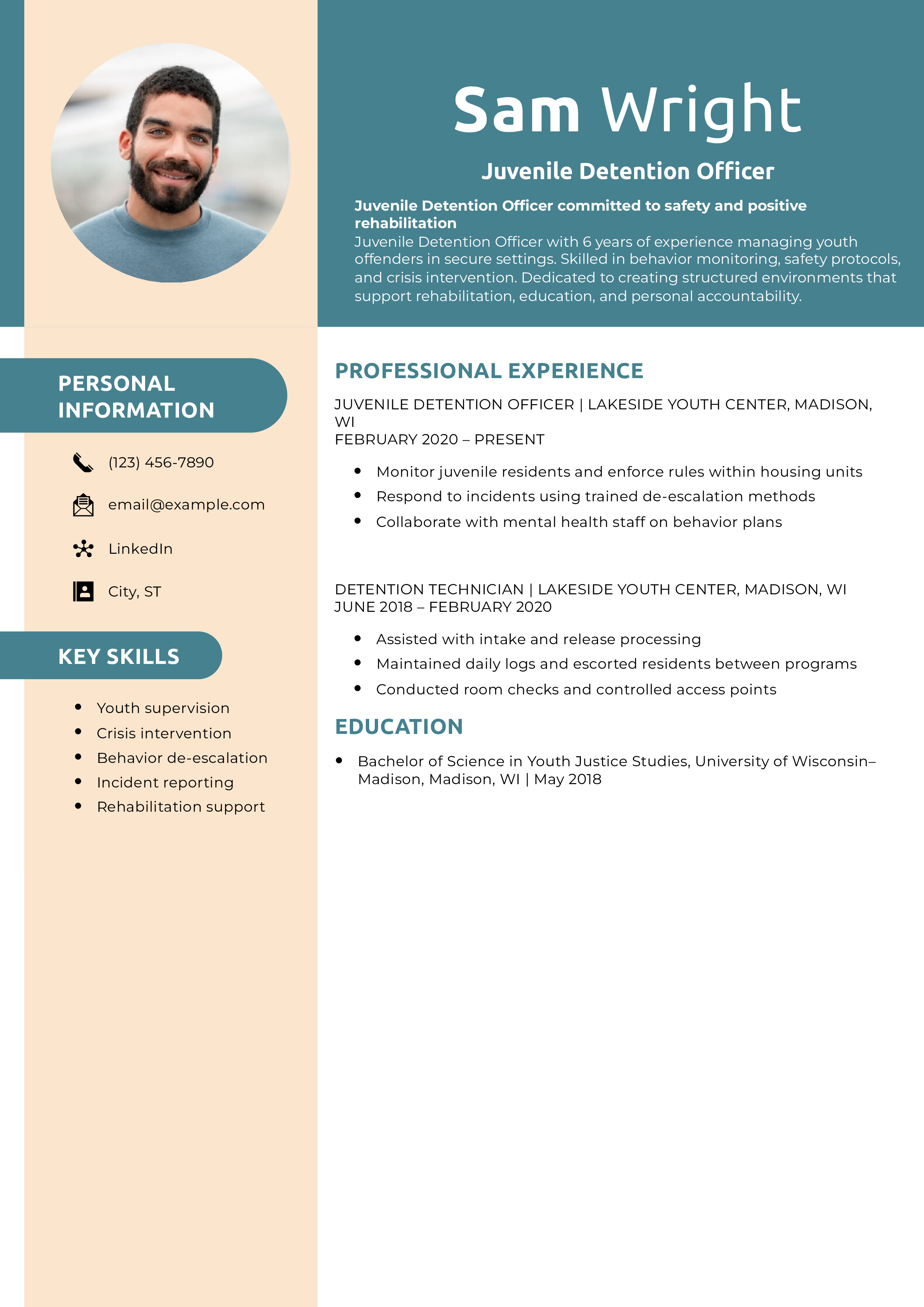
Juvenile Detention Officer Resume Example

Why this juvenile detention officer resume example is strong:

Wright’s resume emphasizes youth-focused enforcement with a rehabilitative mindset. The progression from technician to officer shows growth and added responsibility. For ideas on how to format resumes when advancing within one organization, review how to list promotions on a resume.

Key Tips:

  • Highlight conflict resolution and collaboration with support staff
  • Demonstrate knowledge of juvenile-specific protocols and standards

Law Enforcement Text-Only Resume Examples

  • Patrol Officer
  • Deputy Sheriff
  • Police Investigator
  • Corrections Officer
  • Crime Scene Technician
  • SWAT Officer
  • Field Training Officer
  • K-9 Handler
  • Detective
  • School Resource Officer
  • Narcotics Officer
  • Community Policing Officer
  • Probation Officer
  • Airport Police Officer
  • Game Warden
  • Border Patrol Agent
  • Marine Patrol Officer
  • Park Ranger
  • Transit Police Officer
  • Juvenile Detention Officer

Chris Jackson
[email protected] | (123) 456-7890 | City, ST | LinkedIn

Patrol Officer dedicated to community safety
Eight years of experience responding to emergency calls, conducting traffic enforcement, and supporting crime prevention programs. Known for building trust with residents, completing thorough reports, and maintaining calm in high-stress situations. Experienced in routine patrol, evidence handling, and incident response.

Key Skills

  • Arrest procedures
  • Case documentation
  • Community engagement
  • Crisis intervention
  • Defensive tactics

Professional Experience

Patrol Officer, Grand River Police Department, Grand River, WI | April 2019 to present

  • Respond to calls for service and complete detailed incident reports that follow department standards
  • Conduct vehicle stops and issue citations to reduce unsafe driving behaviors across assigned patrol areas
  • Coordinate with detectives by preserving and documenting evidence for active investigations

Community Service Officer, Grand River Police Department, Grand River, WI | June 2016 to April 2019

  • Assisted sworn officers with traffic control and non-criminal calls to support workload distribution
  • Collected preliminary information during citizen contacts and forwarded reports to supervisors
  • Provided safety presentations to community groups to promote awareness

Education

Associate of Science in Criminal Justice | 2016
Lakeview Technical College, Grand River, WI

How To Write a Law Enforcement Resume

1. Choose a format that complements your law enforcement qualifications

Like most vocations, law enforcement officers should use the combination (or hybrid) resume format. (All resume examples on this page follow this format.) A combination resume has two main parts:

  • An introduction highlighting your top skills and qualifications for your target job. The resume intro usually consists of a brief summary paragraph and a skills list.
  • Your career activities, both recent and relevant, with examples of your success. This part of your resume often centers on sections for work experience and education.

The following are tips and examples to help you create each standard section of your law enforcement resume.

2. Write a persuasive summary that outlines your law enforcement strengths

Start your resume with a summary paragraph highlighting the top reasons you’ll excel in your target law enforcement job. These reasons might include your years of similar experience, record of effective crisis management, or all-around commitment to public safety.

Tip !

Consider writing your summary last, since you’ll likely have a better sense of your top selling points after you’ve written the other resume sections.

Strong summary example for a law enforcement professional

Veteran law enforcement officer with 12 years of experience in patrol, investigations, and community engagement. Skilled in crisis response, crime prevention, and maintaining public safety. Recognized for de-escalating high-risk situations and building strong community trust. Completed over 500 hours of specialized training in tactical response and victim services.

Weak summary example for a law enforcement professional

I have worked in law enforcement for a long time and have handled many different types of public safety situations. I am responsible, a good communicator, and work well with other officers.

3. Showcase your key skills for the law enforcement position

Include a skills list under your summary to show the different ways you can add value. With this section, you can give your document the right keywords to perform well on ATS screenings or AI assessments.

Common key skills for law enforcement resumes
Arrest procedures Body camera use
Case documentation Community policing
Conflict resolution Crime scene security
Criminal investigations Crisis intervention
De-escalation techniques Defensive tactics
Emergency response Evidence collection
First aid and CPR Interviewing and interrogation
Patrol operations Report writing
Risk assessment Surveillance techniques
Traffic enforcement Use of force protocols
Victim support  

4. Develop a work experience section emphasizing your key contributions in law enforcement

Now that you’ve listed your main skills, use the experience section to show them in action.

For each recent job you’ve held, take some time to brainstorm and jot down your duties and achievements separately. This step is crucial. As job search expert Richard N. Bolles pointed out, “the act of simply writing things down is a powerful tool, whether you’re scribbling them on paper or typing in a notes app or a blank document. If you can, consider writing with pen and paper, retro as that may seem.”

When you’re done brainstorming, review each item through the lens of your target job. Choose the most relevant duties or highlights to present as bullet points in your experience section. Try to spell out your impact on the organization or community, and quantify it in terms of a percentage or other hard data. This approach helps give your resume the right focus and detail.

Strong experience example for a law enforcement professional

Patrol Officer, City of Phoenix Police Department, Phoenix, AZ | March 2017 to present

  • Helped reduce neighborhood crime by 8% through targeted patrol strategies and community engagement efforts
  • Conducted over 600 traffic stops, resulting in 75 DUI arrests and 22 weapons seizures
  • Trained five new officers as a certified field training officer, improving onboarding effectiveness
  • Led 12 investigations involving property theft and successfully closed 10 cases with convictions

Weak experience example for a law enforcement professional

Patrol Officer, City of Phoenix Police Department, Phoenix, AZ | March 2017 to present

  • Responsible for patrolling the assigned area
  • Wrote reports
  • Responded to calls
  • Worked with other officers

5. Include your formal education along with law enforcement-related certifications

This information helps show you’re committed to the field and have the knowledge required to excel. When adding your education, include the degree you earned, the school you attended, and, optionally, the year you graduated. Follow a similar format for any certifications, listing your title, the organization, and optionally the completion date.

Example:

Education

Associate of Science in Criminal Justice, Mesa Community College, Mesa, AZ | 2022

Certification

Peace Officer Standards and Training (POST) Certification, Arizona POST Board

Finding the Right Law Enforcement Resume Template for You

The resume templates above can all help you organize and display your law enforcement credentials. When choosing from these or other approved templates, trust your instinct. Often, the design you’re naturally most drawn to will best reflect your professional style and be the one you’re most confident sending to employers.

Build Your Resume
Build Your Resume

Resume.org offers free, HR-approved resume templates to help you create a professional resume in minutes.

Build Your Resume

Frequently Asked Questions: Law Enforcement Resume Examples and Advice

What are common action verbs for law enforcement resumes?

Action Verbs
AdvisedApprehended
AssessedCollaborated
ConductedDeployed
DocumentedEarned
EnforcedEnsured
FacilitatedGuarded
ImprovedInvestigated
LedMaintained
ManagedMediated
MonitoredOversaw
PatrolledReduced
RespondedSecured
Trained 

How do I align my law enforcement resume with a job posting?

A great way to tailor your law enforcement resume is by revising the skills section.

First, delete any terms from your skills list that don’t appear in the job post text.

Then, take another look at the job requirements. Do they cover any skills you possess but hadn’t added to your list yet? By including those terms, you’ll give a more complete picture of the value you can add to the organization.

Suppose a job posting lists “conflict resolution,” “surveillance,” and “report writing” as required skills. To tailor your resume, you would remove any unrelated terms and add those three skills, provided you have them from your experience. This step shows the employer that your abilities are a good fit for their needs.

How can AI help me write my law enforcement resume?

New artificial intelligence (AI) tools, such as ChatGPT or DeepL Write, can help you get started on your resume by quickly creating a first draft. AI can also offer new ideas and suggest better ways to describe your experience.

But while AI is a great tool for getting started, it can’t do everything. You still need to think about your key achievements, pick the most relevant information for each section, and make sure all the details on your final resume are accurate.

What is the best design for a law enforcement resume?

With resume design, less is more. The less visual information you add, the more attention you’ll call to your relevant skills and achievements. Keep your format simple and polished, and let your law enforcement background speak for itself. Avoid visual flourishes like elaborate borders, colorful logos, or unusual fonts and bullet symbols, which usually just distract the hiring manager.

More Resume Examples

Kara Dennison

Head of Career Advising

Kara Dennison, SPHR, CPRW, EC is an Executive Career and Leadership Coach, Organizational Strategy Consultant, and CEO of Optimized Career Solutions. With certifications as a Senior Professional in Human Resources (SPHR), Professional Resume Writer (CPRW), and Encouragement Consultant (EC), Kara brings a unique blend of strategic insight, behavioral science, and personal development to her work. Her career began in corporate recruiting and HR leadership, where she partnered with C-suite executives to hire top performers and reviewed more than 500,000 resumes. That experience ignited her passion for helping high-achieving professionals clarify their path, tell their story with impact, and advance into roles they love.

Today, Kara coaches executives and consults with organizations on culture, communication, and leadership development. She’s been named a Top 101 Global Employee Engagement Influencer by Inspiring Workplaces for 2023, 2024, and 2025, and contributes regularly to Forbes on topics like career growth, leadership trends, and the evolving workplace. Her work has appeared in Fast Company, LifeHacker, Thrive Global, and other leading outlets. Through one-on-one coaching, brand strategy, and organizational consulting, Kara’s mission is simple: empower professionals and leaders to live impactful lives, showing up with clarity and confidence so they and their teams can thrive.

Written by professional resume writers and loved by hiring managers

Resume.org offers free, HR approved resume templates to help you create a professional resume in minutes. Choose from several template options and even pre-populate a resume from your profile.