
20 Occupational Therapy Resume Examples and Templates for 2026



-
Occupational Therapy Resume Examples and Templates [Download in App]
- Hand Therapist
- School-Based Occupational Therapist
- Travel Occupational Therapist
- Home Health Occupational Therapist
- Neurorehabilitation Occupational Therapist
- Pediatric Occupational Therapist
- Acute Care Occupational Therapist
- Occupational Therapy Assistant
- Home Health Occupational Therapist 2
- Occupational Therapist in Mental Health
- Occupational Therapist (SNF)
- Occupational Therapist (Outpatient)
- Occupational Therapist (Neonatal)
- Occupational Therapist (Telehealth)
- Entry-Level Occupational Therapist
- Occupational Therapist (Acute Care)
- Occupational Therapist (Rehabilitation Director)
- Occupational Therapist (Mental Health)
- Occupational Therapist (Assistive Technology)
- Pediatric Occupational Therapist 2
- Occupational Therapy Text-Only Resume Examples
- How To Write an Occupational Therapy Resume
- How To Pick the Best Occupational Therapy Resume Template
- Frequently Asked Questions: Occupational Therapy Resume Examples and Advice
Key Takeaways
- Emphasize specializations: Use your resume summary to highlight specific populations or conditions you’ve worked with, such as pediatrics, neurorehabilitation, or geriatrics, to catch the hiring manager’s attention early.
- Detail quantifiable achievements: Show your impact using numbers. Improvements in patient recovery time, therapy plan adherence rates, or patient caseloads can make your resume more compelling.
- Use keywords for ATS: Include key occupational therapy terms from the job posting, such as activities of daily living (ADL) training, neuromuscular reeducation, or sensory integration, to ensure your resume passes through applicant tracking systems.
Occupational Therapy Resume Examples and Templates [Download in App]
Hand Therapist Resume Example
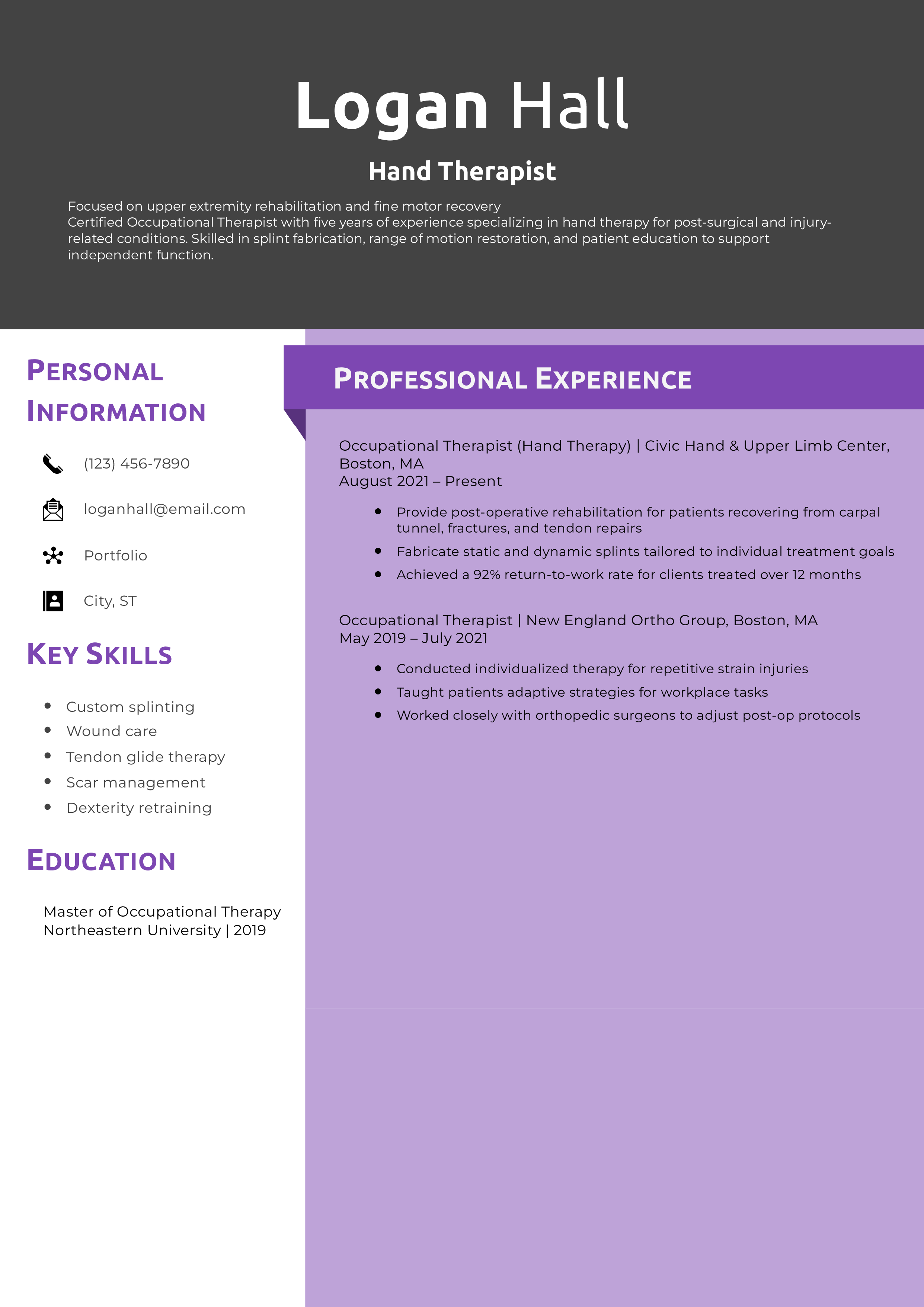
Why this hand therapist resume example is strong:
This resume communicates niche expertise in a specialized therapy area, supported by measurable client outcomes. Write a resume that emphasizes specialization and quantifiable success using strategies from our complete resume writing guide.
School-Based Occupational Therapist Resume Example

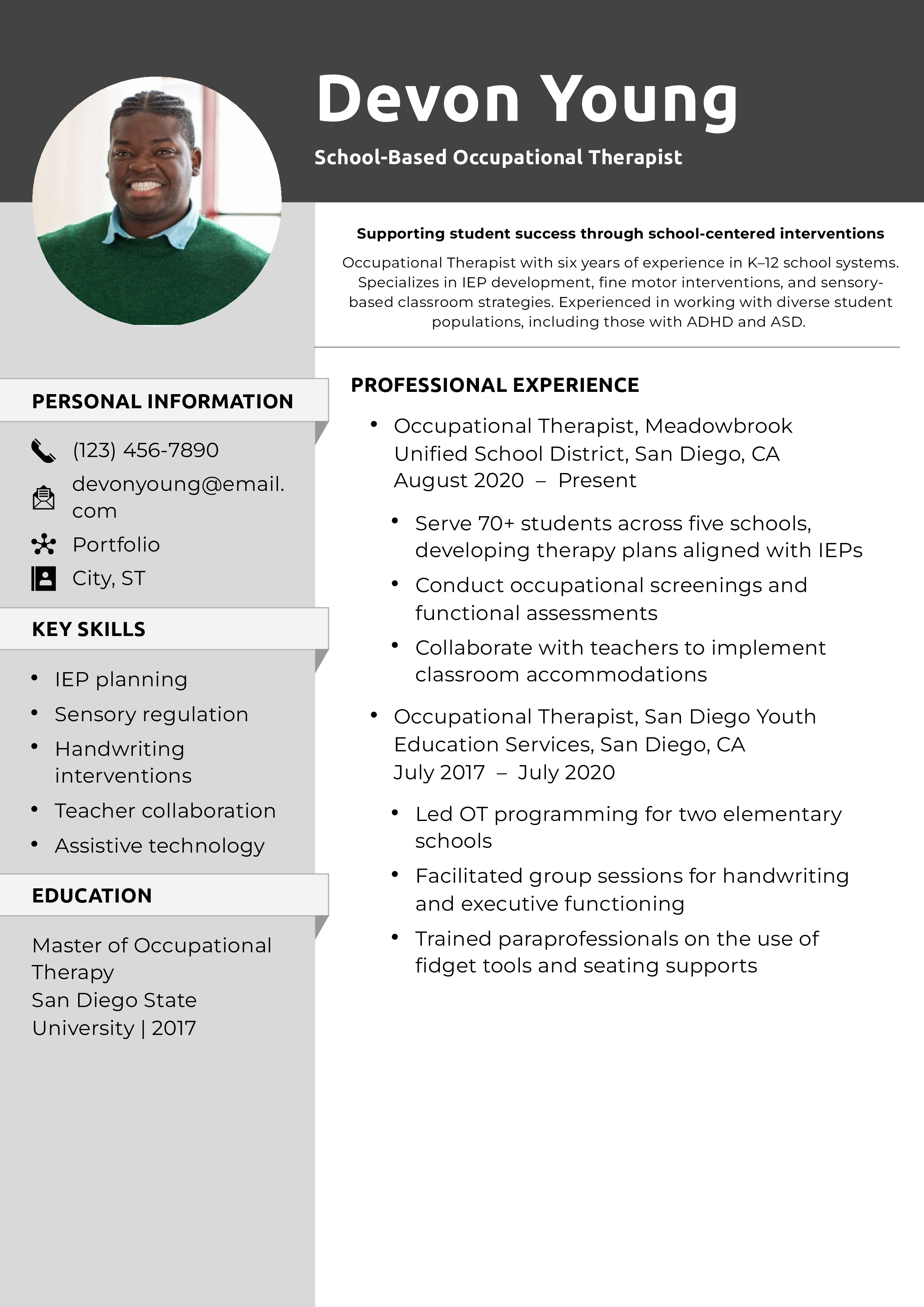
Why this school-based OT resume example is strong:
This resume is tailored to the education sector and clearly connects OT practice to student outcomes. For tips on aligning your resume with job-specific needs, see how to match your resume to a job posting.
Travel Occupational Therapist Resume Example
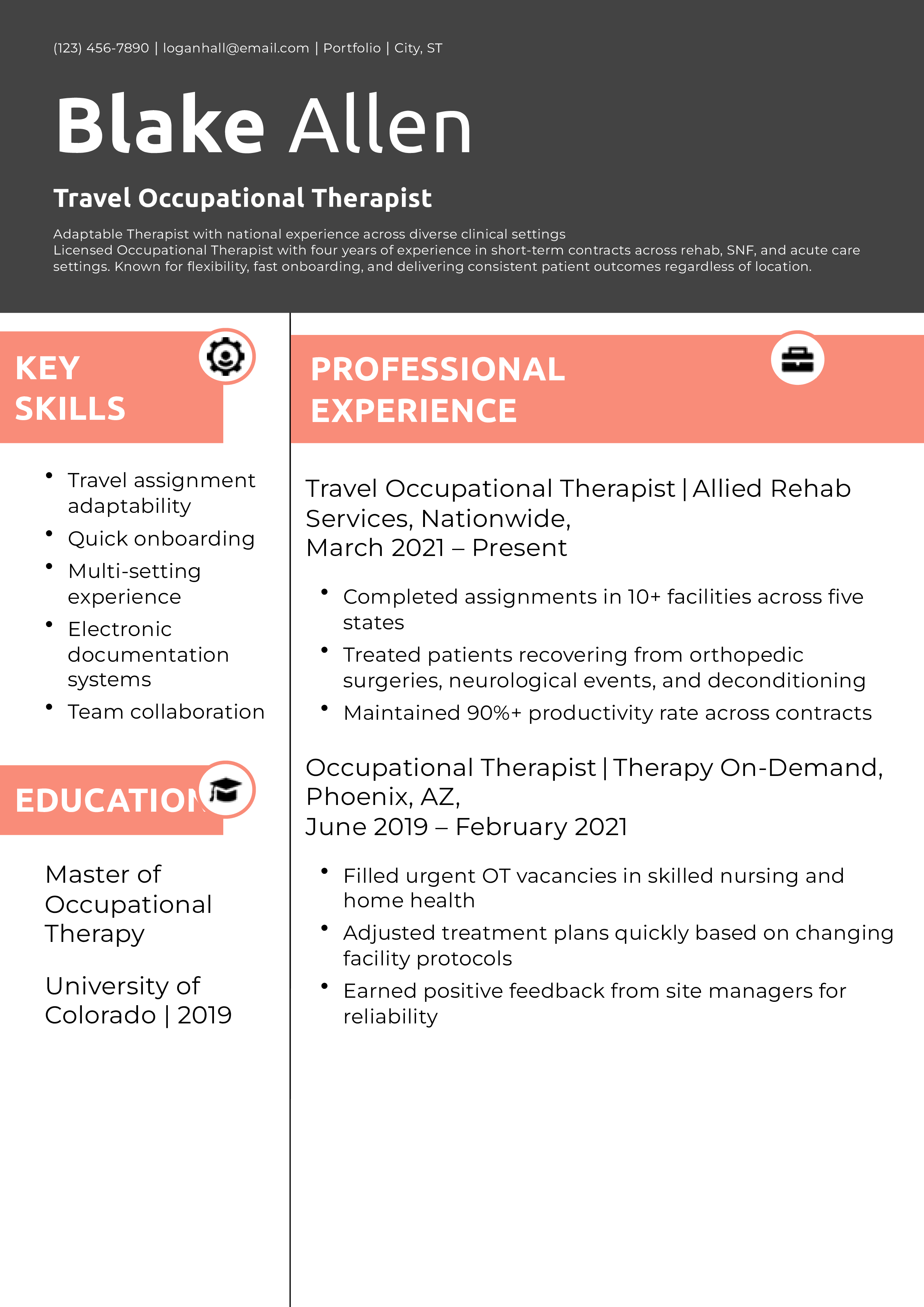
Why this travel OT resume example is strong:
This resume demonstrates career flexibility and consistent performance in high-demand roles. If you’ve worked across multiple contracts, learn how to list promotions and role changes on your resume to reflect dynamic experience.
Home Health Occupational Therapist Resume Example
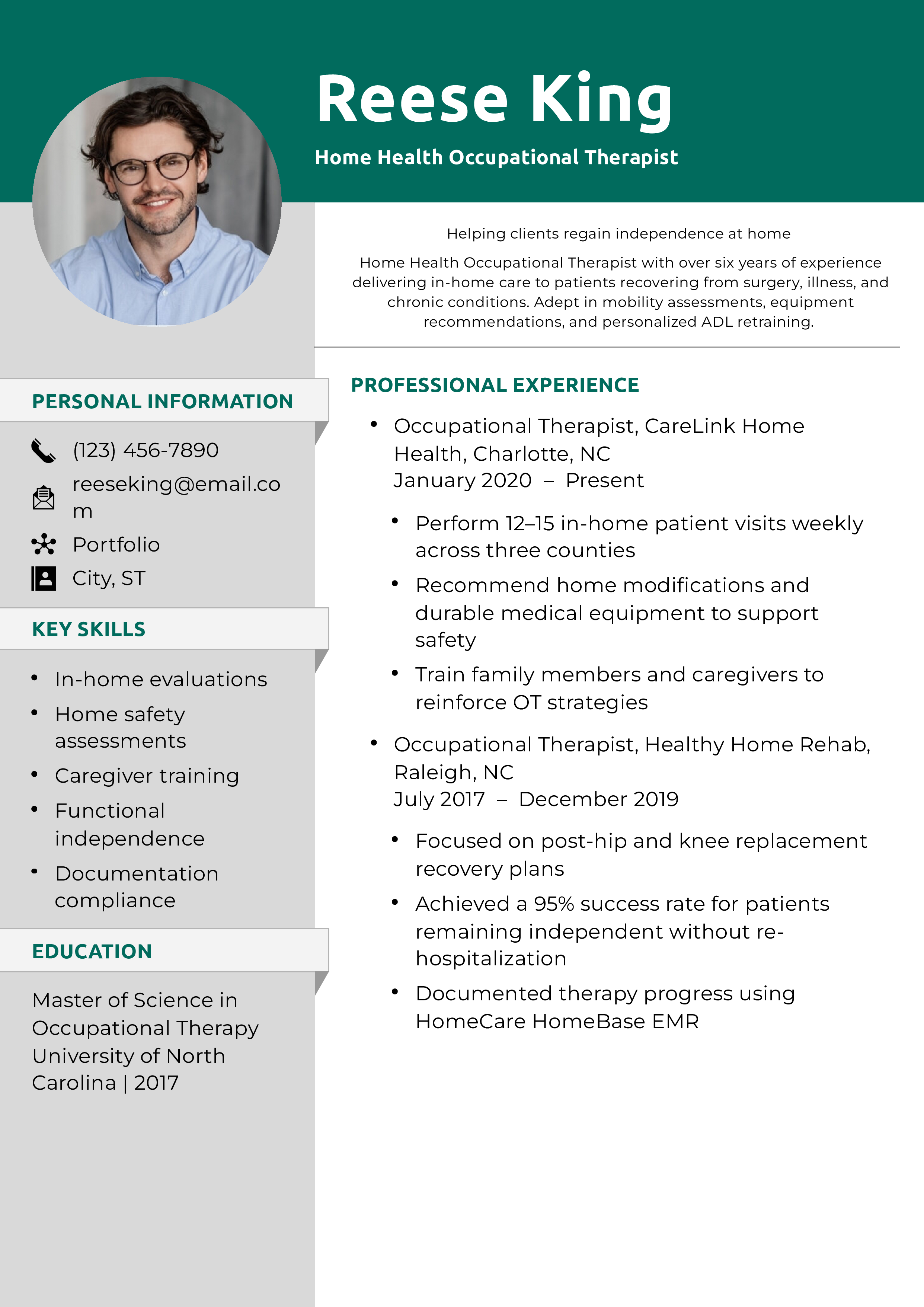
Why this home health OT resume example is strong:
This resume effectively highlights autonomy, patient education, and safety outcomes — key in the home setting. For more on balancing outcomes and context, explore the best resume formats for health care professionals.
Neurorehabilitation Occupational Therapist Resume Example
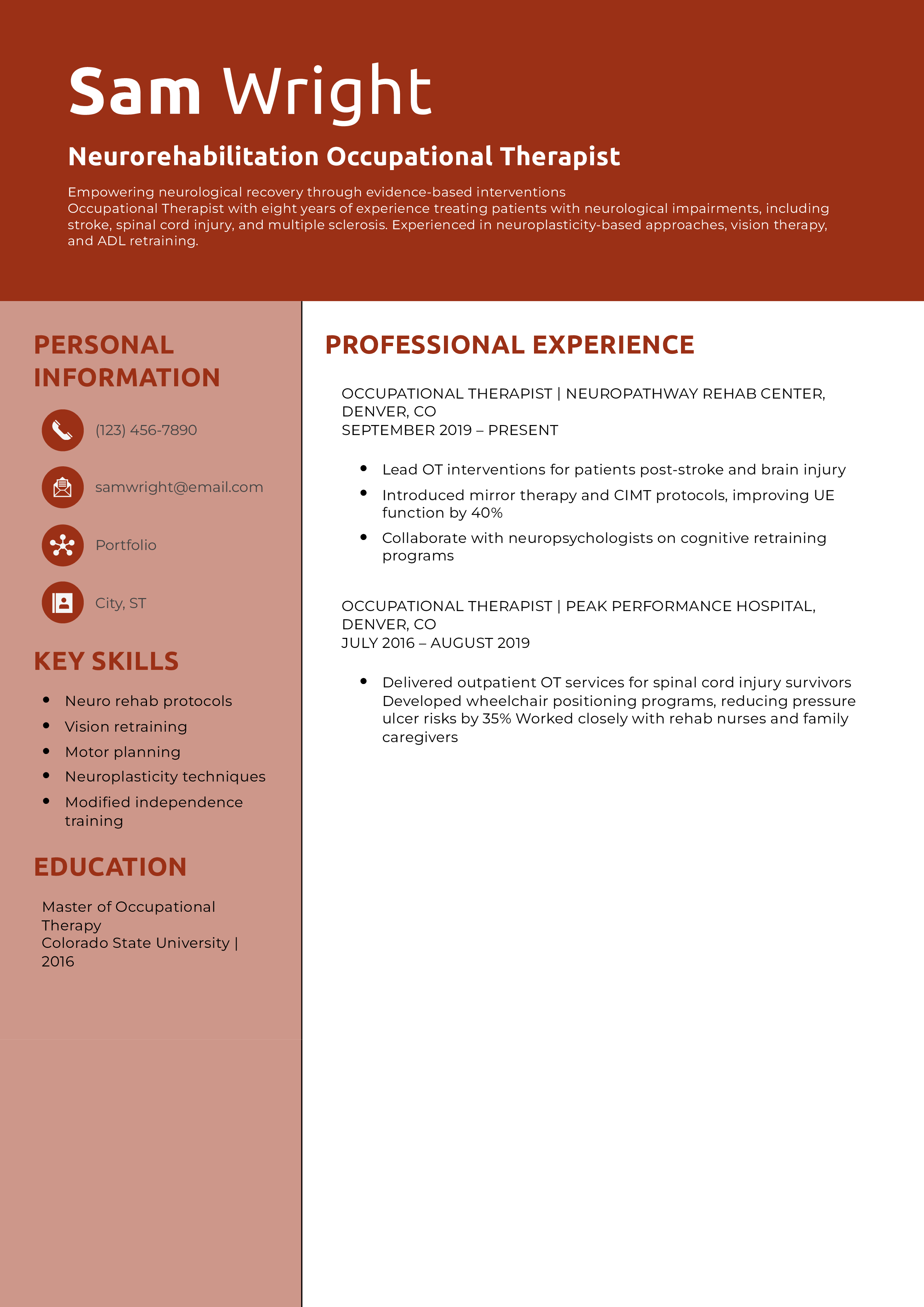
Why this neurorehab OT resume example is strong:
The resume integrates clinical techniques with clear patient outcomes, emphasizing neuro expertise. If you’re unsure how much to include, see how long your resume should be based on your experience level.
Pediatric Occupational Therapist Resume Example
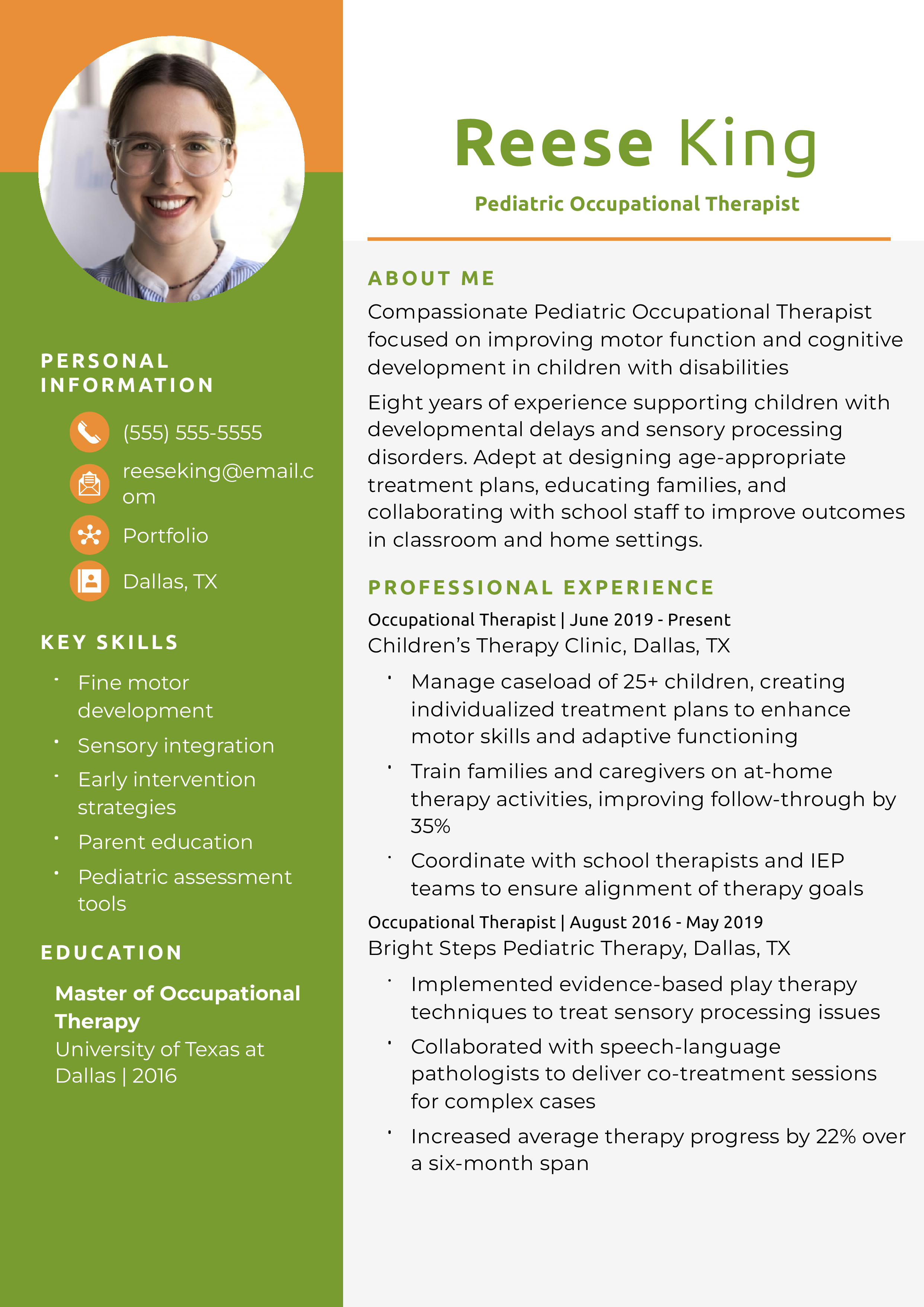
Why this pediatric occupational therapist resume example is strong:
This resume clearly showcases pediatric expertise with a strong emphasis on collaboration and progress metrics. Specific numbers, like the 35% follow-through improvement, bring the accomplishments to life. The resume also demonstrates cross-disciplinary teamwork, which is essential in pediatric care. For more ideas on how to describe therapeutic impact, visit how to write a resume with no experience. Even experienced professionals can borrow concise framing strategies from this guide.
Acute Care Occupational Therapist Resume Example
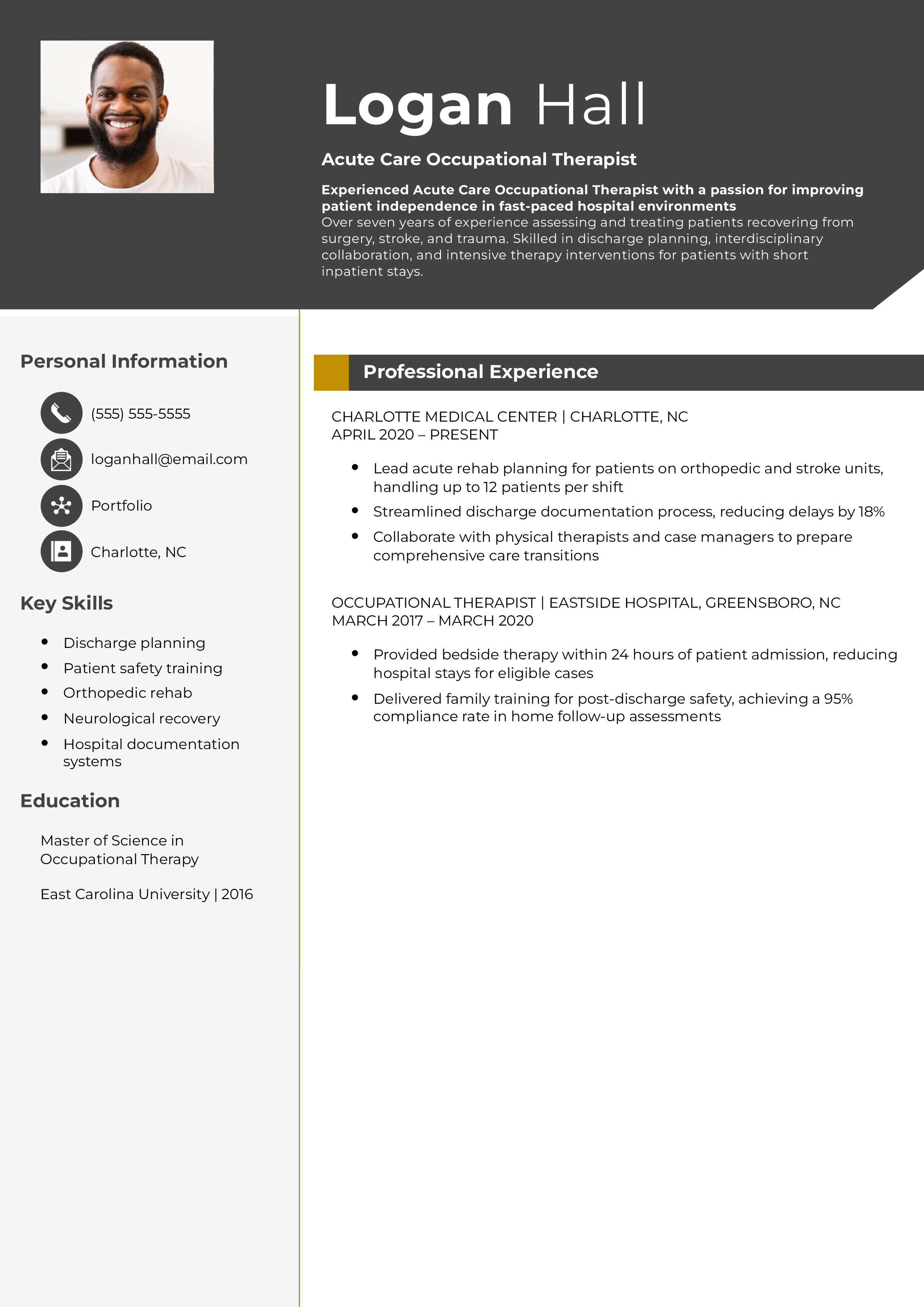
Why this acute care occupational therapist resume example is strong:
This resume highlights the fast-paced demands of hospital-based work and includes actionable outcomes, such as reduced documentation delays. It also reflects strong coordination with the care team. If you want to learn more about how to structure your experience for maximum clarity, see this resource on best resume formats.
Occupational Therapy Assistant Resume Example
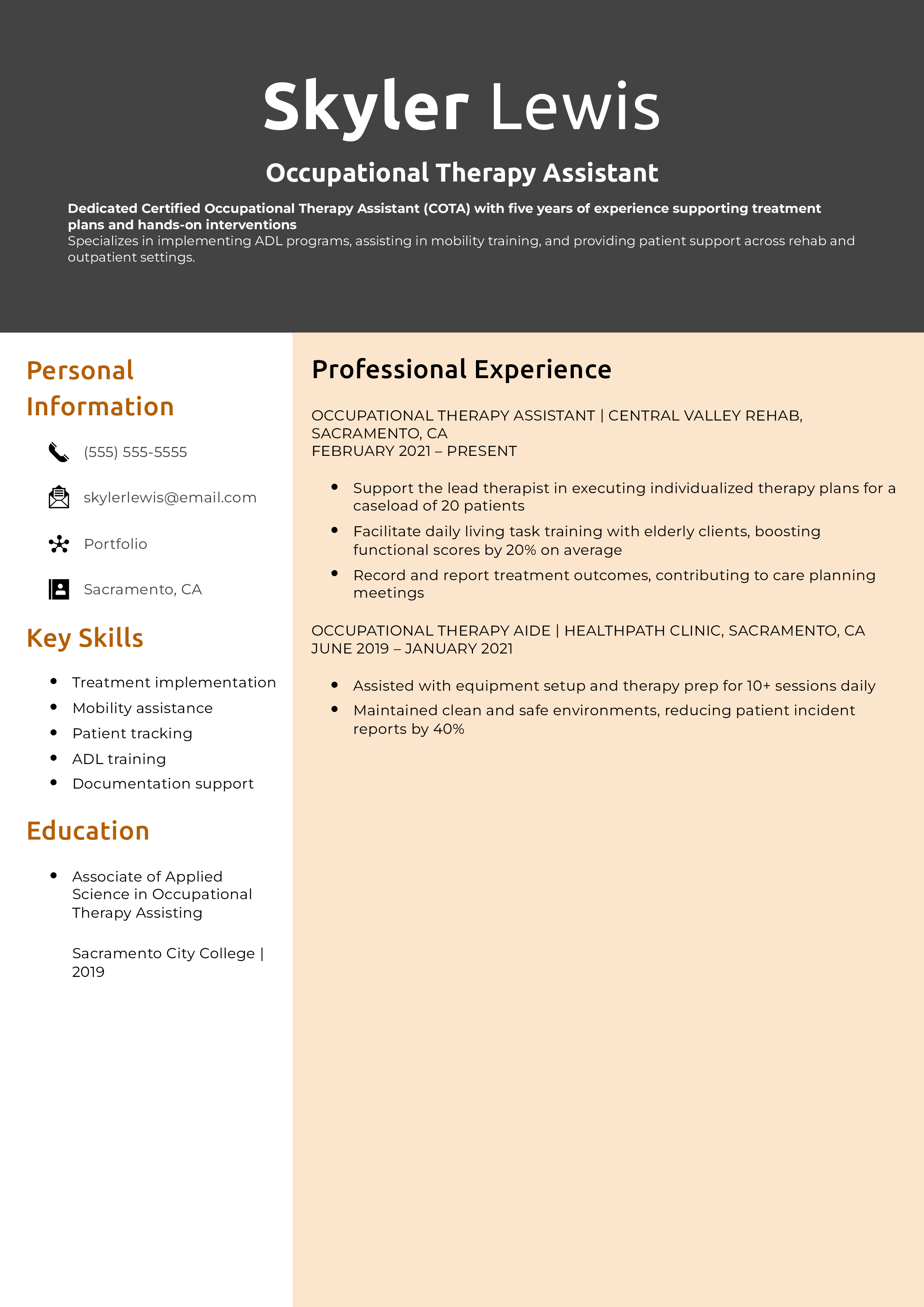
Why this occupational therapy assistant resume example is strong:
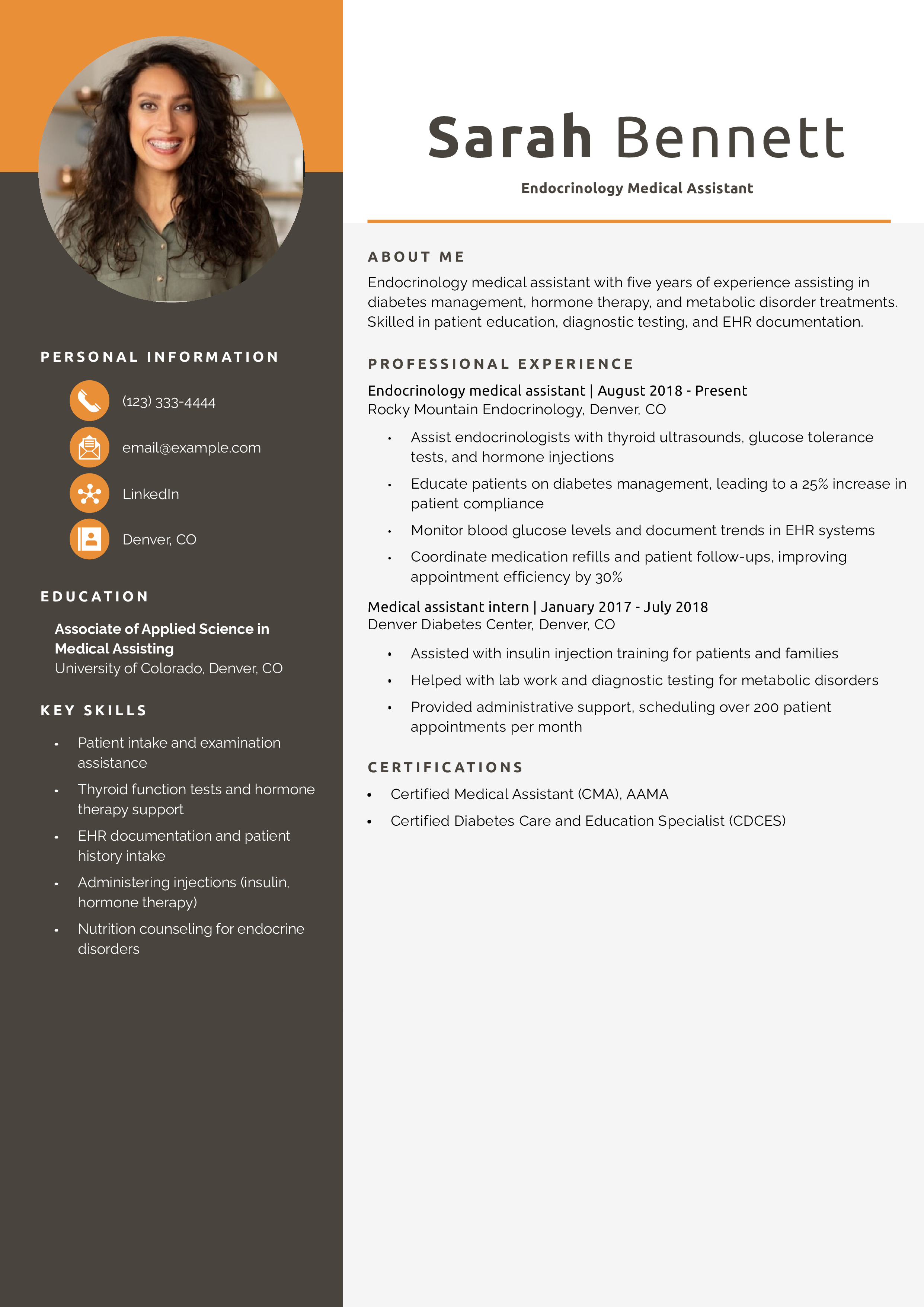
This resume stands out with its clear presentation of support-focused responsibilities and measurable patient outcomes. It’s tailored to the assistant role without overstepping into therapist-level duties. For more insights into presenting certifications and associate degrees, see how to list your education on a resume.
Home Health Occupational Therapist Resume Example 2
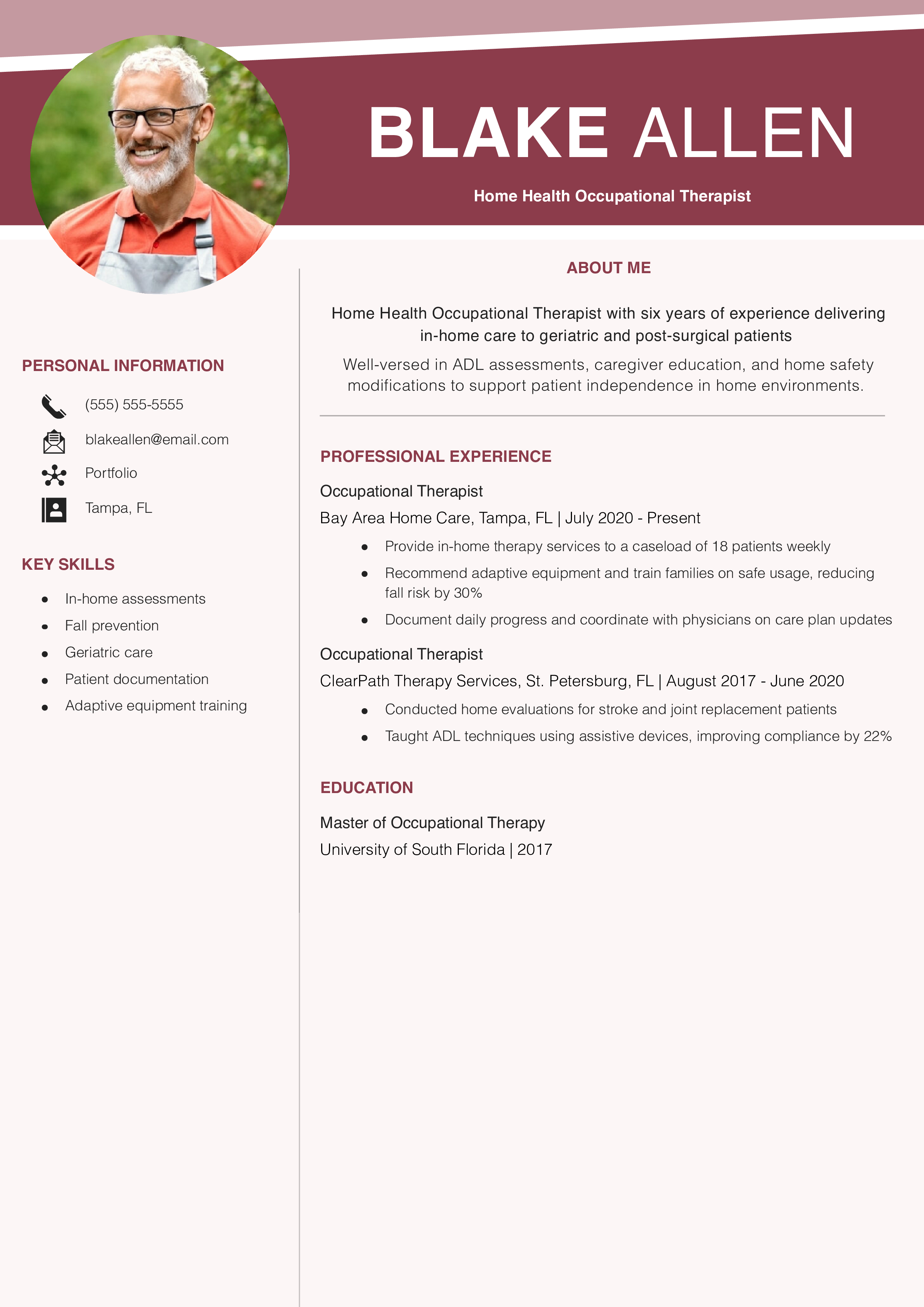
Why this home health occupational therapist resume example is strong:
This resume is highly specific to home health settings, which often involve working independently without direct supervision. Results like fall-risk reduction show value to agencies and families alike. For advice on tailoring your resume to reflect industry-specific needs, visit how to build a resume.
Occupational Therapist in Mental Health Resume Example
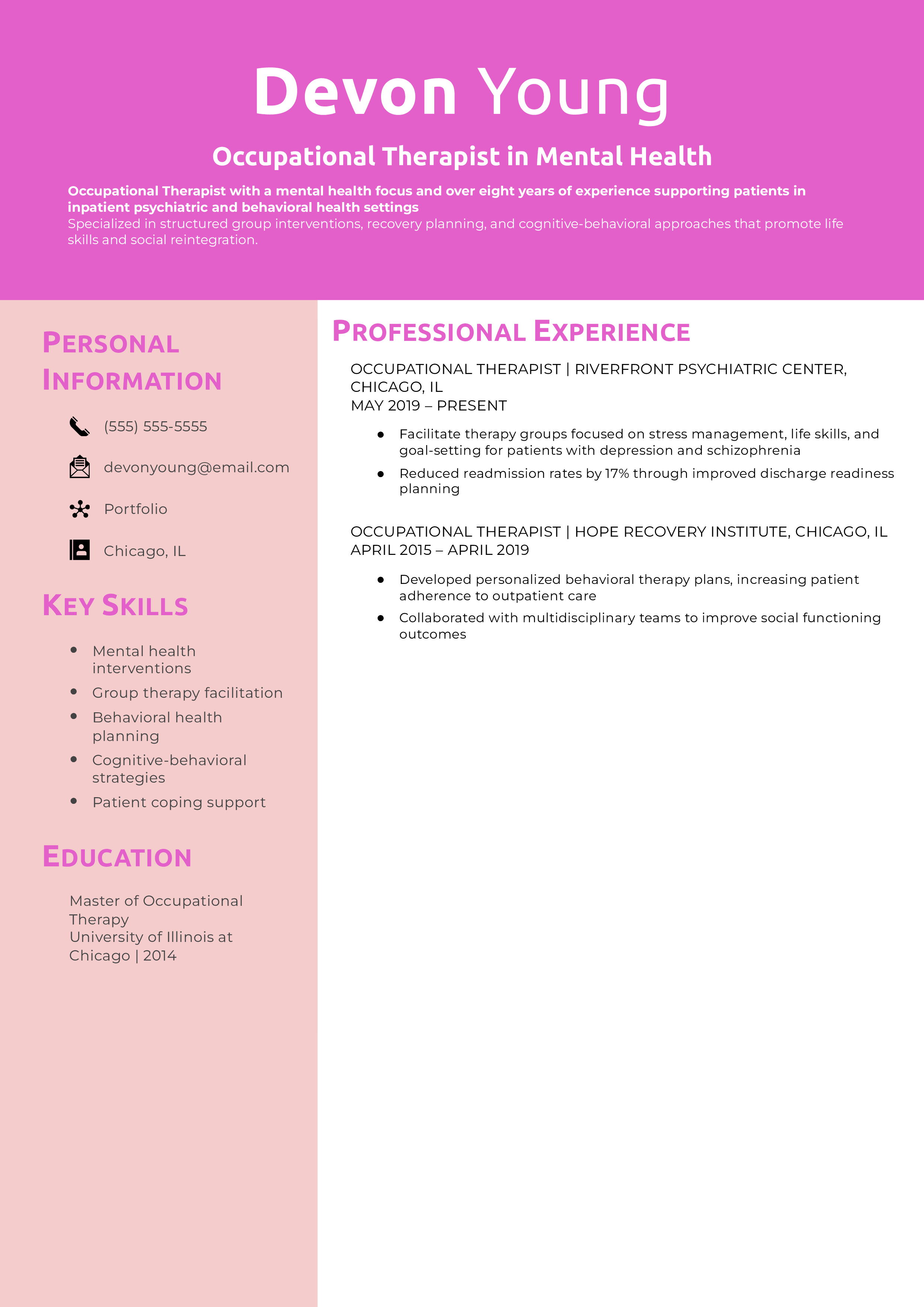
Why this occupational therapist’s mental health resume example is strong:
This resume directly highlights the connection between mental health treatment and occupational therapy through practical, goal-driven work. It also emphasizes collaborative care and program outcomes. Explore ways to frame outcomes like these in your own resume by checking out how to list promotions on a resume.
Occupational Therapist (SNF) Resume Example
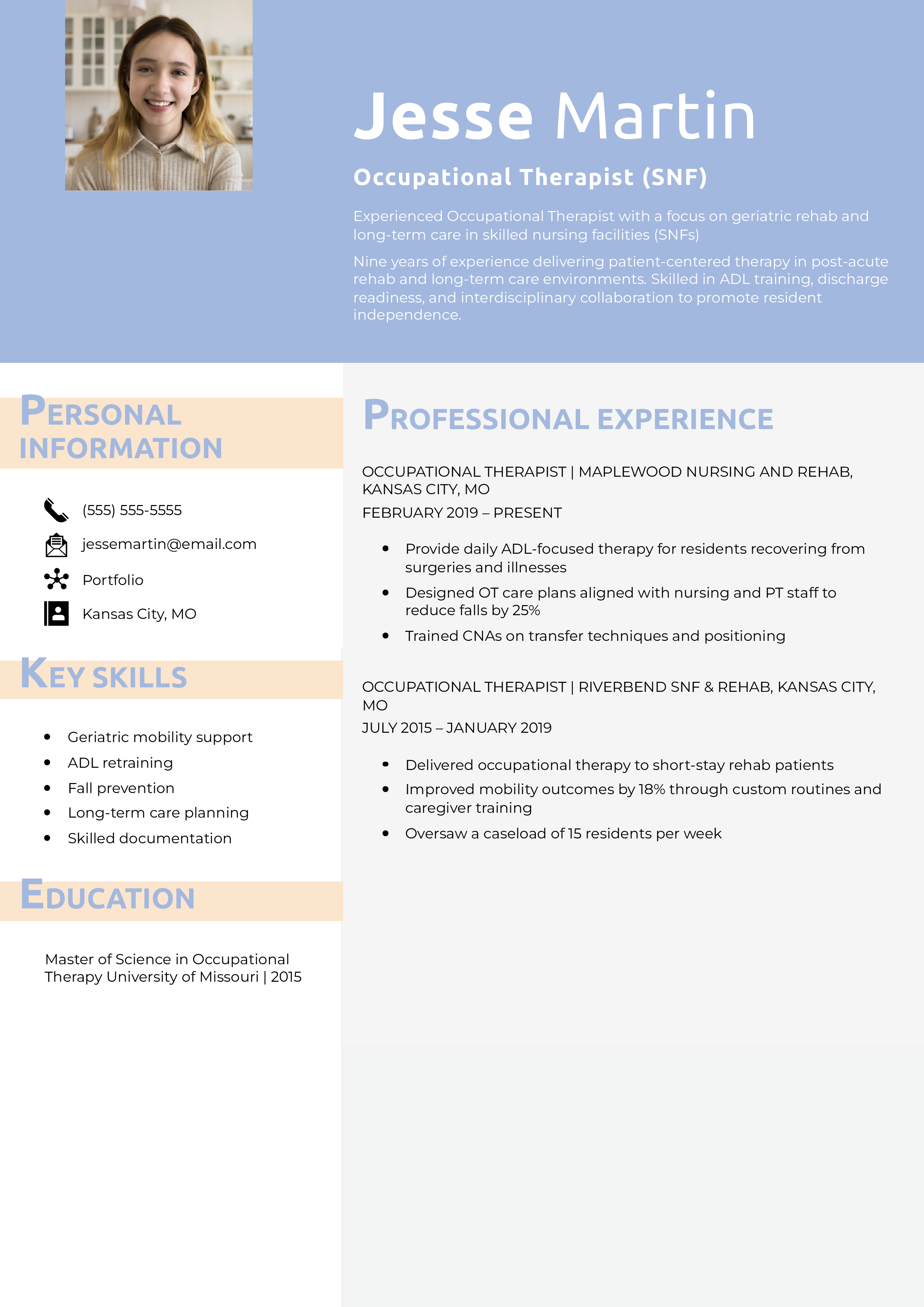
Why this SNF occupational therapist resume example is strong:
This resume demonstrates familiarity with the unique demands of skilled nursing environments, including interdisciplinary teamwork and resident safety. For ideas on organizing clinical experience clearly, check out best resume formats.
Occupational Therapist (Outpatient) Resume Example
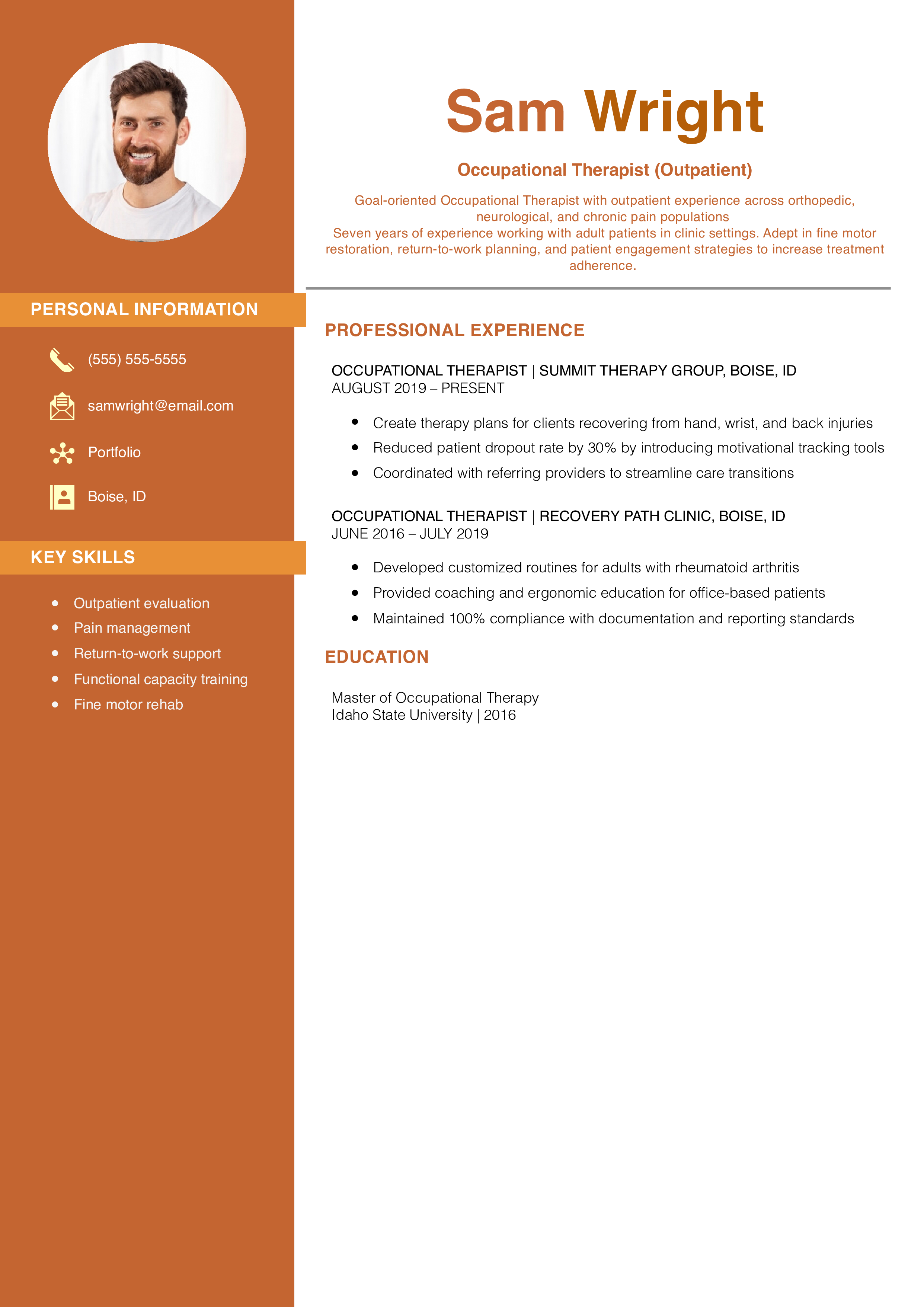
Why this outpatient occupational therapist resume example is strong:
It shows direct connections between patient goals and therapeutic outcomes. Each bullet reflects individualized care and clinic productivity. See more strategies like this in how to build a resume.
Occupational Therapist (Neonatal) Resume Example
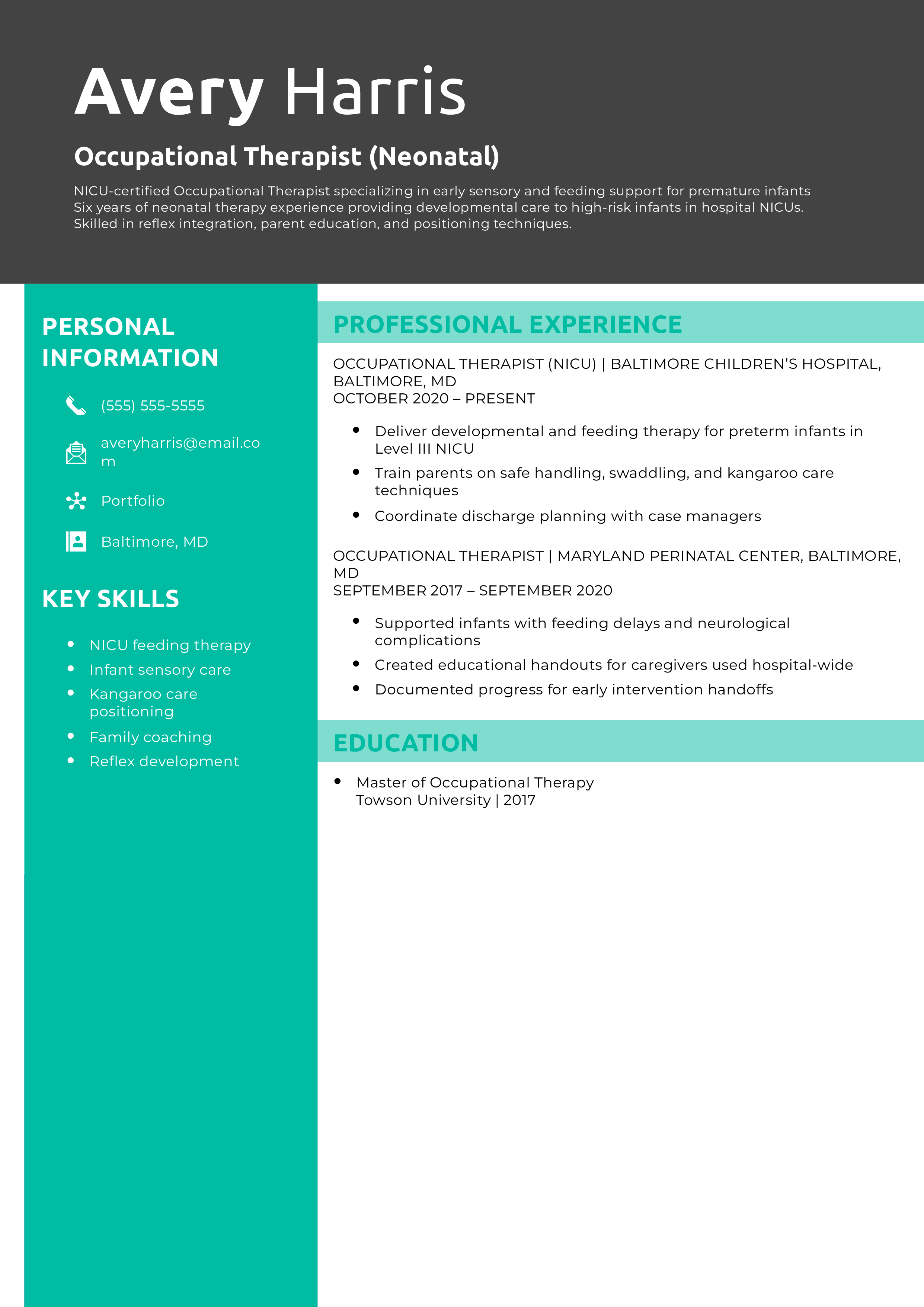
Why this neonatal OT resume example is strong:
This resume emphasizes a rare specialty and balances medical detail with family-centered care. Write a strong resume objective to establish focus for niche roles like this.
Occupational Therapist (Telehealth) Resume Example
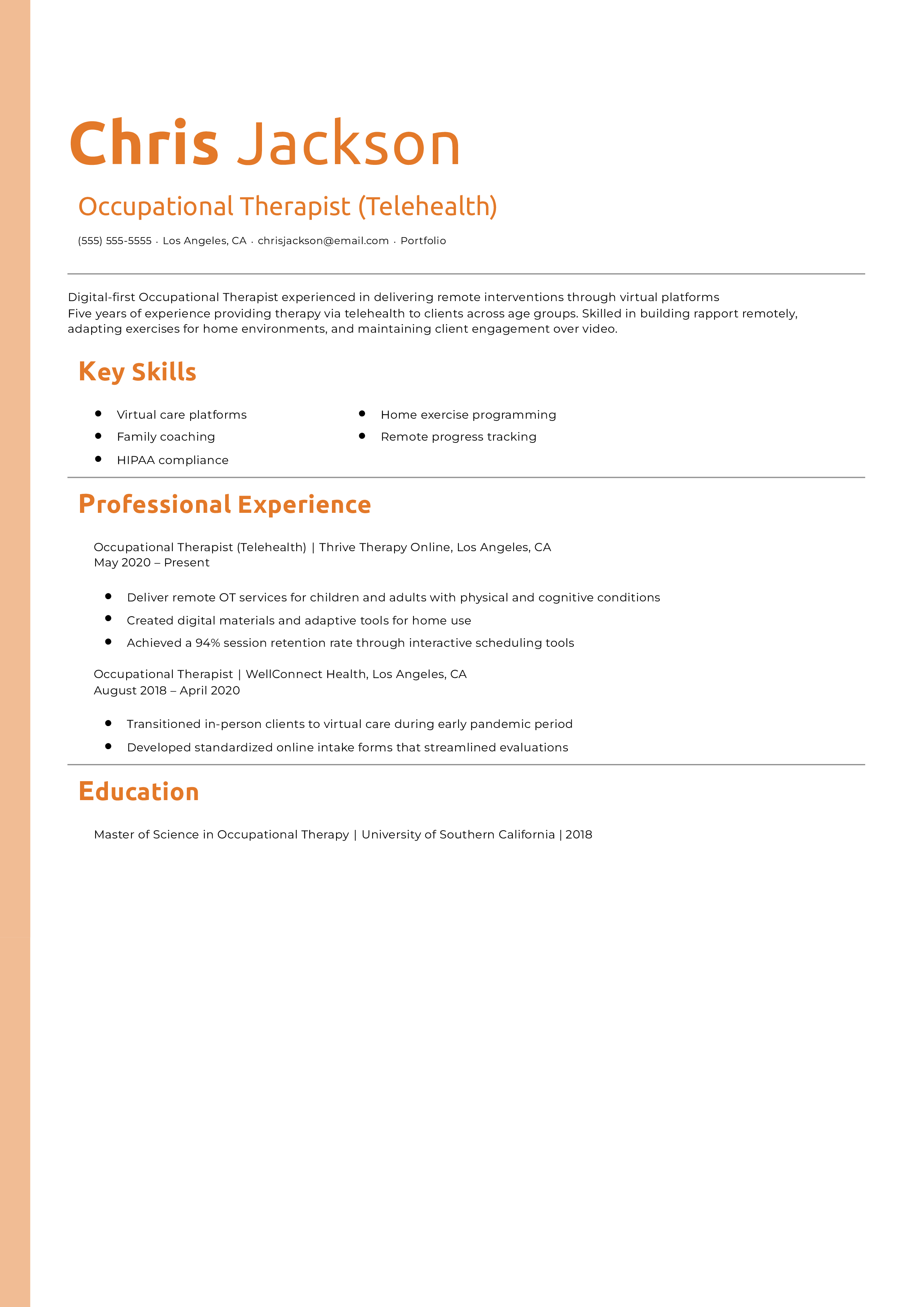
Why this telehealth occupational therapist resume example is strong:
It highlights tech proficiency and shows how remote care can be engaging and effective. To make your resume equally impactful, read how to list promotions and title changes on your resume.
Entry-Level Occupational Therapist Resume Example
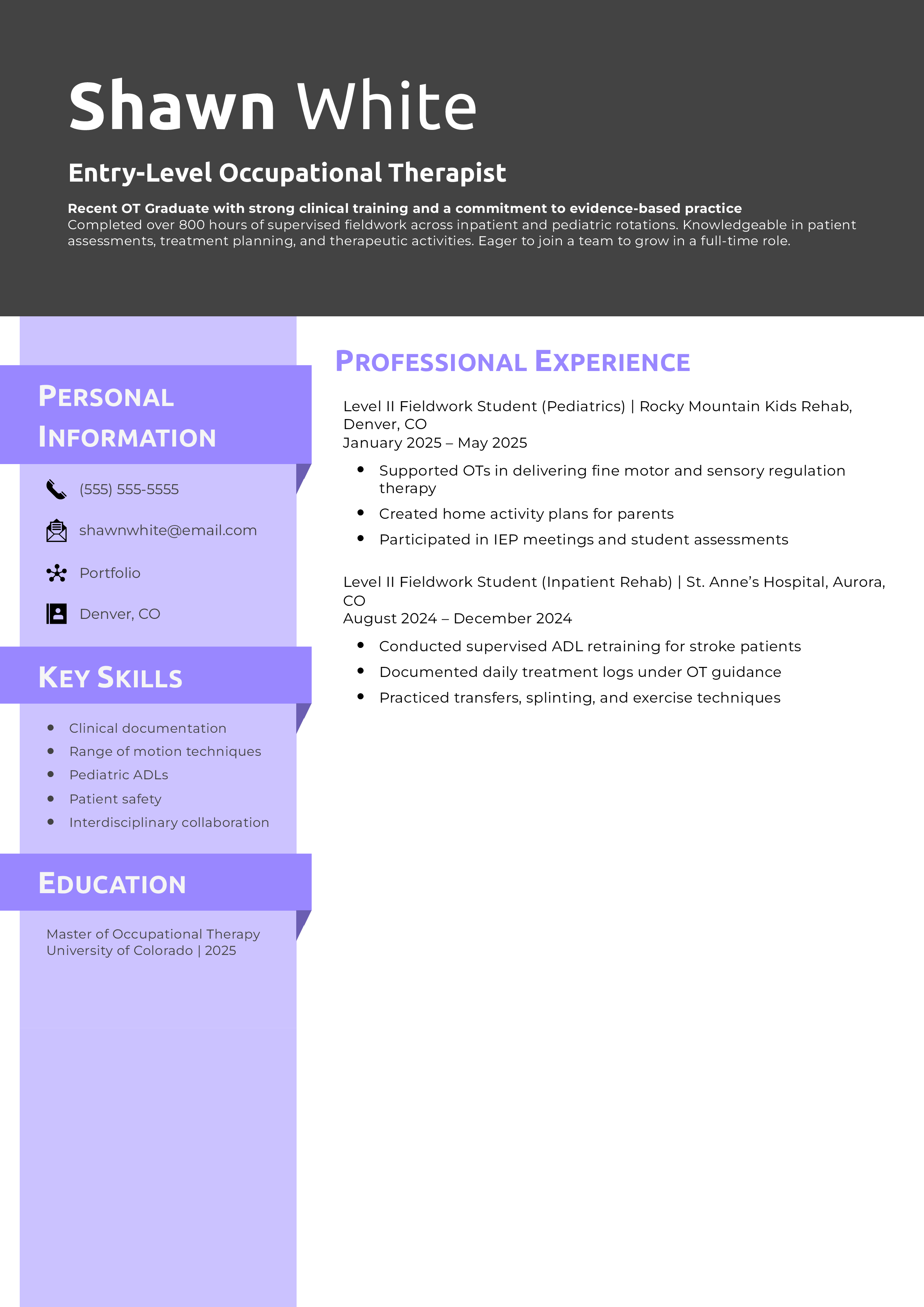
Why this entry-level OT resume example is strong:
It’s focused, honest about experience level, and highlights practical fieldwork that aligns with real job duties. Find out about how to write a resume with no experience while still showing potential and readiness.
Occupational Therapist (Acute Care) Resume Example
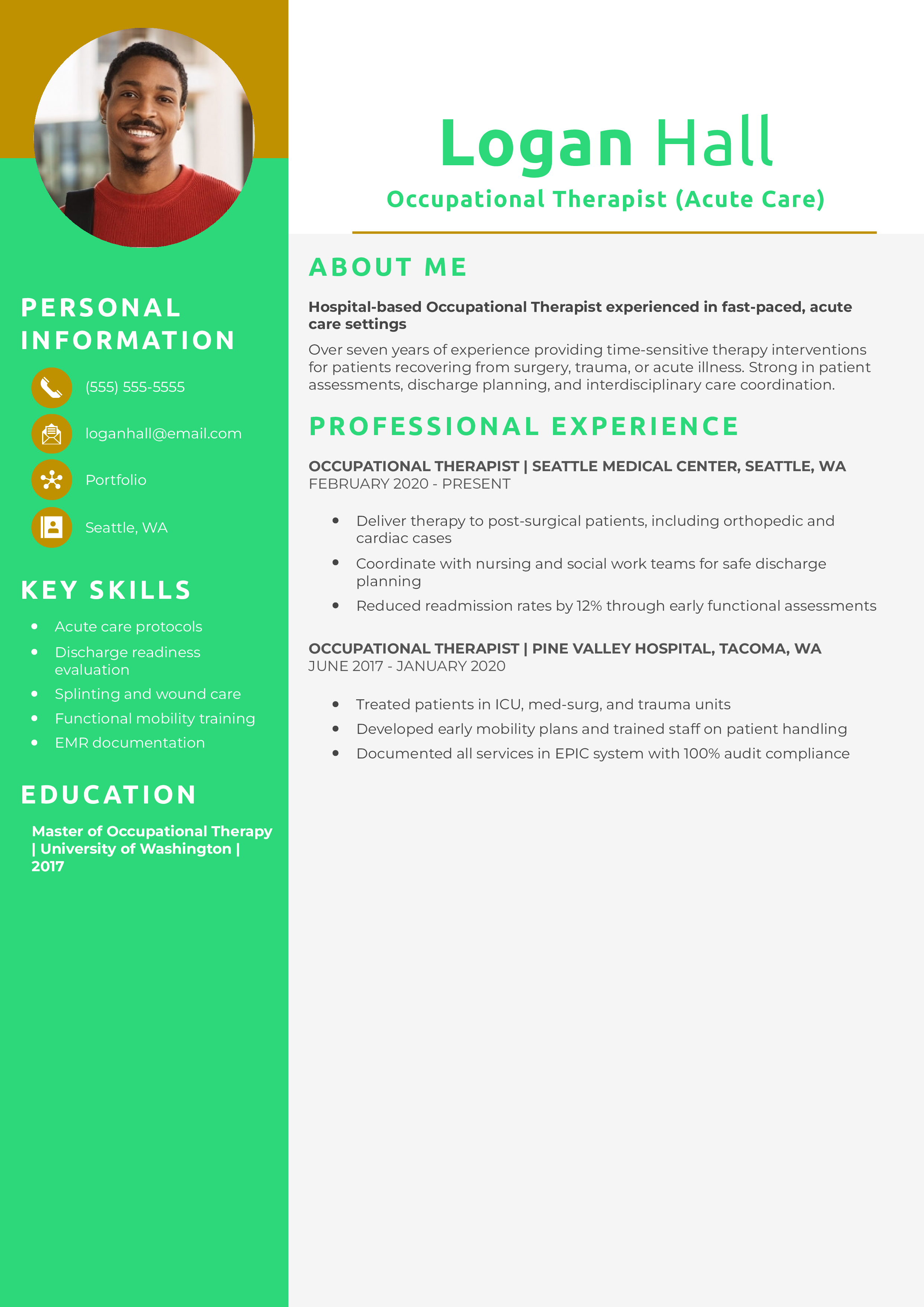
Why this acute care occupational therapist resume example is strong:
This resume communicates experience with hospital workflows, urgency, and teamwork. For guidance on organizing resumes with multiple roles, see how to list your experience clearly.
Occupational Therapist (Rehabilitation Director) Resume Example
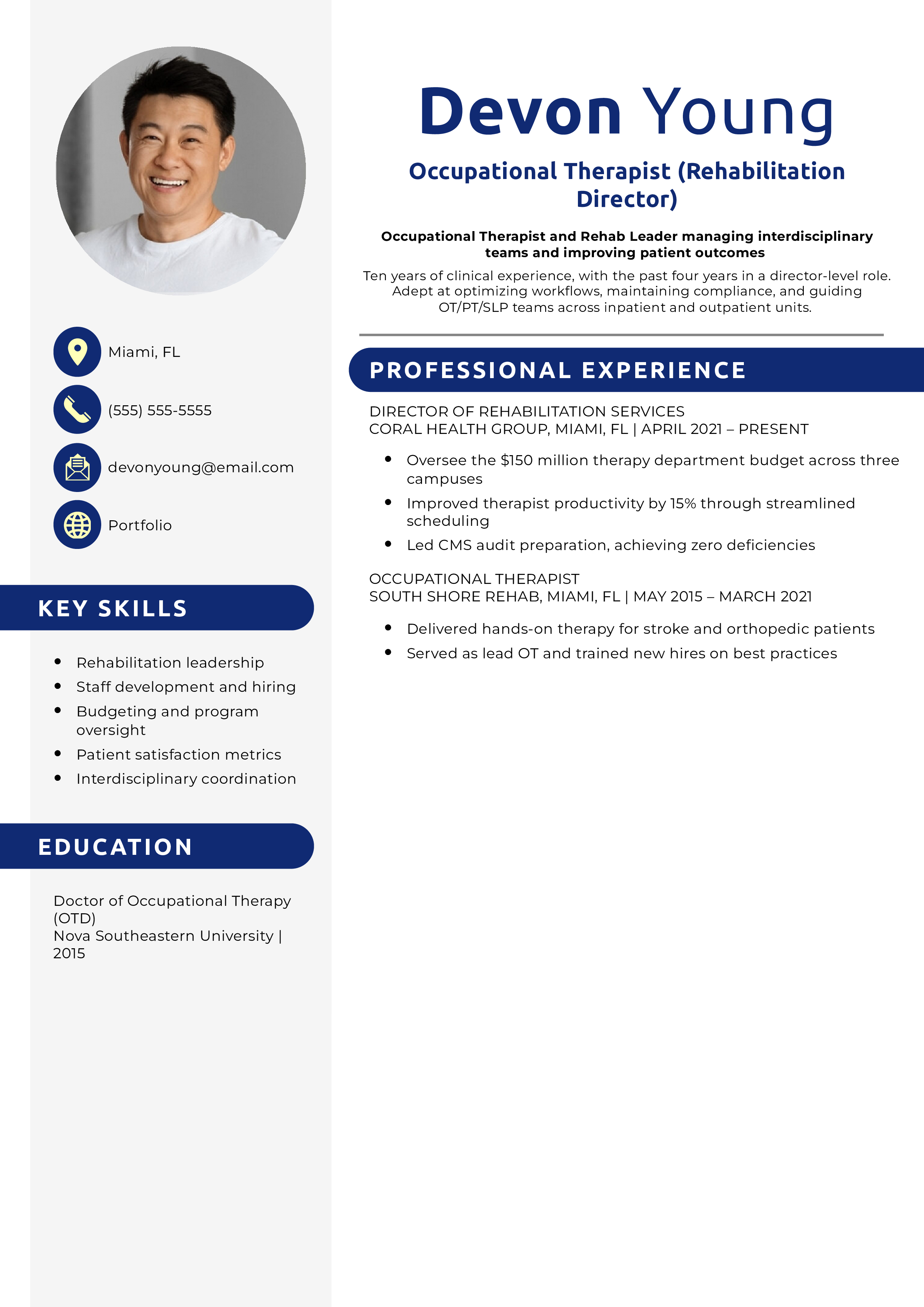
Why this rehabilitation director resume example is strong:
It effectively blends leadership and clinical expertise. Strong metrics support management impact. Learn more about choosing the best resume format for supervisory roles.
Occupational Therapist (Mental Health) Resume Example
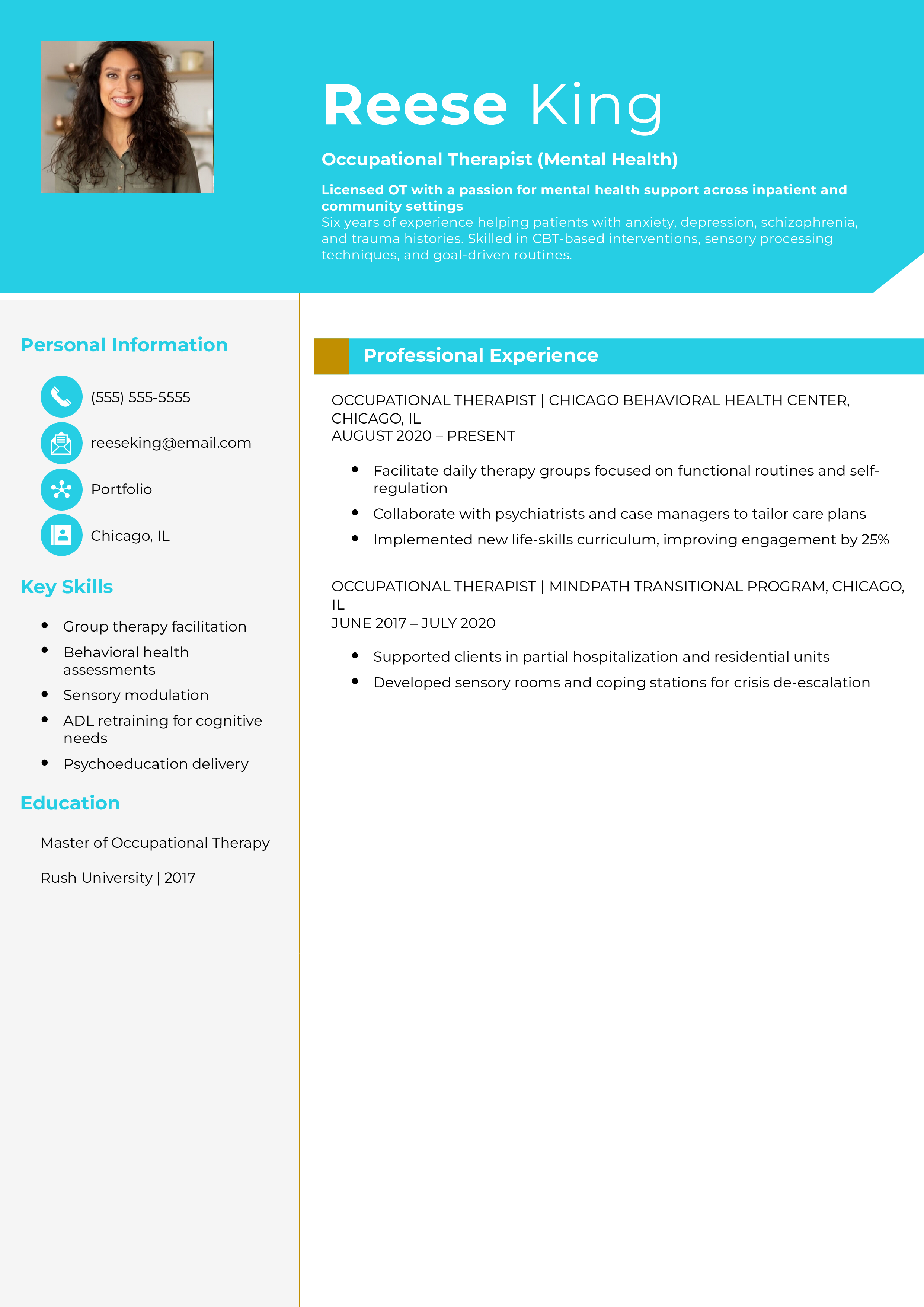
Why this mental health OT resume example is strong:
This resume highlights adaptability and experience with emotionally complex cases. For those applying in specialized fields, it’s helpful to first build a strong foundational resume before tailoring to niche populations.
Occupational Therapist (Assistive Technology) Resume Example

Why this assistive technology OT resume example is strong:
This example showcases deep expertise in a tech-focused niche, using financial and service metrics to build credibility. If you’re entering this area, review how long your resume should be to balance detail with clarity.
Pediatric Occupational Therapist Resume Example 2
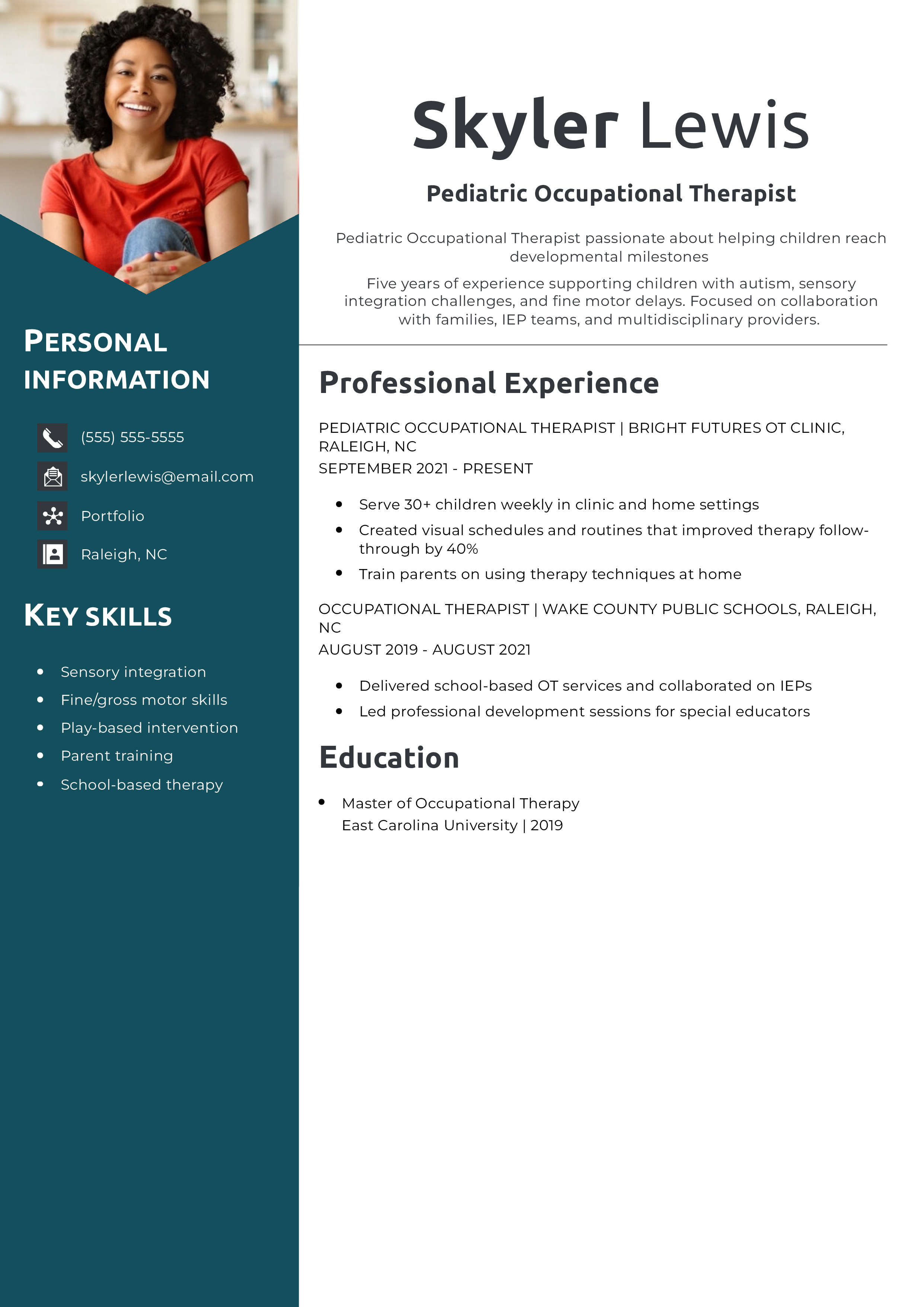
Why this pediatric OT resume example is strong:
This resume focuses on outcomes for children and collaboration with parents and educators. See how to write an effective resume objective that matches early childhood roles.
Occupational Therapy Text-Only Resume Examples
How To Write an Occupational Therapy Resume
1. Select a suitable layout and design for your occupational therapy resume
The layout of your occupational therapy resume should reflect the qualities of your profession — organized, efficient, and client-centered. Hiring managers want to quickly assess your clinical expertise, certifications, and patient care experience, so your layout should guide them to those details without distraction.
A clean, structured format helps showcase your hands-on experience with patients, interdisciplinary collaboration, and treatment planning skills. Avoid using complicated visual elements or heavy blocks of text. Instead, opt for clearly labeled sections and consistent formatting. Whether you’re a new graduate or a licensed occupational therapist (OTR), a streamlined design makes it easier for employers to identify your strengths and qualifications at a glance.
2. Write a compelling profile summarizing your occupational therapy qualifications
Your resume summary sets the tone for the rest of your application, and it’s your chance to create a strong first impression. Use this space to introduce your title, years of experience, and the populations or settings you’ve worked in, such as hospitals, outpatient clinics, or school-based environments.
An effective summary is tailored, specific, and focused on outcomes. Mention any specialized certifications or clinical strengths like orthotic training, stroke recovery, or pediatric developmental therapy. Your summary should convey both your clinical competence and your ability to support patient independence and quality of life.
Strong summary example for an occupational therapist:
Licensed occupational therapist with five years of experience in inpatient rehabilitation settings, specializing in neurorehabilitation and ADL retraining. Proven ability to design personalized therapy plans that increase patient mobility and reduce hospital readmission rates. Passionate about empowering patients to achieve functional independence.
Weak summary example for an occupational therapist:
I am an occupational therapist with experience working in different settings. I help people with therapy and recovery, and I enjoy working with patients. I am looking for a new opportunity where I can grow my skills.
3. Incorporate a results-focused work history section for your occupational therapy resume
The work history section is where you prove your value as an OT. Instead of just listing tasks, focus on how your interventions improved outcomes for patients. Metrics like improvements in functional mobility, reduced falls, increased discharge readiness, or patient satisfaction scores help paint a clear picture of your clinical impact.
Highlight collaboration with interdisciplinary teams, documentation accuracy, use of assessment tools, and any program development initiatives you’ve led. Make each bullet specific and action-oriented to show how your therapy skills translate into measurable results.
Strong experience example for an occupational therapist:
Occupational Therapist | St. Mary’s Rehabilitation Hospital | Philadelphia, PA | April 2020 – present
- Delivered ADL-focused therapy to a caseload of 12 patients daily, improving functional independence in 78% of cases
- Collaborated with physical therapists and case managers to reduce patient discharge delays by 30%
- Led a falls prevention training initiative that decreased incidents in the stroke unit by 40%
- Implemented standardized assessments, including MoCA and FIM to monitor and document patient progress
Weak experience example for an occupational therapist:
Occupational Therapist | St. Mary’s Rehabilitation Hospital | Philadelphia, PA | April 2020 – present
- Worked with patients on therapy
- Helped people improve their skills
- Participated in team meetings
- Completed documentation as required
4. List your education and any pertinent certifications for an occupational therapist
Education and credentials are essential for occupational therapy positions. Be sure to list your degree(s), school name, and city and state, but leave out graduation dates unless you’re a recent graduate. Also include relevant certifications and licensure, such as OTR, NBCOT certification, or state licensure details.
If you’ve completed any advanced training — like lymphedema certification, hand therapy specialization, or sensory integration training — include those here as well. They can differentiate you from other applicants and show your commitment to continuing education.
Education example for an occupational therapist:
Master of Science in Occupational Therapy
Thomas Jefferson University | Philadelphia, PA
Relevant Certifications:
- National Board for Certification in Occupational Therapy (NBCOT) | Certified OTR
- CPR/BLS Certification | American Heart Association
- Lymphedema Management Certification | Norton School of Lymphatic Therapy
5. Highlight your essential abilities and technical proficiencies for an occupational therapist
A well-balanced skills section helps hiring managers quickly assess your capabilities. Include clinical techniques, assessment tools, software systems, and therapeutic approaches relevant to your role. Also, add transferable soft skills like time management or patient advocacy, but avoid vague terms like “communication” or “people skills.”
Tailor your skill list to reflect the specific needs of the job posting, especially for roles in pediatrics, geriatrics, or mental health. Ensure your skills align with the setting you’re targeting — whether it’s home health, inpatient rehabilitation, or outpatient care.
| Over 20 hard and soft skills for occupational therapist resumes: | |
|---|---|
| ADL retraining | Assistive technology |
| Care planning | Cognitive rehabilitation |
| Constraint-induced movement therapy | Discharge planning |
| Electronic health records (EHR) | Fine motor skill development |
| Functional mobility training | Geriatric care |
| Group therapy facilitation | Home safety assessments |
| Inpatient rehab therapy | Lymphedema management |
| Manual therapy | Neurodevelopmental treatment (NDT) |
| Orthotics and splinting | Patient education |
| Pediatric OT | Sensory integration therapy |
| Stroke rehabilitation | Wheelchair assessments |
How To Pick the Best Occupational Therapy Resume Template
Selecting the right resume template for an occupational therapist role involves striking a balance between clarity and professionalism. Your resume should be easy to navigate, with well-defined sections that clearly outline your clinical experience, certifications, and skills.
Avoid flashy visuals or over-styled templates. These can distract from your qualifications and make it harder for hiring managers (or ATS) to scan your resume. Instead, go for a clean layout that gives equal space to your summary, work history, education, and licensure. This helps ensure the information that matters most is front and center. The best templates support your content without overshadowing it.
Resume.org offers free, HR-approved resume templates to help you create a professional resume in minutes.
Build Your ResumeFrequently Asked Questions: Occupational Therapy Resume Examples and Advice
Common action verbs for occupational therapy resumes include:
| Action Verbs | |
|---|---|
| Assessed | Collaborated |
| Designed | Educated |
| Evaluated | Facilitated |
| Implemented | Led |
| Modified | Monitored |
| Planned | Provided |
| Recorded | Restored |
| Trained | |
These verbs demonstrate clinical activity, patient interaction, and teamwork.
To align your resume with the job, carefully review the posting and highlight the specific skills, settings, or populations they’re looking for. If the role focuses on home health, emphasize related experience. If it mentions a high volume of stroke rehab cases, showcase your neurorehabilitation skills. Match your bullet points and skill keywords with the language of the posting to help your resume pass ATS scans and connect with human readers.
The best resume format for occupational therapists is reverse chronological. This format highlights your most recent experience and enables hiring managers to visualize your clinical progression over time. It also allows space to feature licensing and certifications, which are critical in OT roles. Use clear headings, consistent formatting, and ample white space to keep the content easy to read.

Head of Career Advising
Kara Dennison, SPHR, CPRW, EC is an Executive Career and Leadership Coach, Organizational Strategy Consultant, and CEO of Optimized Career Solutions. With certifications as a Senior Professional in Human Resources (SPHR), Professional Resume Writer (CPRW), and Encouragement Consultant (EC), Kara brings a unique blend of strategic insight, behavioral science, and personal development to her work. Her career began in corporate recruiting and HR leadership, where she partnered with C-suite executives to hire top performers and reviewed more than 500,000 resumes. That experience ignited her passion for helping high-achieving professionals clarify their path, tell their story with impact, and advance into roles they love.
Today, Kara coaches executives and consults with organizations on culture, communication, and leadership development. She’s been named a Top 101 Global Employee Engagement Influencer by Inspiring Workplaces for 2023, 2024, and 2025, and contributes regularly to Forbes on topics like career growth, leadership trends, and the evolving workplace. Her work has appeared in Fast Company, LifeHacker, Thrive Global, and other leading outlets. Through one-on-one coaching, brand strategy, and organizational consulting, Kara’s mission is simple: empower professionals and leaders to live impactful lives, showing up with clarity and confidence so they and their teams can thrive.
Resume.org offers free, HR approved resume templates to help you create a professional resume in minutes. Choose from several template options and even pre-populate a resume from your profile.