


Key Takeaways

  • Emphasize specializations: Quickly highlight your nursing specialties and commitment to patient care in your resume summary to capture the attention of hiring managers from the start.
  • Detail quantifiable achievements: Use specific numbers and outcomes to illustrate your impact in previous nursing roles, such as patient satisfaction rates or improvements in care delivery, in the professional experience section.
  • Use keywords for ATS: Include relevant nursing skills and keywords from the job posting in your resume to ensure it passes through Applicant Tracking Systems (ATS) and reaches hiring managers.

Emergency Room (ER) Nurse Resume Examples and Templates [Download in App]

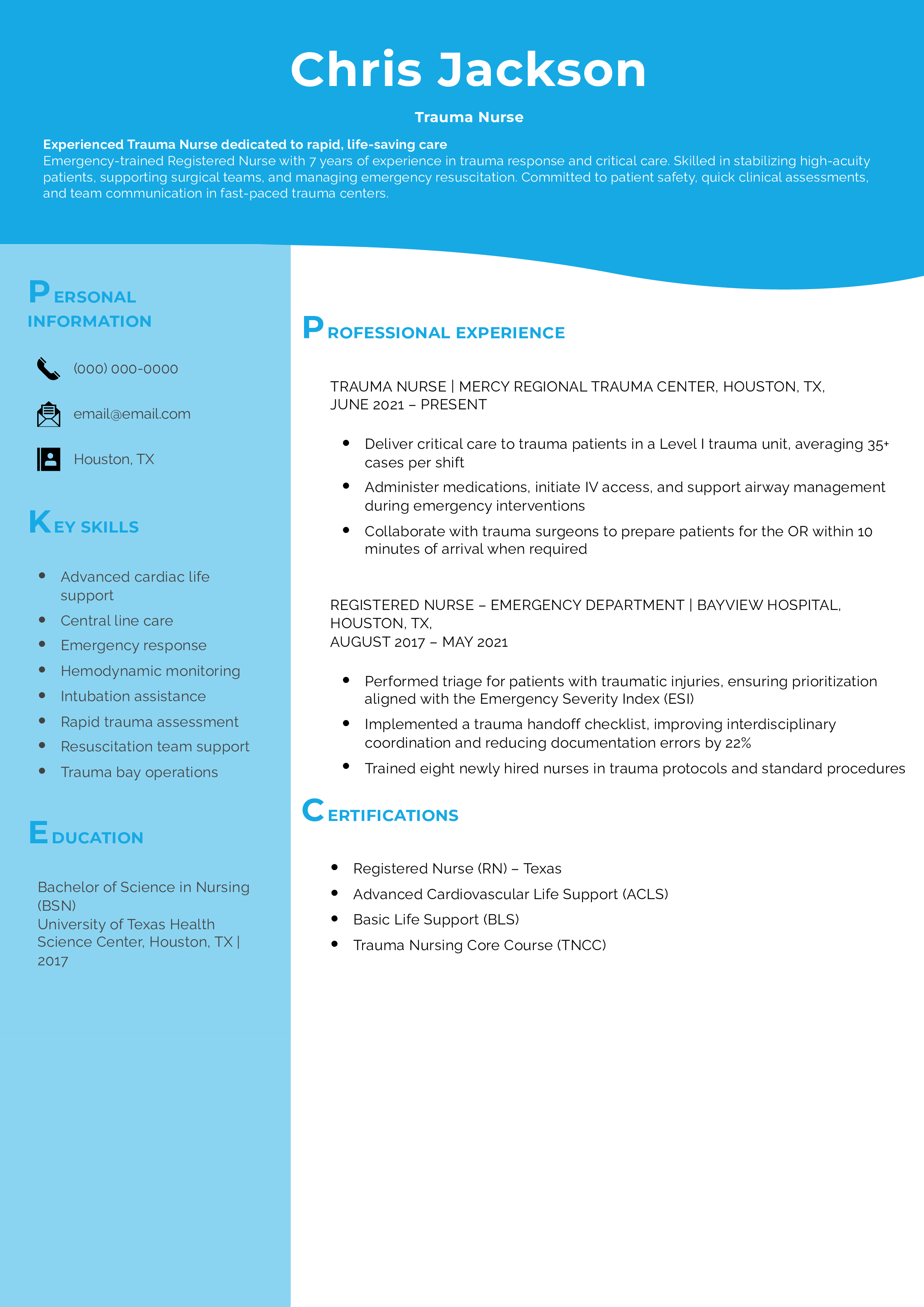
Trauma Nurse Resume Example

Why this trauma nurse resume example is strong:

This resume clearly showcases trauma-specific expertise, uses action-oriented language, and includes measurable achievements. The candidate highlights experience in Level I trauma care and a commitment to rapid interventions — skills crucial for trauma roles. Learn how to create a resume that’s tailored to your exact strengths: How To Build a Resume.


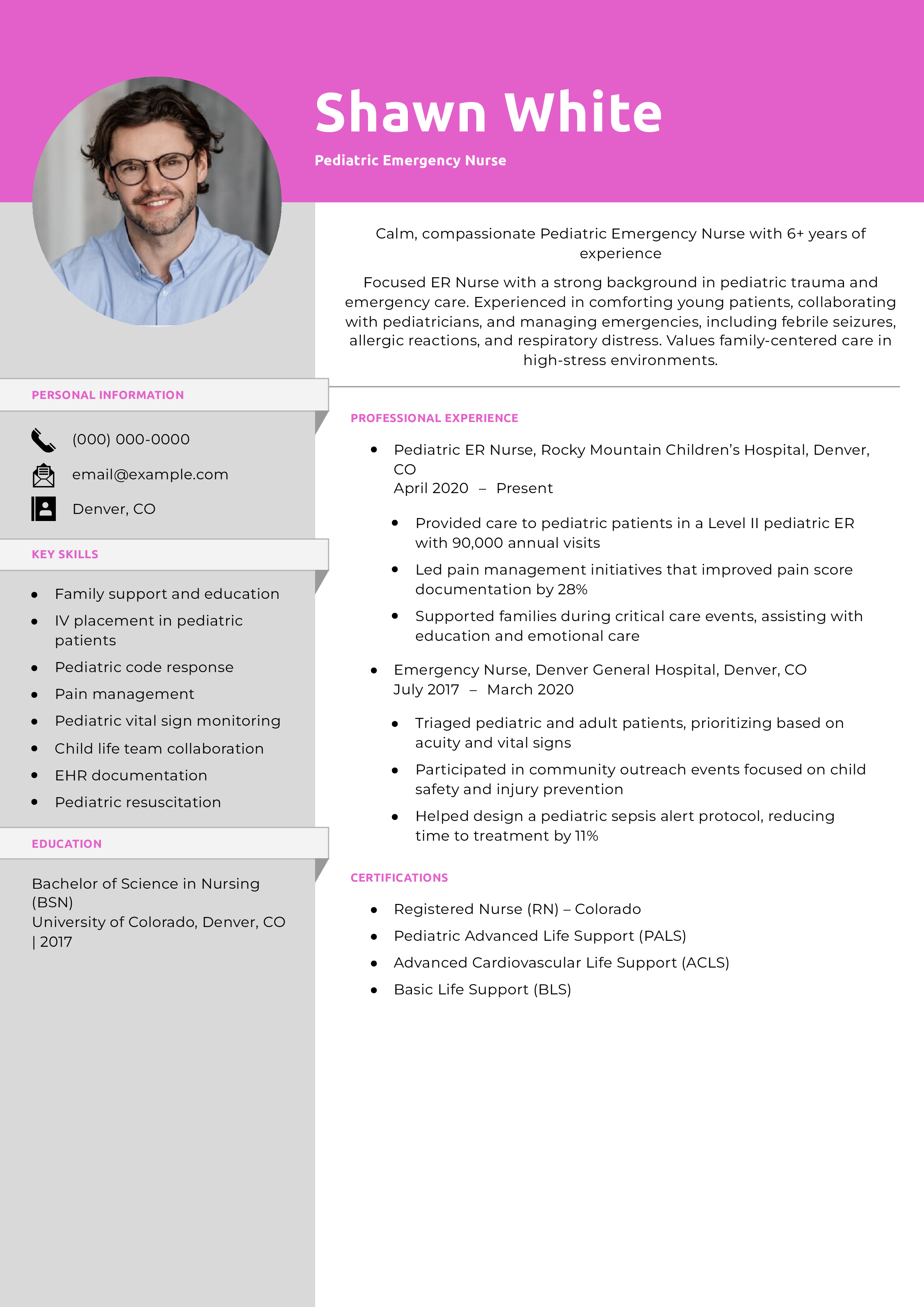
Pediatric Emergency Nurse Resume Example

Why this pediatric ER nurse resume example is strong:

This resume blends clinical expertise with a human-centered focus on pediatric care. It demonstrates technical and emotional competencies key for pediatric roles. Results are tied to real-world improvements. Learn How To List Your Education on a Resume.


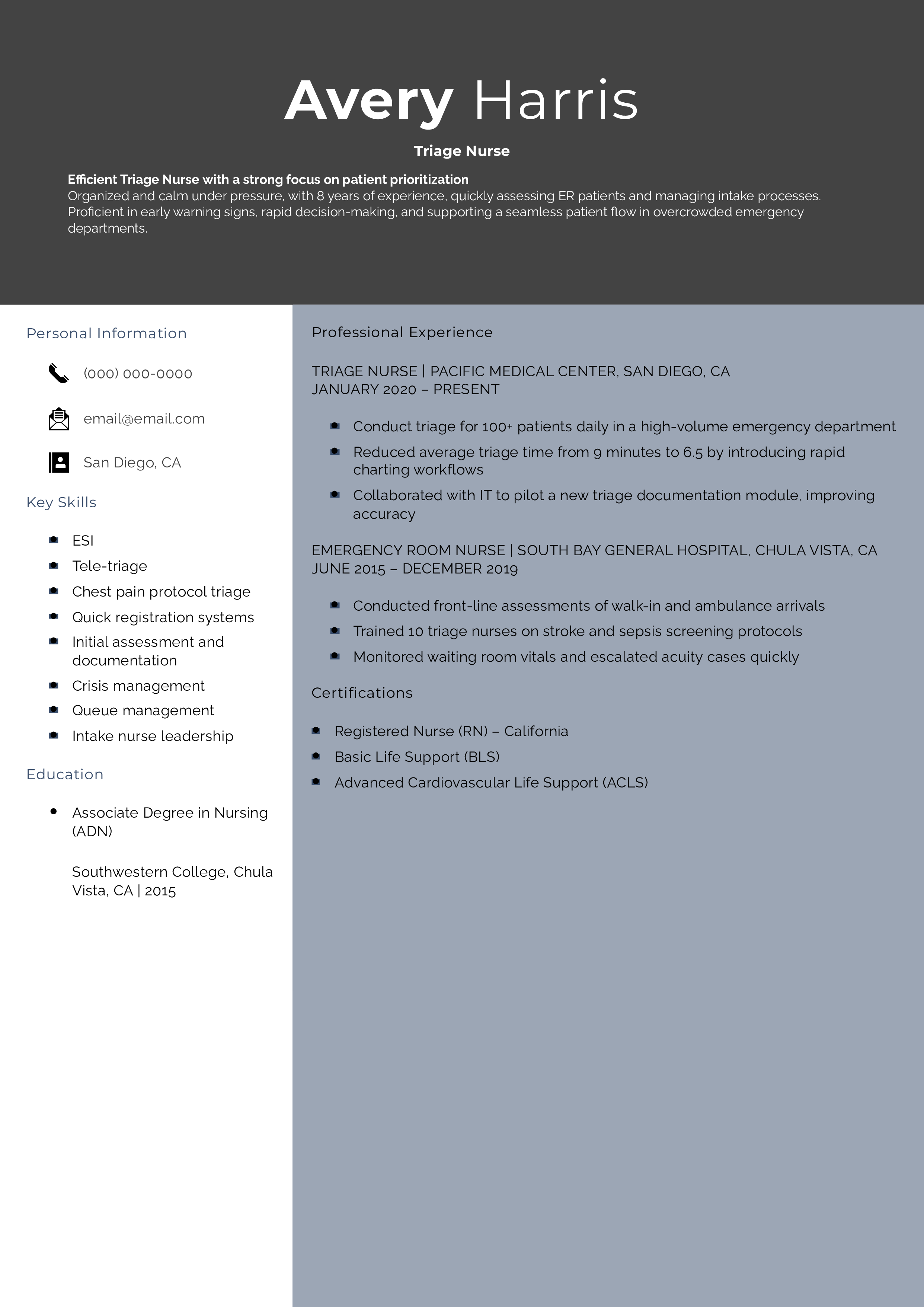
Triage Nurse Resume Example

Why this triage nurse resume example is strong:

This resume shows leadership in intake operations and a commitment to efficiency and safety. Specific metrics like reduced triage time add credibility. Here’s what you need to consider: How Long Should a Resume Be?


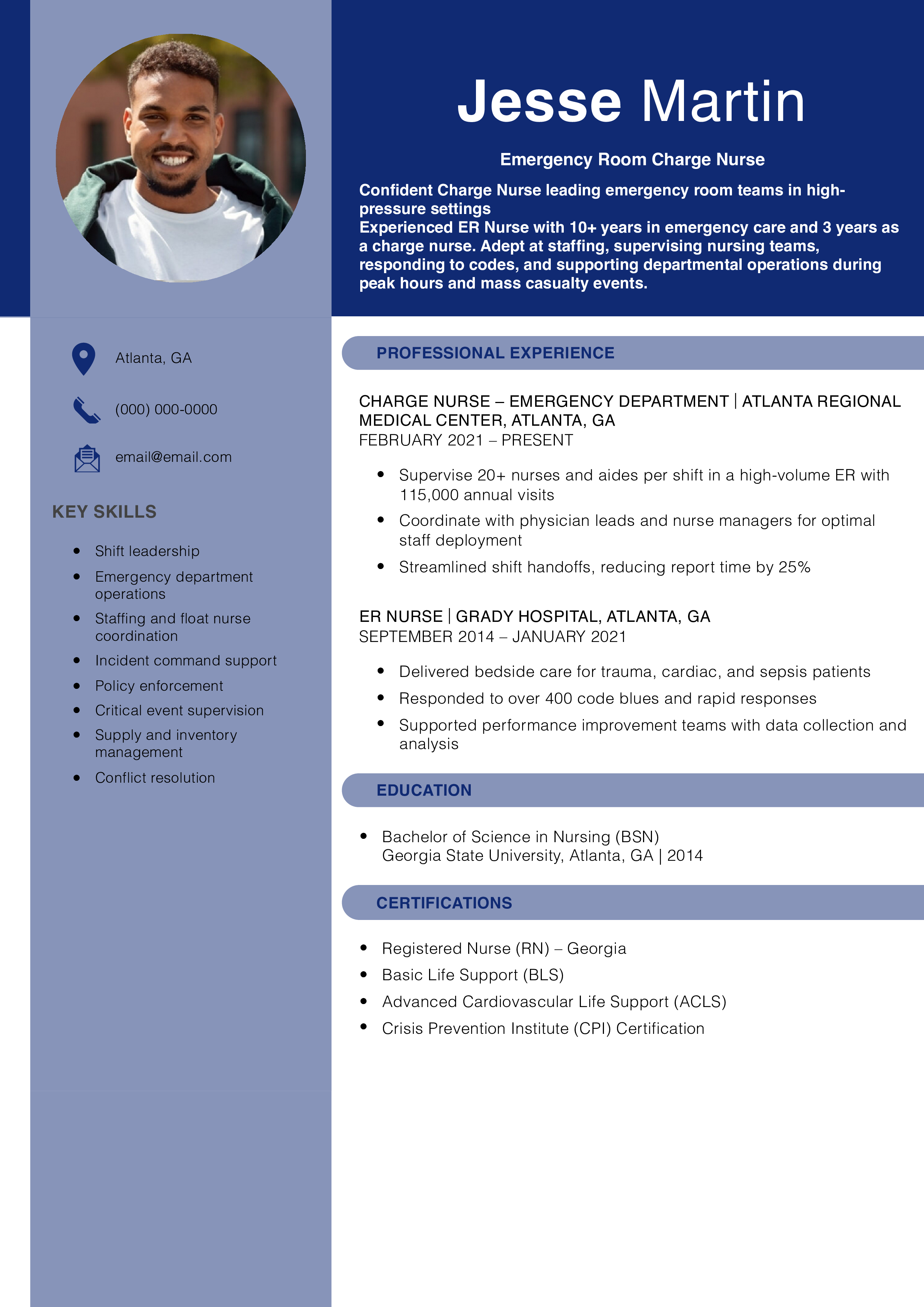
Emergency Room Charge Nurse Resume Example

Why this charge nurse resume example is strong:

This resume highlights leadership growth and operational contributions. The candidate shows how they’ve improved workflow and maintained team readiness. Explore How To List Promotions on a Resume.


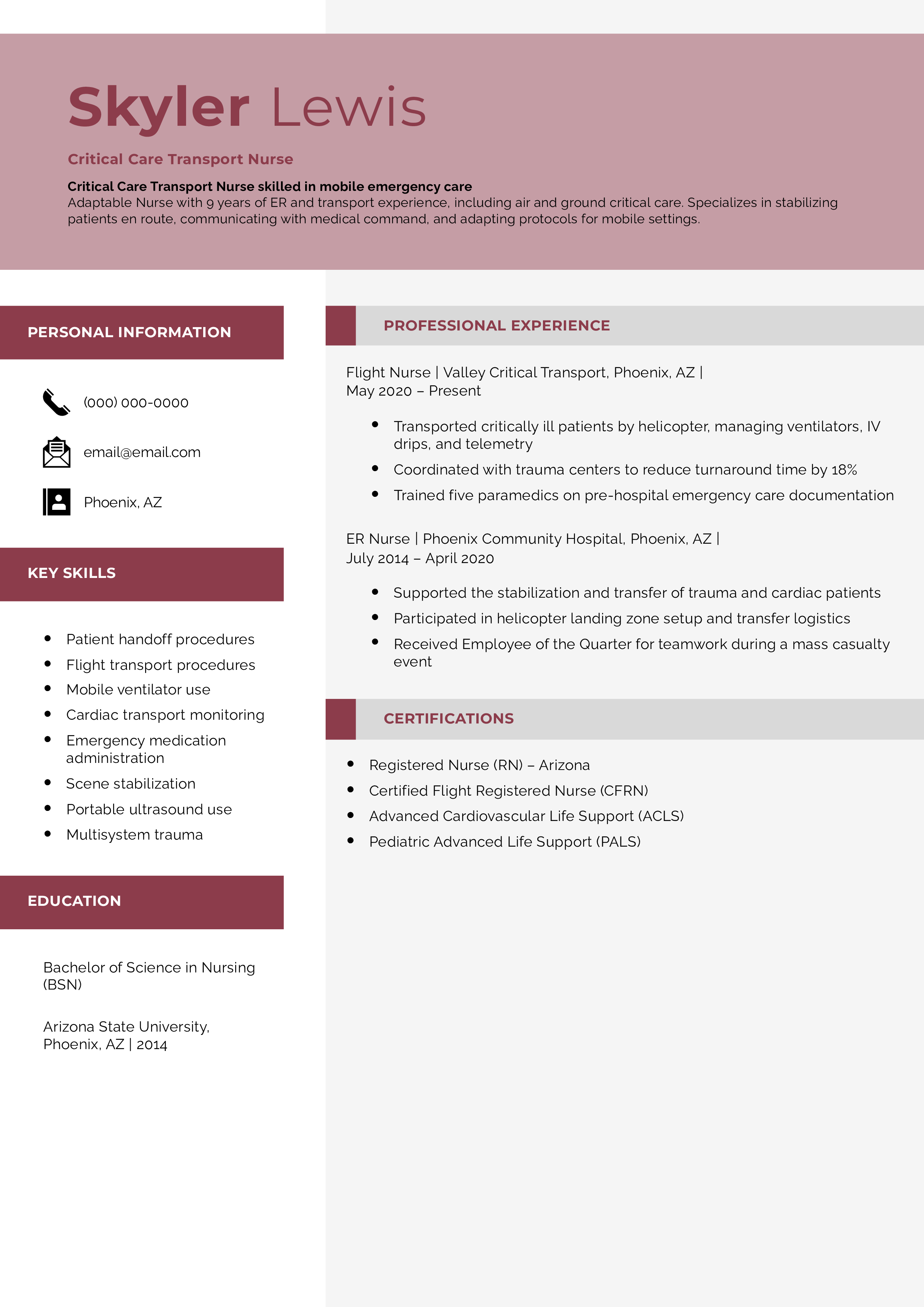
Critical Care Transport Nurse Resume Example

Why this critical care transport nurse resume example is strong:

The resume focuses on mobility-specific skills while still reflecting a strong ER foundation. It emphasizes autonomy and real-time decision-making. Want to see how AI can help streamline your resume writing? Try this tool: AI Resume Builder.


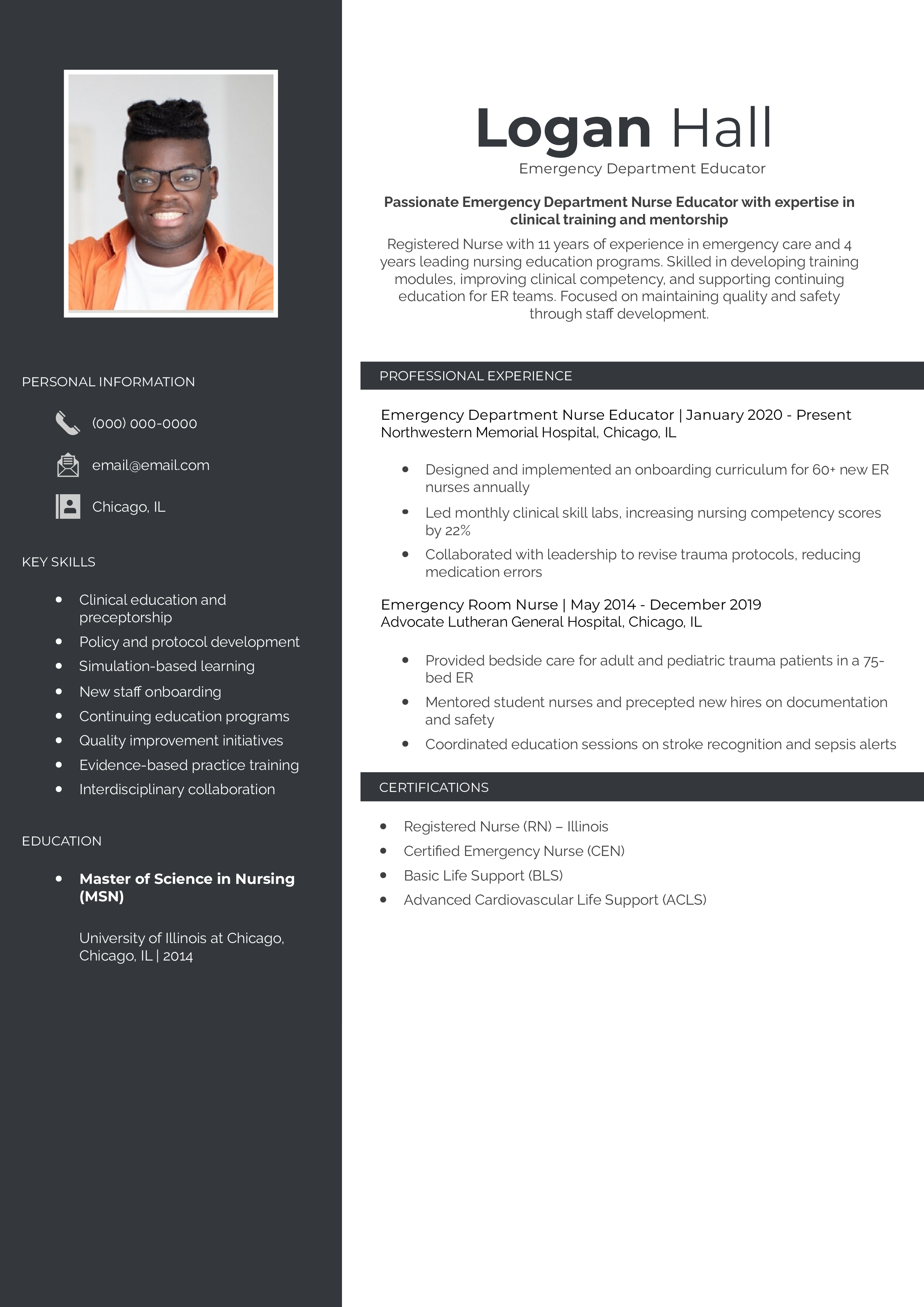
Emergency Department Educator Resume Example

Why this emergency department educator resume example is strong:

This resume demonstrates leadership through teaching and protocol improvement. It highlights advanced credentials and quantifiable training outcomes. For more guidance on tailoring education sections effectively, visit How To List Your Education on a Resume.


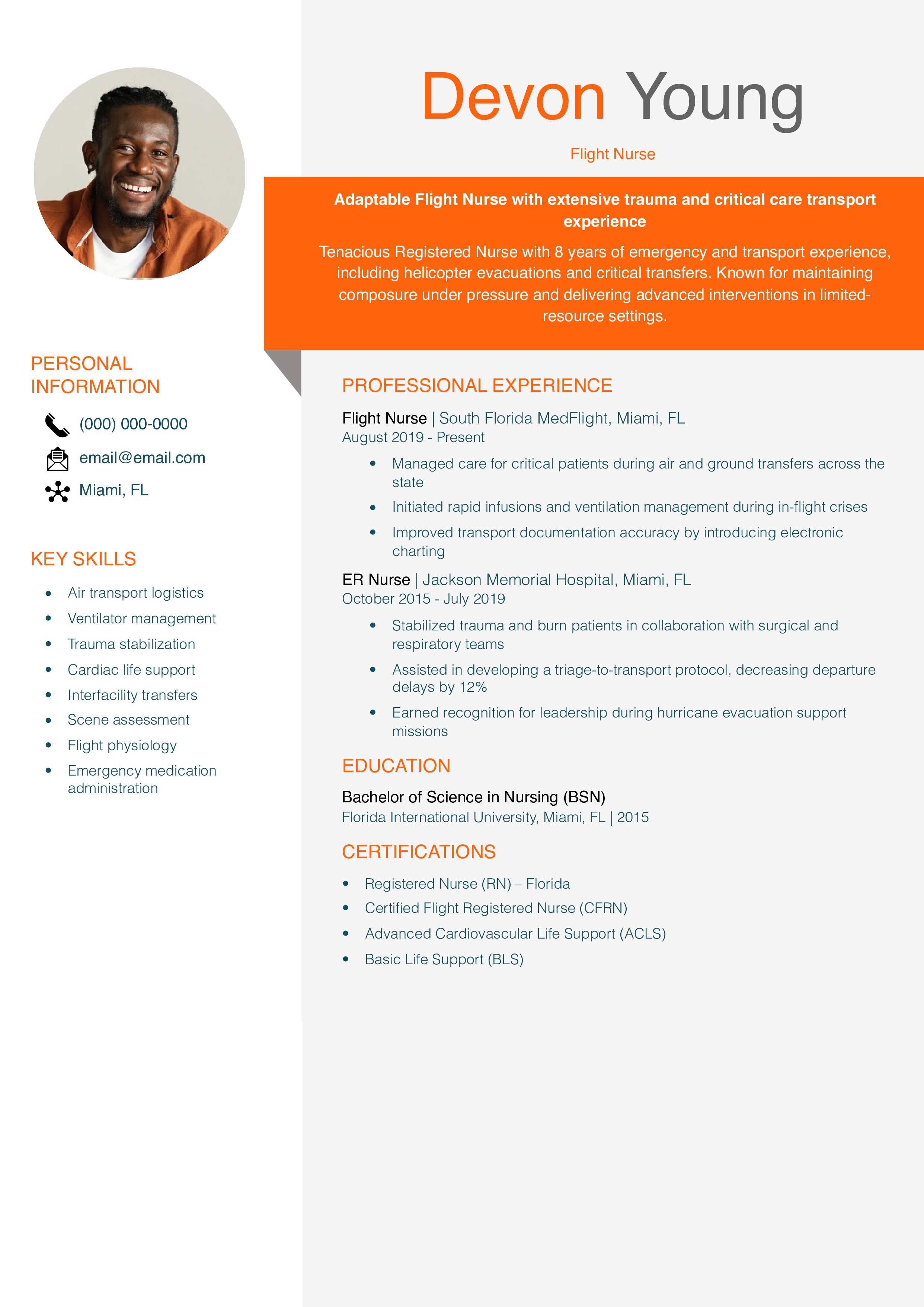
Flight Nurse Resume Example

Why this flight nurse resume example is strong:

The resume emphasizes real-world achievements in both air and emergency settings, using results-driven language and solid credentials. To ensure your resume follows the best structure for your career, explore Best Resume Formats.


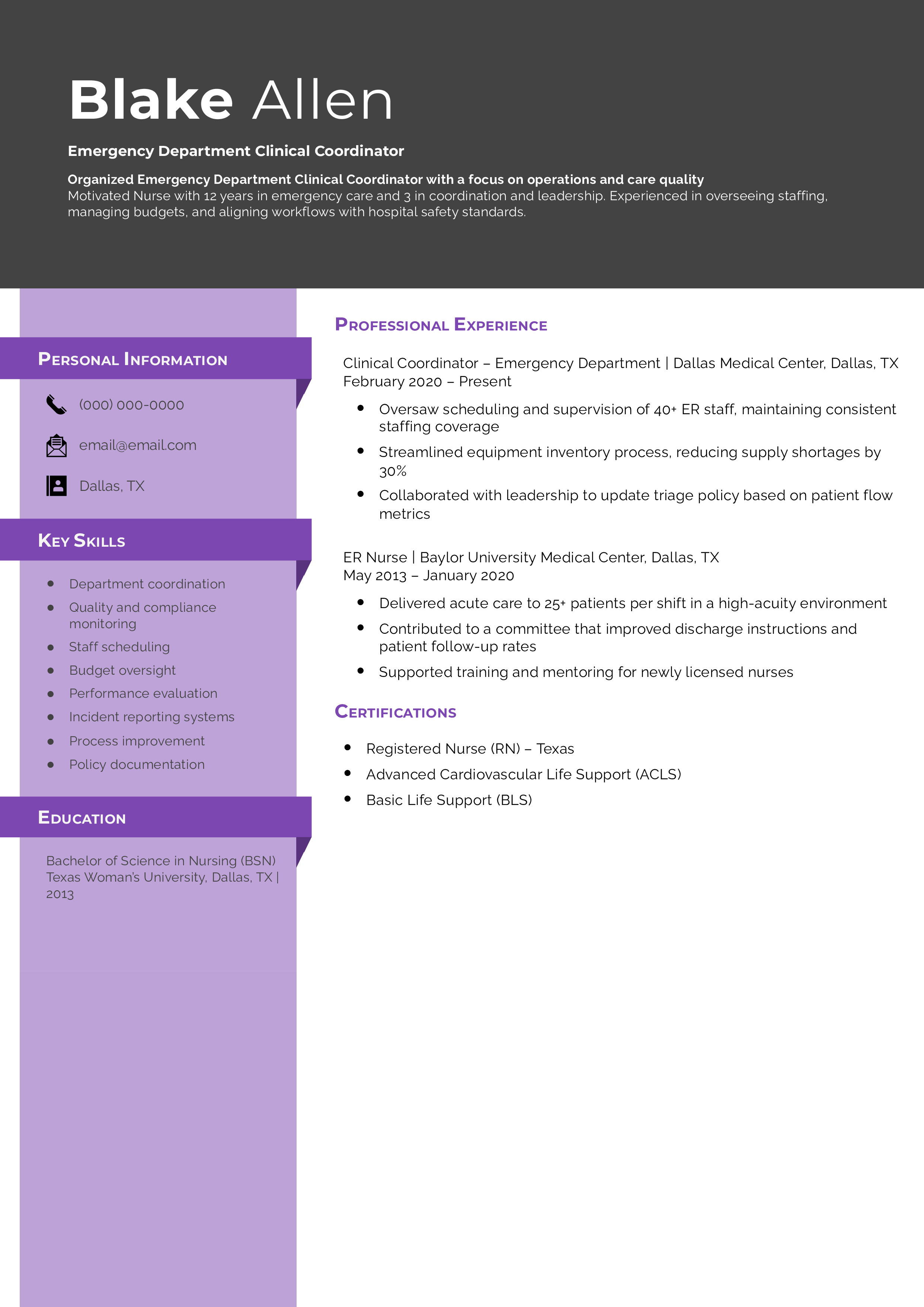
Emergency Department Clinical Coordinator Resume Example

Why this emergency department clinical coordinator resume example is strong:

This resume highlights management experience and operational improvements without losing clinical focus. It showcases leadership development and clear impact metrics. For more ways to strengthen your resume’s structure, see How To Build a Resume.


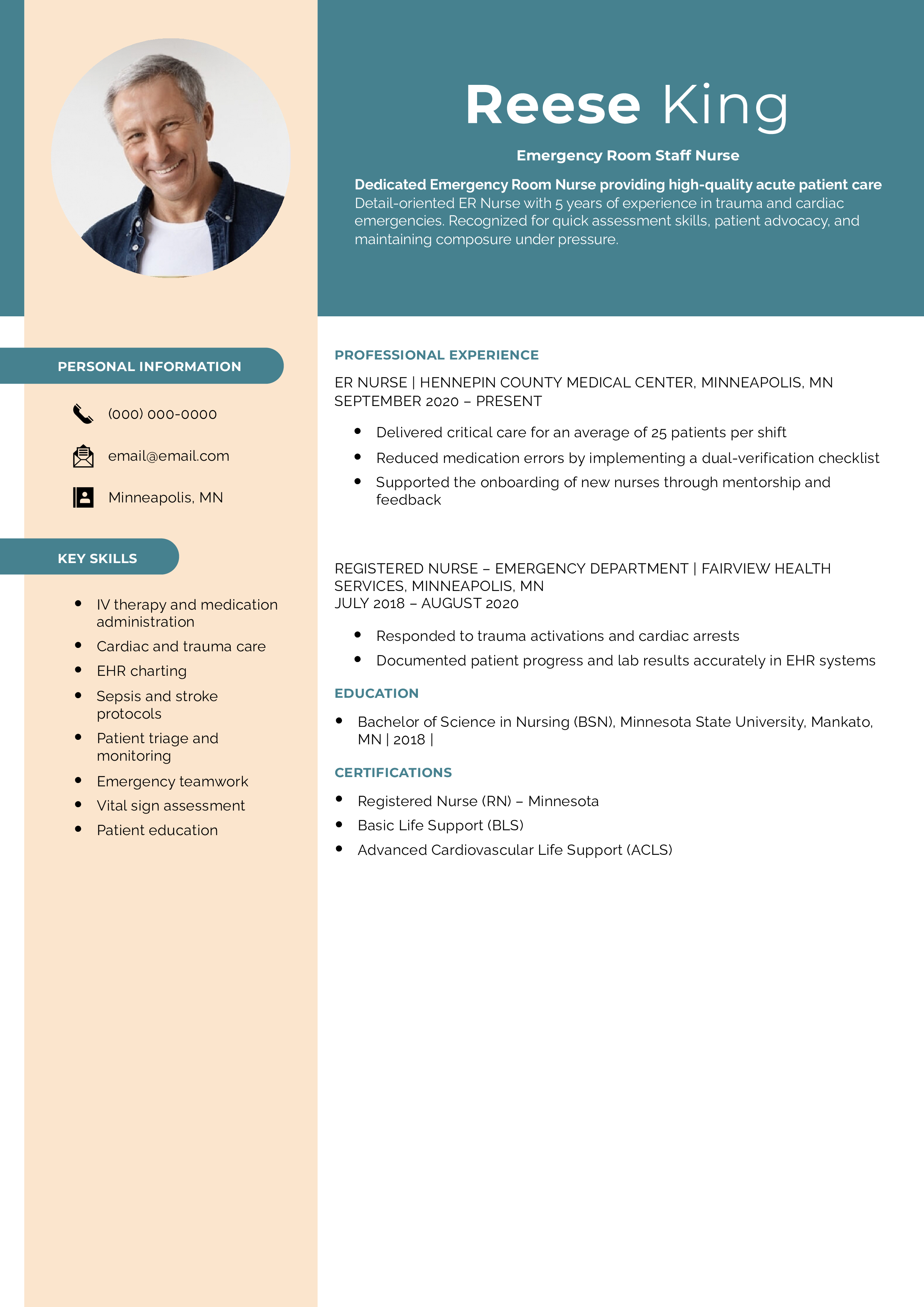
Emergency Room Staff Nurse Resume Example

Why this emergency room staff nurse resume example is strong:

This resume balances technical proficiency and efficiency while demonstrating teamwork and accountability. Each bullet shows impact through measurable results. For tips on keeping your resume length appropriate, check out How Long Should a Resume Be?


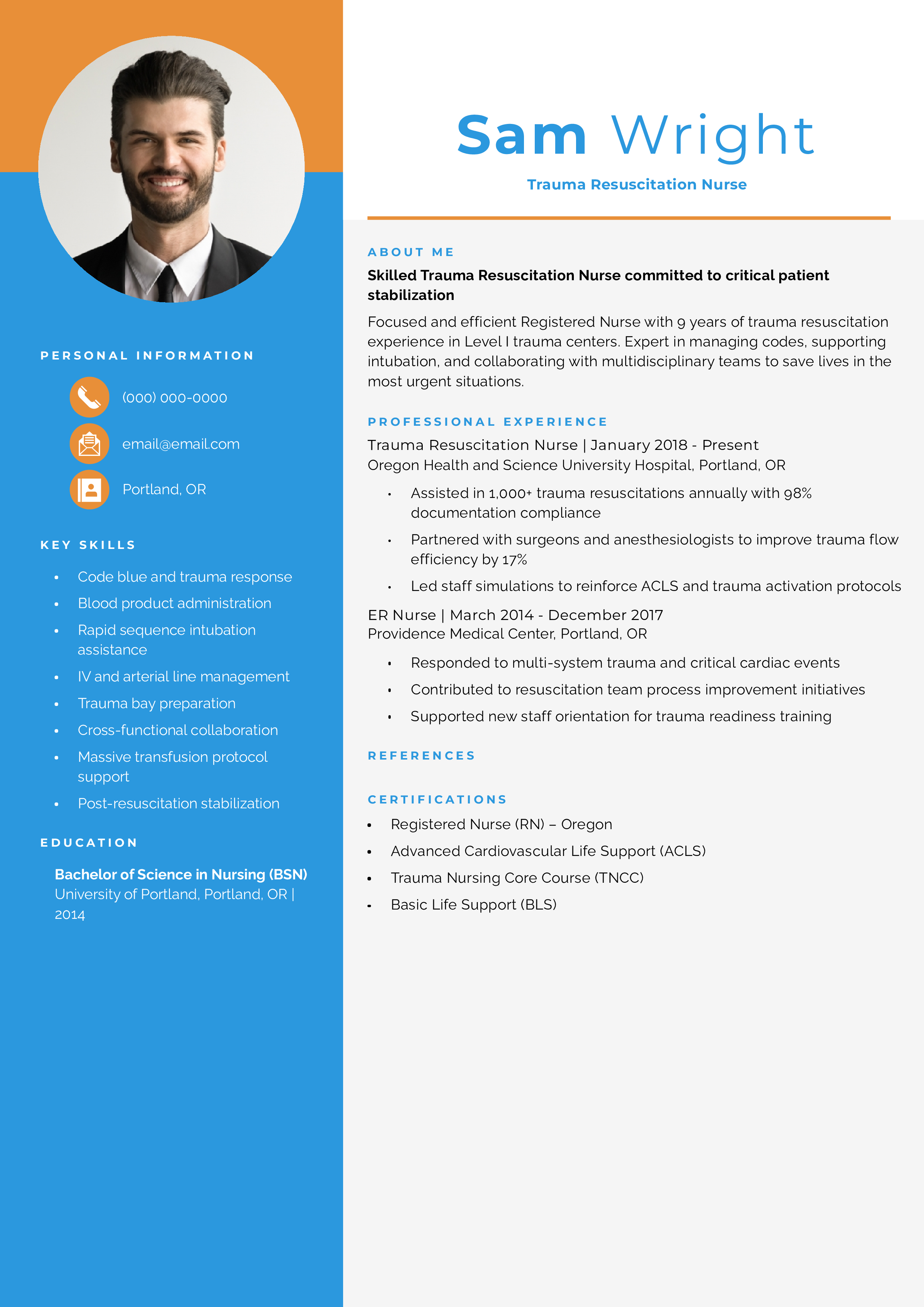
Trauma Resuscitation Nurse Resume Example

Why this trauma resuscitation nurse resume example is strong:

This resume focuses on technical precision and composure during life-saving interventions. Quantified results back up the candidate’s expertise. For insights on building impactful objectives and summaries, visit Resume Objective Examples.


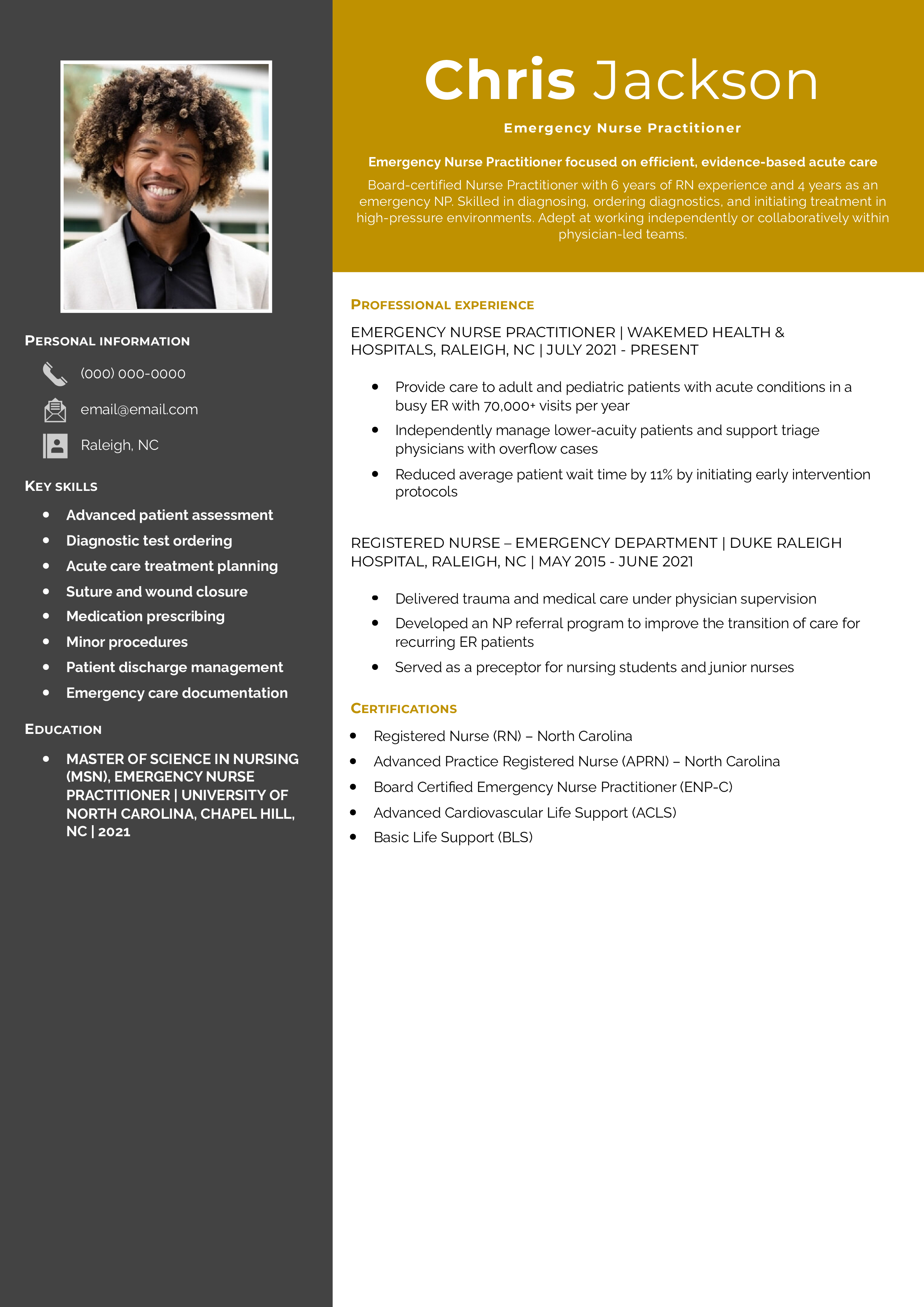
Emergency Nurse Practitioner Resume Example

Why this emergency nurse practitioner resume example is strong:

This resume effectively highlights the candidate’s career progression from RN to NP, emphasizes clinical autonomy, and shows clear contributions to patient flow. Need help writing a resume with experience gaps or transitions? See How To Write a Resume With No Experience.


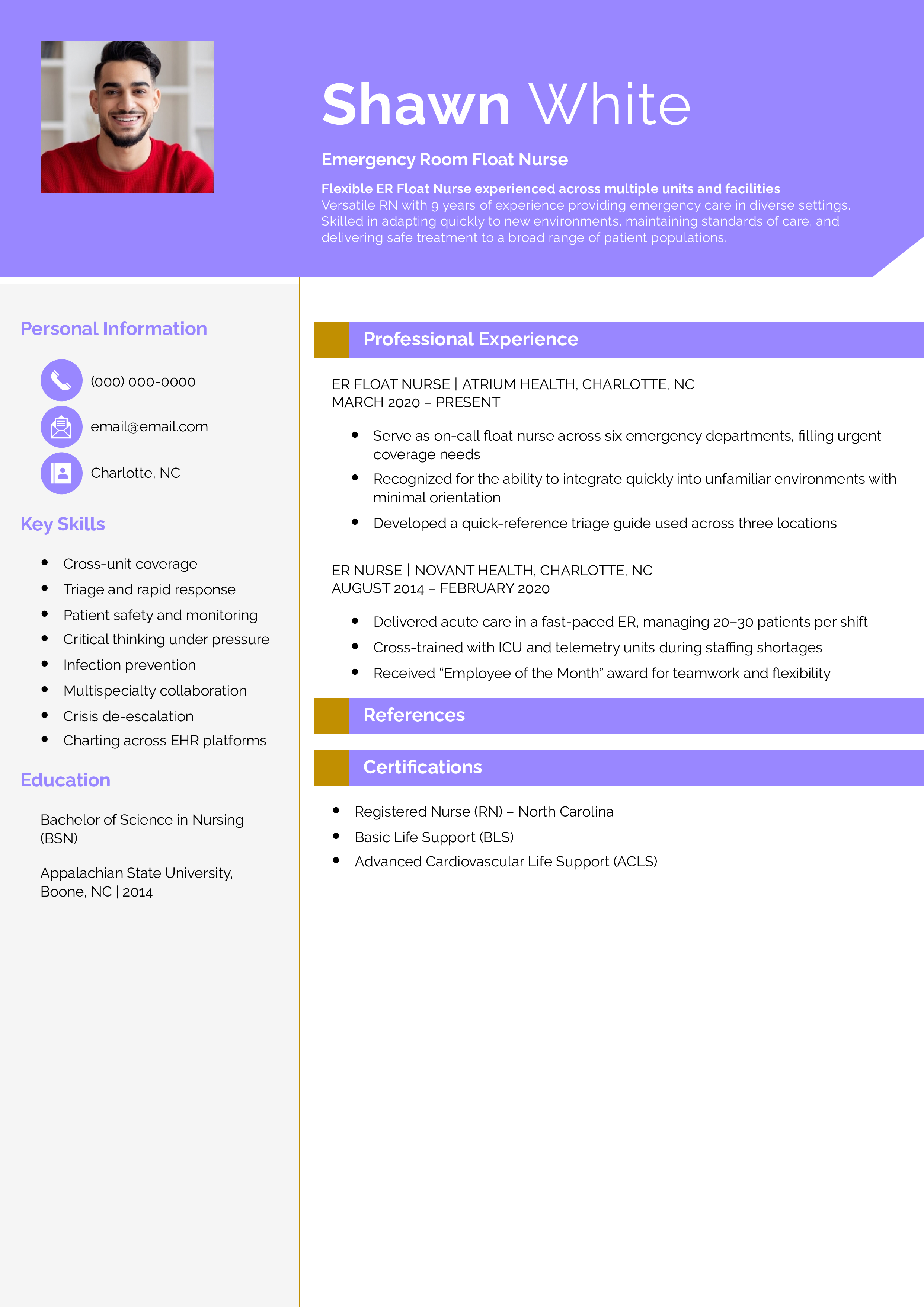
Emergency Room Float Nurse Resume Example

Why this emergency room float nurse resume example is strong:

This resume highlights adaptability and quick thinking, which are vital in float roles. The experience section demonstrates resilience, collaboration, and initiative. To make your resume more flexible for multiple roles, explore How To Build a Resume.


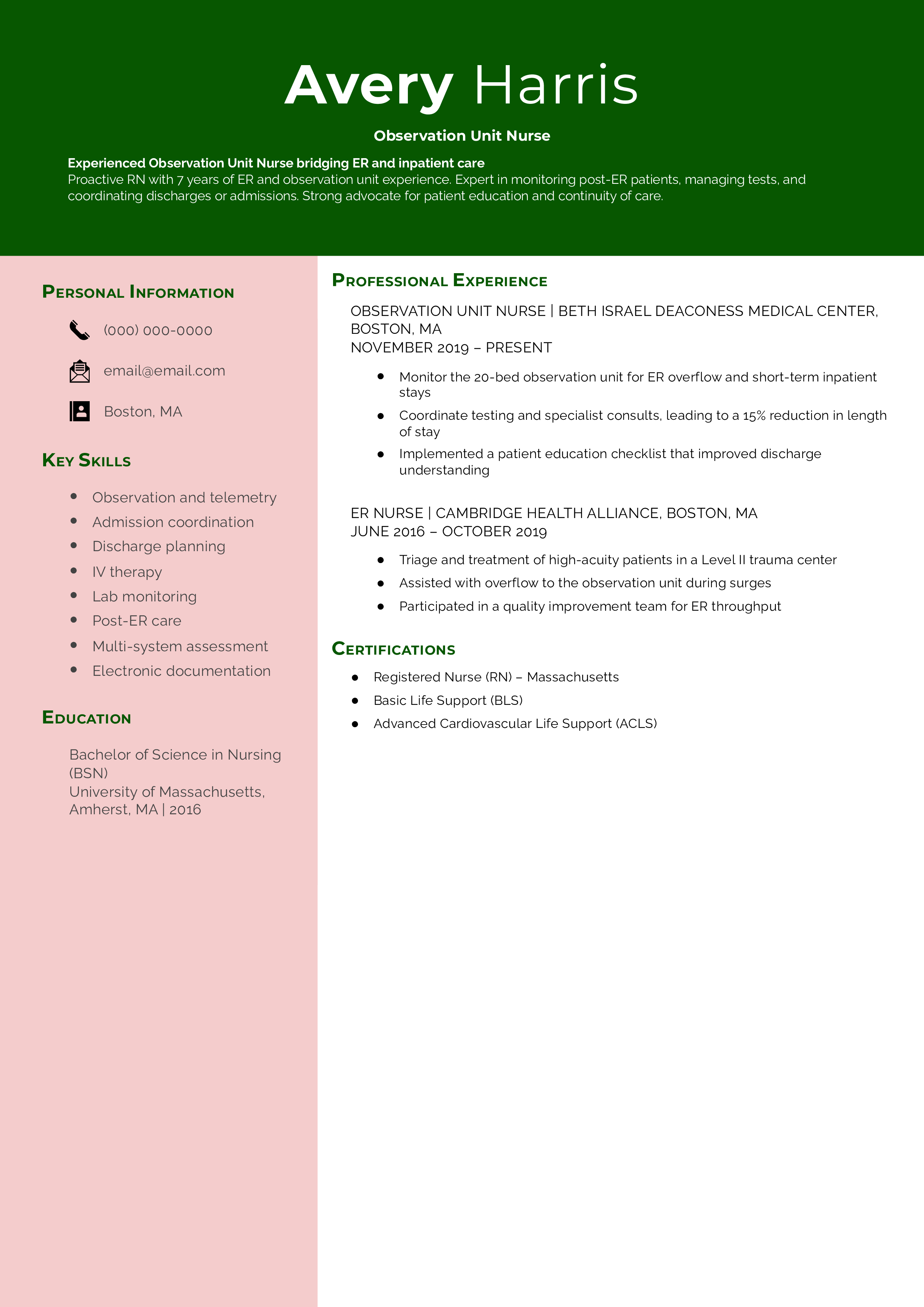
Observation Unit Nurse Resume Example

Why this observation unit nurse resume example is strong:

This resume bridges emergency and inpatient care well, using metrics and outcome-based examples. The skills align closely with transitional care goals. Learn how to style your resume for maximum clarity and efficiency: Best Resume Formats.


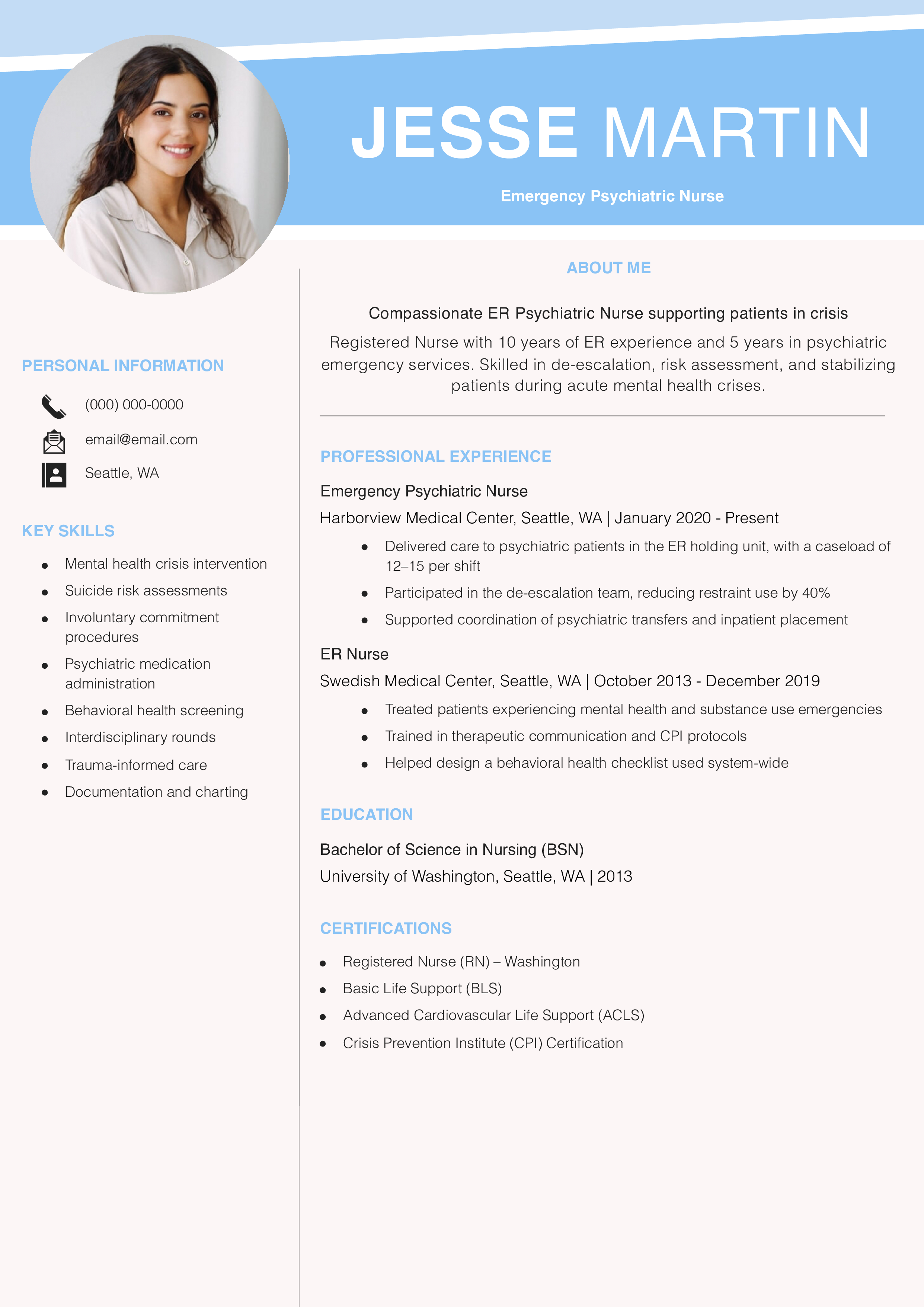
Emergency Psychiatric Nurse Resume Example

Why this emergency psychiatric nurse resume example is strong:

This resume shows depth in both emergency and psychiatric care, addressing a highly specialized role with real impact. To highlight specialized experience like this, explore Resume Objective Examples.


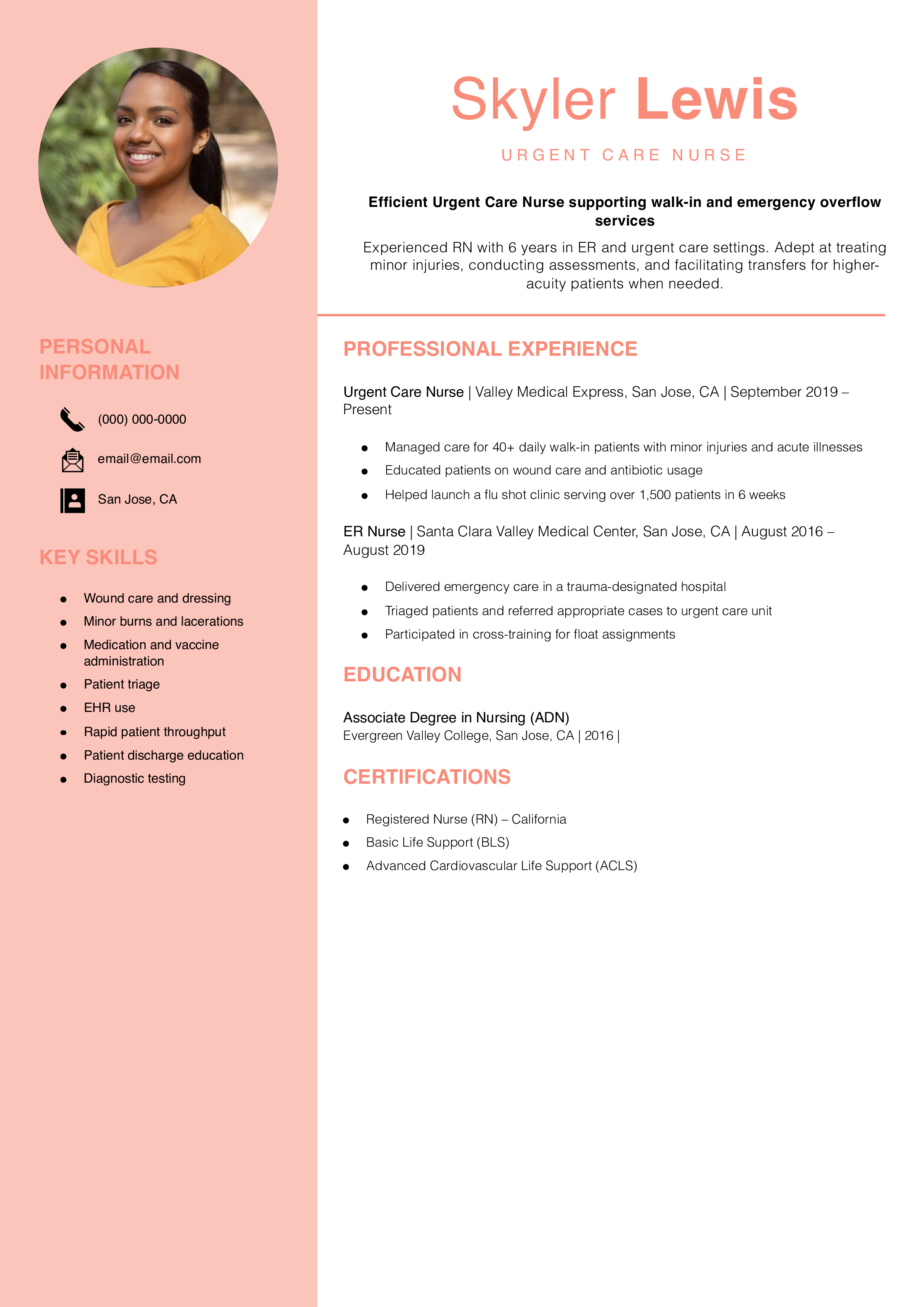
Urgent Care Nurse Resume Example

Why this urgent care nurse resume example is strong:

This resume focuses on speed, efficiency, and care in lower-acuity emergency settings. It shows the candidate’s ability to multitask and support public health initiatives. Learn how to tailor each role in How To List Promotions on a Resume.


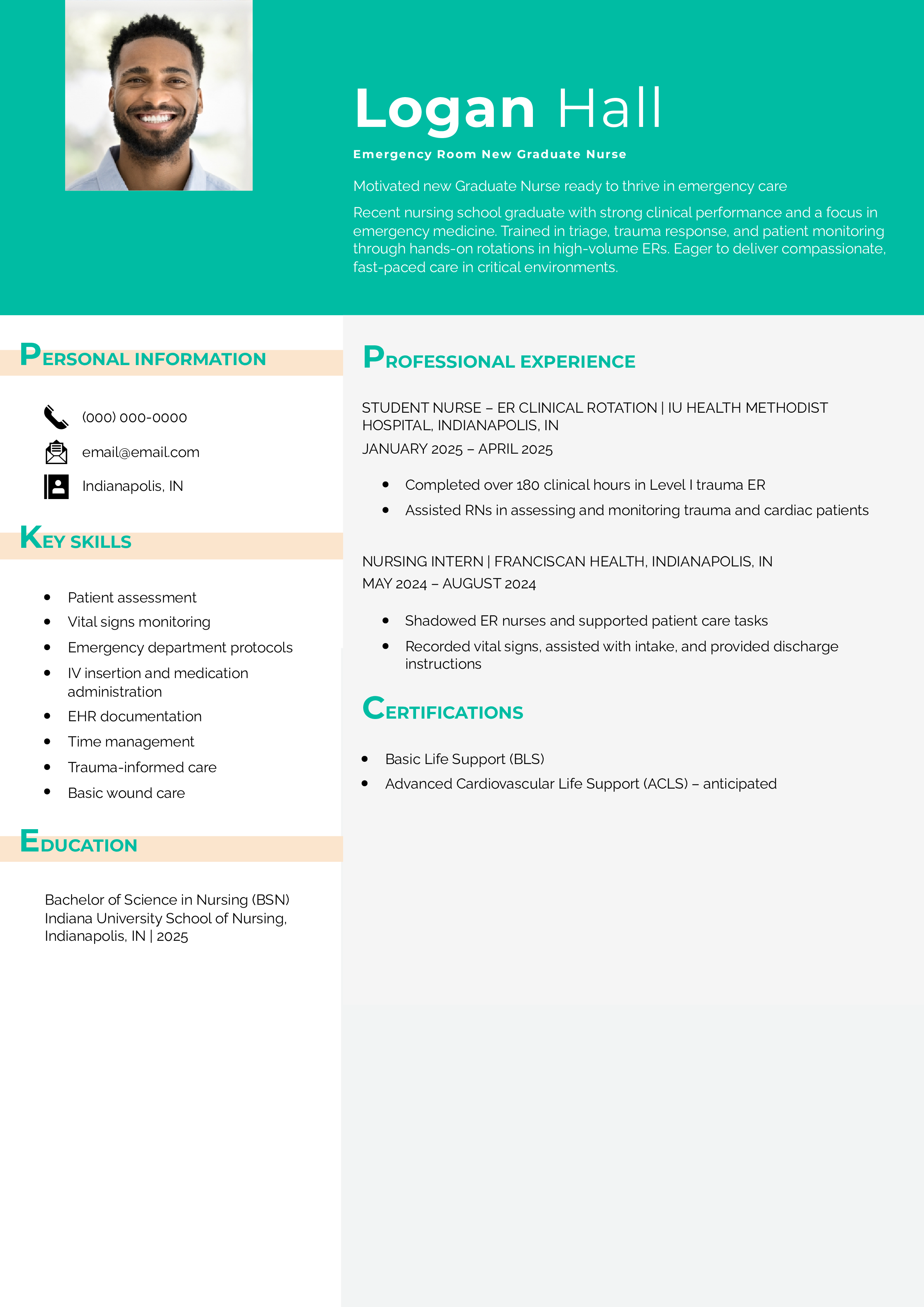
Emergency Room New Graduate Nurse Resume Example

Why this new graduate ER nurse resume example is strong:

This resume clearly outlines relevant clinical experience and training aligned with emergency care. It shows initiative, preparation, and readiness to transition into a full-time ER role. If you’re a new nurse building your first resume, see How To Write a Resume With No Experience.


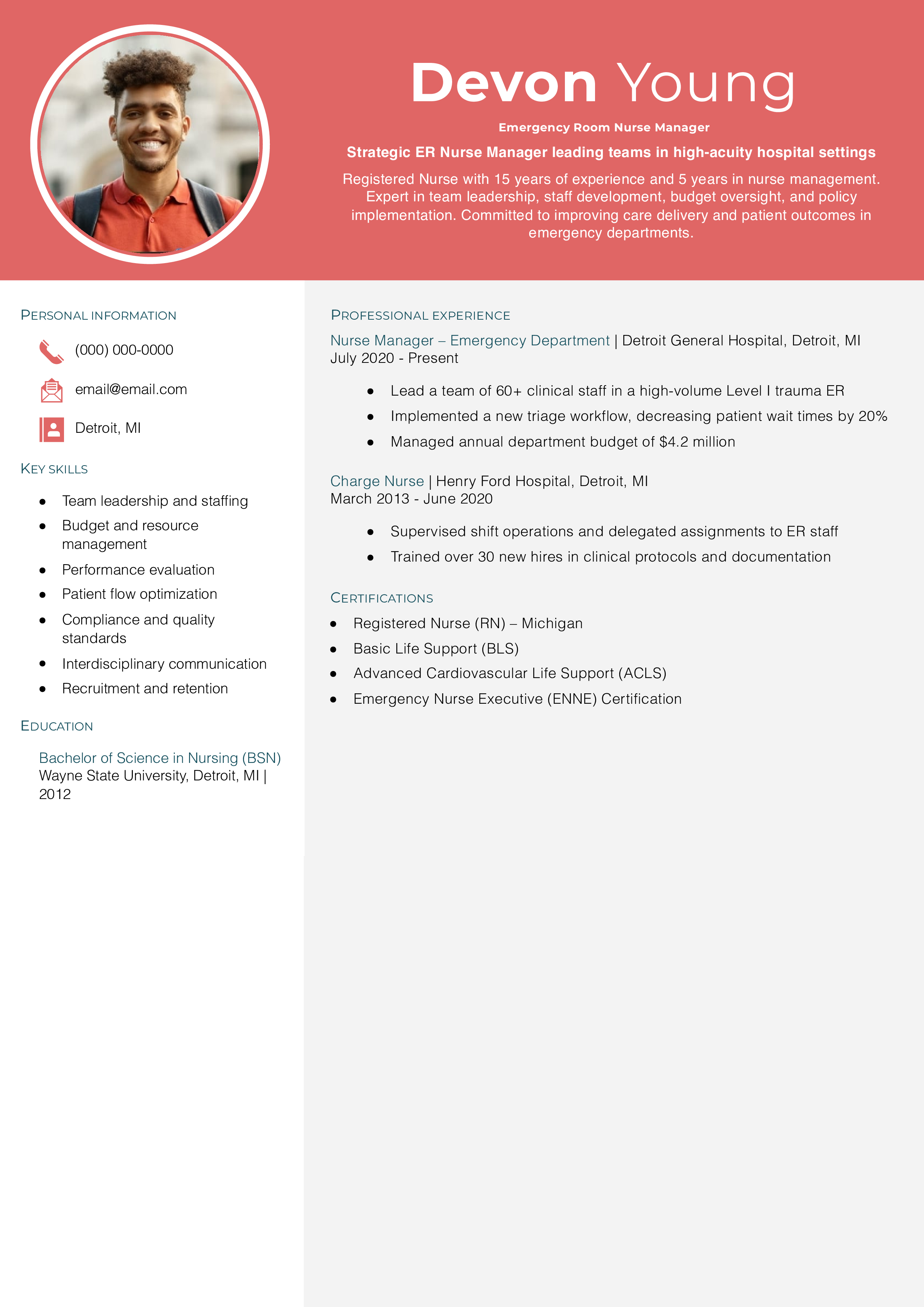
Emergency Room Nurse Manager Resume Example

Why this ER nurse manager resume example is strong:

This resume highlights leadership skills, measurable department improvements, and large-scale responsibility. It demonstrates readiness for director-level roles. For more tips on outlining leadership and career growth, visit How To List Promotions on a Resume.


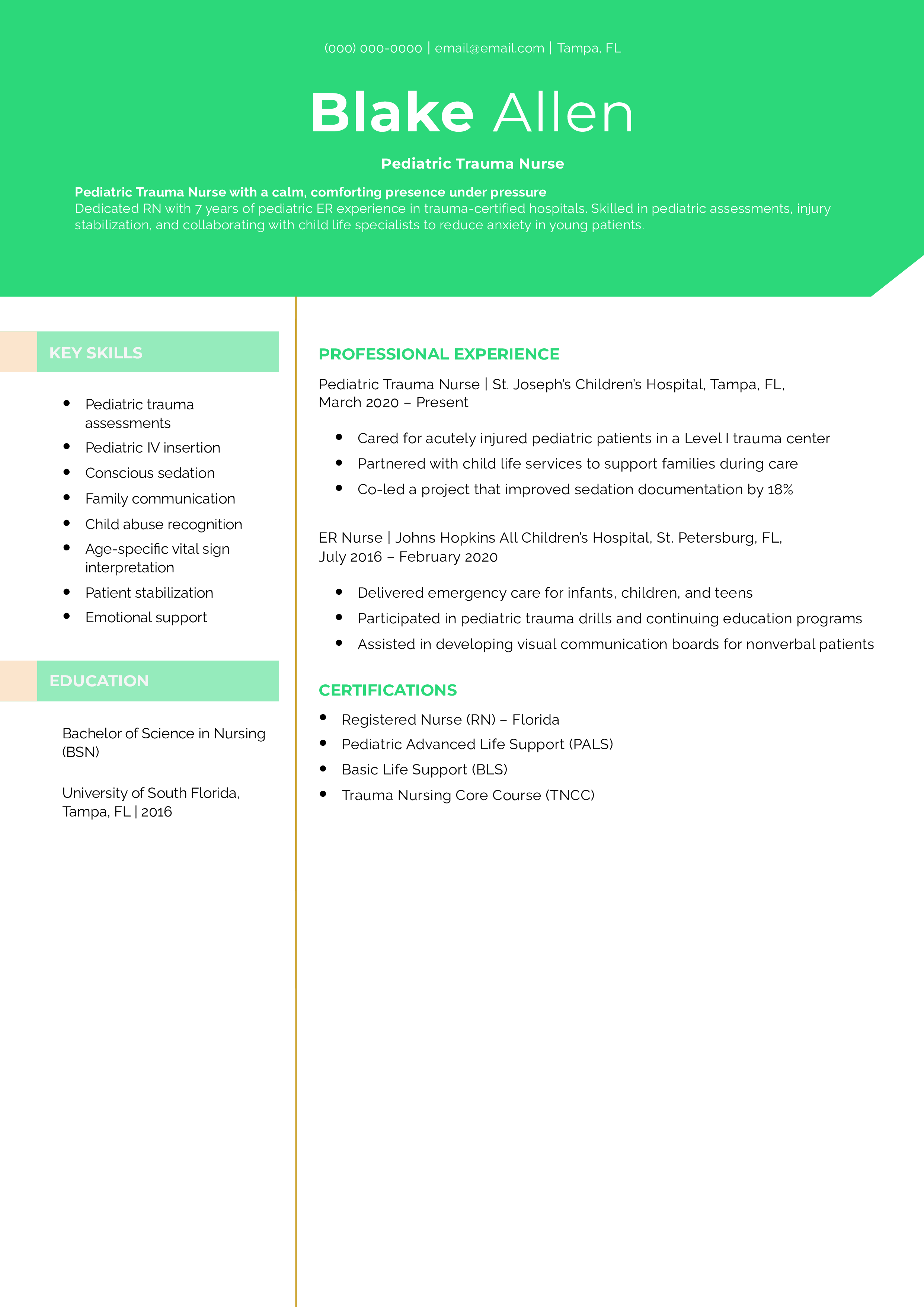
Pediatric Trauma Nurse Resume Example

Why this pediatric trauma nurse resume example is strong:

This resume balances technical expertise with emotional intelligence, both of which are crucial in pediatric trauma care. It also demonstrates involvement in department improvements. Learn how to effectively structure roles like these: Best Resume Formats.


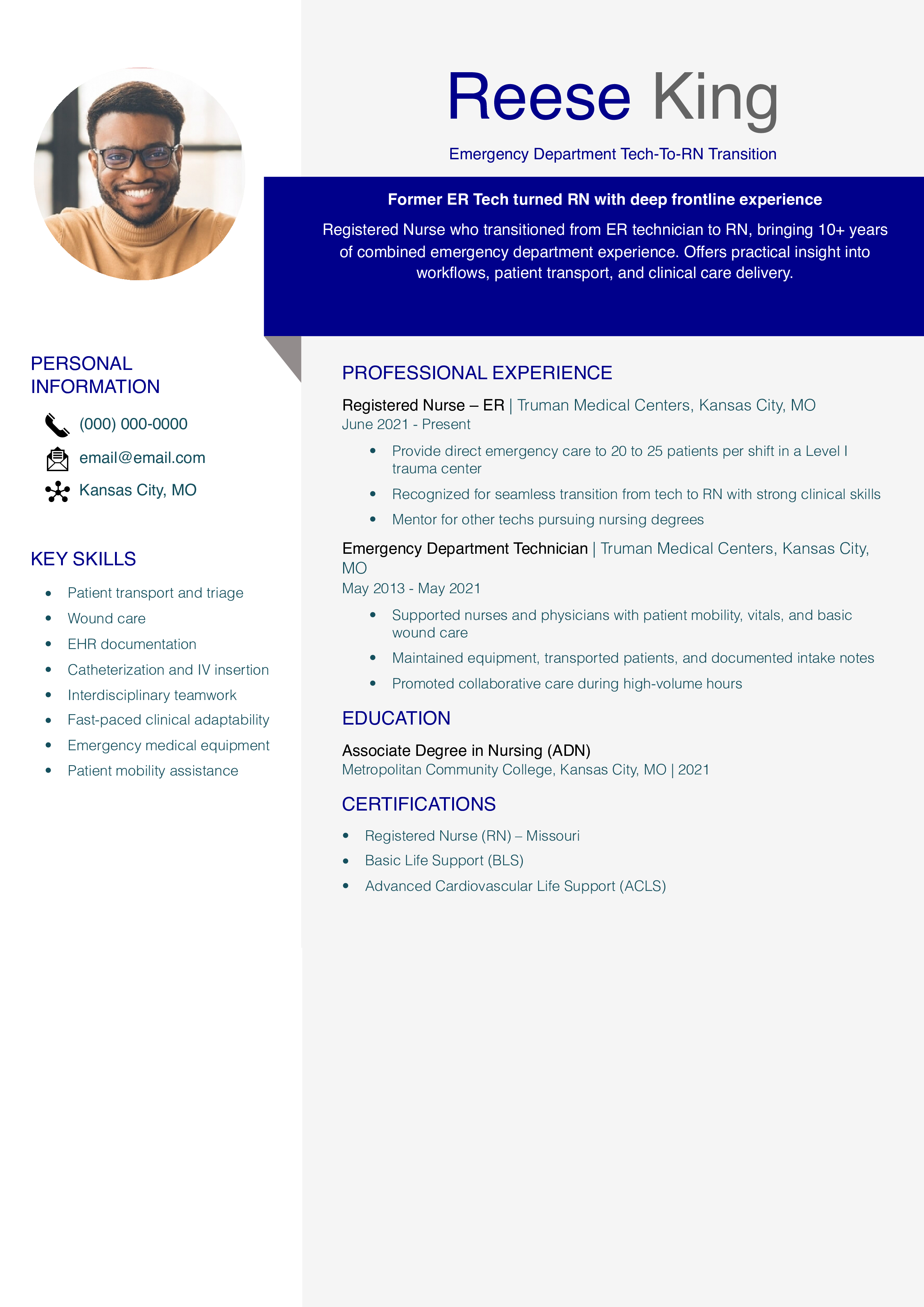
Emergency Department Tech-To-RN Transition Resume Example

Why this ED tech-to-RN resume example is strong:

This resume showcases a clear career path and emphasizes growth, skill expansion, and long-term dedication to emergency care. If you’ve made a similar career jump, explore How To Build a Resume.


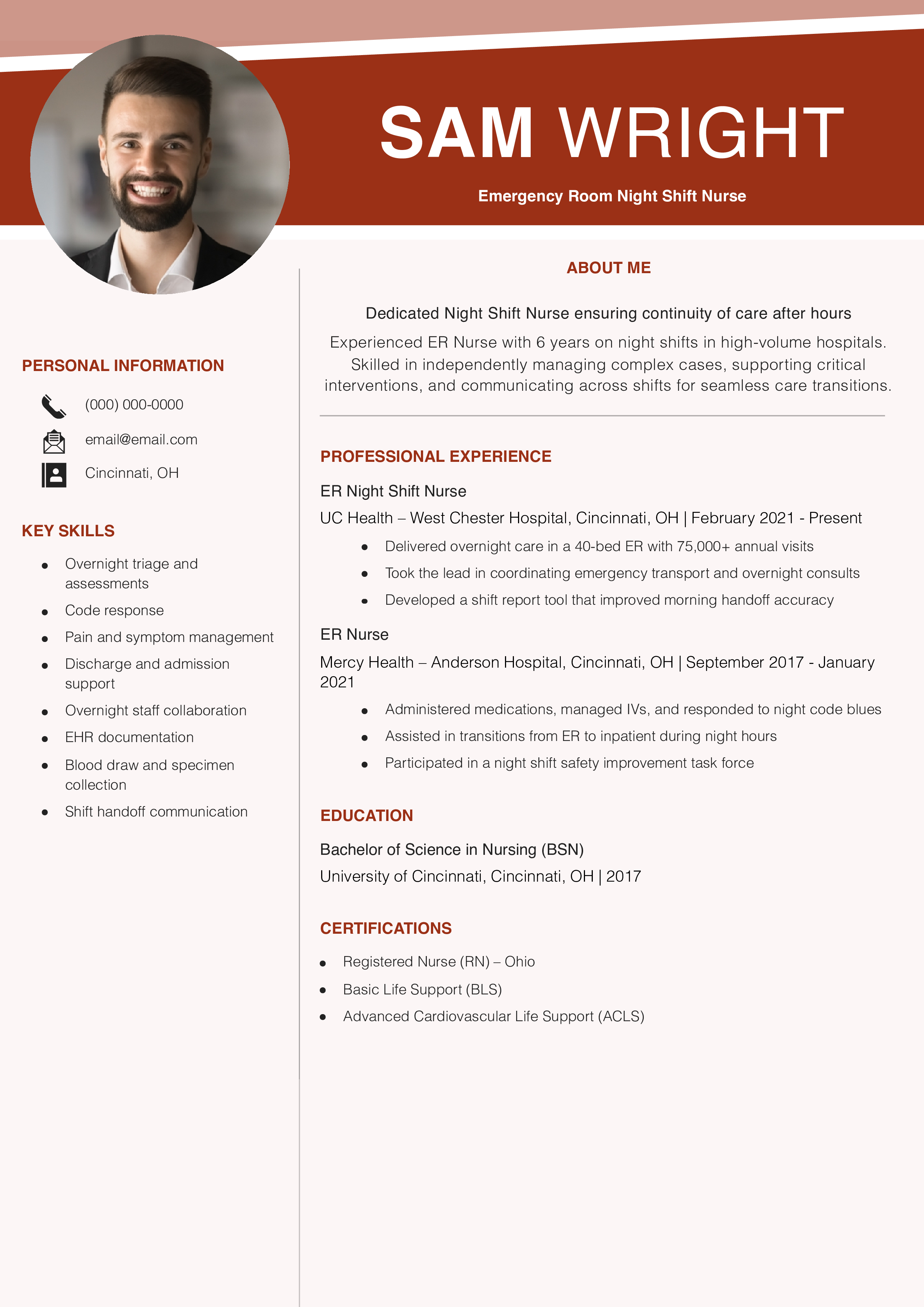
Emergency Room Night Shift Nurse Resume Example

Why this ER night shift nurse resume example is strong:

This resume highlights the unique skills and independence required for night shift work, along with specific tools developed by the candidate. For more resume customization tips, visit How To Build a Resume.


Emergency Room (ER) Nurse Text-Only Resume Examples

  • Trauma nurse
  • Pediatric emergency nurse
  • Triage nurse
  • Emergency room charge nurse
  • Critical care transport nurse
  • Emergency department educator
  • Flight nurse
  • Emergency department clinical coordinator
  • Emergency room staff nurse
  • Trauma resuscitation nurse
  • Emergency nurse practitioner
  • Emergency room float nurse
  • Observation unit nurse
  • Emergency psychiatric nurse
  • Urgent care nurse
  • Emergency room new graduate nurse
  • Emergency room nurse manager
  • Pediatric trauma nurse
  • Emergency department tech-to-RN transition
  • Emergency room night shift nurse

Chris Jackson
[email protected] | (000) 000-0000 | Houston, TX

Experienced Trauma Nurse dedicated to rapid, life-saving care
Emergency-trained Registered Nurse with 7 years of experience in trauma response and critical care. Skilled in stabilizing high-acuity patients, supporting surgical teams, and managing emergency resuscitation. Committed to patient safety, quick clinical assessments, and team communication in fast-paced trauma centers.

Key Skills

  • Advanced cardiac life support
  • Central line care
  • Emergency response
  • Hemodynamic monitoring
  • Intubation assistance
  • Rapid trauma assessment
  • Resuscitation team support
  • Trauma bay operations

Professional Experience

Trauma Nurse, Mercy Regional Trauma Center, Houston, TX | June 2021 to present

  • Deliver critical care to trauma patients in a Level I trauma unit, averaging 35+ cases per shift
  • Administer medications, initiate IV access, and support airway management during emergency interventions
  • Collaborate with trauma surgeons to prepare patients for the OR within 10 minutes of arrival when required

Registered Nurse – Emergency Department, Bayview Hospital, Houston, TX | August 2017 to May 2021

  • Performed triage for patients with traumatic injuries, ensuring prioritization aligned with the Emergency Severity Index (ESI)
  • Implemented a trauma handoff checklist, improving interdisciplinary coordination and reducing documentation errors by 22%
  • Trained eight newly hired nurses in trauma protocols and standard procedures

Education

Bachelor of Science in Nursing (BSN)
University of Texas Health Science Center, Houston, TX | 2017

Certifications

Registered Nurse (RN) – Texas
Advanced Cardiovascular Life Support (ACLS)
Basic Life Support (BLS)
Trauma Nursing Core Course (TNCC)

How To Write an ER Nurse Resume

1. Select a suitable layout and design for your emergency room nurse resume

The role of an emergency room (ER) nurse demands precision, calm under pressure, and rapid decision-making in life-or-death situations. Your resume design should reflect those qualities by being clean, structured, and easy to navigate at a glance.

Opt for a format that prioritizes readability. Hiring managers often skim resumes quickly, especially in high-demand health care environments. Use bold section headers, consistent spacing, and bullet points to organize your information clearly. Avoid overly stylized or creative formats that distract from your qualifications.

An ideal ER nurse resume puts certifications, licenses, and specialties (such as trauma, pediatrics, or triage) front and center. Let your design work quietly in the background while your skills and impact shine.

2. Write a compelling profile summarizing your ER nurse qualifications

Your resume summary should immediately establish your experience, areas of expertise, and commitment to patient care. Think of it as your elevator pitch — a concise paragraph that sets the tone for the rest of your resume.

If you’re an experienced ER nurse, focus on the types of emergencies you’ve handled, your years in the field, and how you’ve improved patient outcomes. If you’re newer to the role, highlight your nursing education, clinical rotations, and any high-pressure experience, such as internships or volunteer work in emergency settings.

Avoid vague statements like “I am a hard worker” or “I love helping people.” Instead, show what you’ve done: triaging patients during peak hours, reducing wait times, or assisting with critical trauma care.

Strong summary example for an emergency room nurse

Compassionate and efficient ER nurse with 6 years of experience in fast-paced hospital ERs. Skilled in trauma care, rapid patient assessment, and crisis response. Proven ability to manage high patient volumes while ensuring safety and quality of care. Known for staying calm under pressure and delivering life-saving interventions.

Weak summary example for an emergency room nurse

I have been working as a nurse in the ER for several years. I take care of patients, handle emergencies, and work with doctors and staff. I am a team player and good at multitasking.

3. Incorporate a results-focused work history section for your ER nurse resume

In an emergency setting, your actions directly affect patient outcomes. That makes the professional experience section especially important. Use this space to show the real-world impact of your care.

Rather than listing duties alone, highlight achievements: patient load managed per shift, time saved through triage improvements, or how you contributed to a drop in ER wait times.

Quantify results whenever possible, and keep bullet points concise and action-oriented. Start each bullet with a strong verb to show initiative and effectiveness.

Strong experience example for an emergency room nurse

Emergency room nurse | St. Joseph Medical Center | Houston, TX | March 2019 to present

  • Provided critical care to an average of 30+ patients per shift in a Level I trauma center
  • Reduced triage wait time by 15% by implementing an early assessment protocol for walk-in patients
  • Trained 12 new staff members on emergency protocols and infection control procedures
  • Collaborated with interdisciplinary teams to stabilize patients during code blue events

Weak experience example for an emergency room nurse

Emergency room nurse | St. Joseph Medical Center | Houston, TX | March 2019 to present

  • Took care of patients in the ER
  • Helped doctors and other nurses
  • Did triage when needed
  • Monitored patient vitals and gave medications

4. List your education and any pertinent certifications for an ER nurse

ER nurses must meet specific educational and licensing requirements, so this section is non-negotiable. Start with your degree, then include licenses and certifications that demonstrate your readiness for emergency care.

Make sure to include your registered nurse (RN) license, and if applicable, certifications like Basic Life Support (BLS), Advanced Cardiovascular Life Support (ACLS), Pediatric Advanced Life Support (PALS), or Trauma Nursing Core Course (TNCC). These demonstrate your qualifications for the high-intensity nature of ER work.

Education example for an emergency room nurse

Bachelor of Science in Nursing (BSN)
University of Texas Health Science Center | Houston, TX

Relevant Certifications:

  • Registered Nurse (RN), Texas Board of Nursing
  • Basic Life Support (BLS) | American Heart Association
  • Advanced Cardiovascular Life Support (ACLS) | American Heart Association
  • Trauma Nursing Core Course (TNCC) | Emergency Nurses Association

5. Highlight your essential abilities and technical proficiencies for an ER nurse

ER nurses use a wide range of clinical and technical skills, so be specific when listing yours. Separate them into categories if needed: clinical procedures, emergency response, technical tools, and patient care techniques.

Avoid generic phrases like “good communication skills.” Instead, focus on hard and soft skills that directly affect patient outcomes in high-stress environments. Think critically about the tasks you perform in a shift and list the tools, procedures, and strategies you use to deliver excellent care.

Over 20 hard and soft skills for ER nurse resumes
Acute care Airway management
Blood draws and IV insertion Cardiac monitoring
Catheterization Central line care
Clinical documentation Crisis intervention
Defibrillation and code response Electronic health records (EHR) systems
Emergency patient assessment Infection control
Medication administration Mental health crisis response
Multitasking under pressure Pain management
Patient and family education Rapid triage
Respiratory support Team collaboration
Trauma care Vital sign monitoring

How To Pick the Best ER Nurse Resume Template

The best ER nurse resume template is clean, professional, and organized. Your content should take center stage, with the layout supporting rather than distracting from it. Look for templates with clearly defined sections, including summary, skills, experience, education, and certifications.

Use bolded headings, plenty of white space, and a consistent font. Avoid unnecessary graphics or color unless you’re applying in a creative or nontraditional setting. Most ER nurse applicants are better served by simple formats that emphasize qualifications.

Reverse chronological formats work best in the health care industry. They help hiring managers see your most recent and relevant roles first. A well-structured template will also help your resume perform well with ATS, ensuring it reaches the right people.

Build Your Resume
Build Your Resume

Resume.org offers free, HR-approved resume templates to help you create a professional resume in minutes.

Build Your Resume

Frequently Asked Questions: ER Nurse Resume Examples and Advice

What are common action verbs for ER nurse resumes?

Common action verbs for ER nurse resumes include:

Action verbs
Administered Assessed
Collaborated Delivered
Diagnosed Documented
Educated Evaluated
Implemented Monitored
Performed Provided
Responded Stabilized
Triaged

These verbs highlight your ability to act quickly, provide patient care, and work as part of a fast-moving team.

How do you align your resume with a job posting?

Start by reading the job description closely. Highlight key skills, certifications, and experiences they mention, like trauma care, triage, or experience in a Level I trauma center. Then, reflect those same terms in your resume, especially in the summary and skills sections.

Use keywords from the job posting so your resume passes ATS filters. If a hospital lists specific software or protocols, include your familiarity with them. Tailoring your resume this way makes your experience feel like a natural fit for the role.

What is the best ER nurse resume format?

The reverse chronological format is ideal for ER nurses. It highlights your most recent work experience, which is often the most relevant. This format enables hiring managers to easily track your professional growth and observe how your skills have evolved over time.

Ensure the format includes space for your licenses and certifications, as these are essential for any nursing position. Keep your layout clean and your descriptions results-driven to make the best impression.

More Resume Examples

Kara Dennison

Head of Career Advising

Kara Dennison, SPHR, CPRW, EC is an Executive Career and Leadership Coach, Organizational Strategy Consultant, and CEO of Optimized Career Solutions. With certifications as a Senior Professional in Human Resources (SPHR), Professional Resume Writer (CPRW), and Encouragement Consultant (EC), Kara brings a unique blend of strategic insight, behavioral science, and personal development to her work. Her career began in corporate recruiting and HR leadership, where she partnered with C-suite executives to hire top performers and reviewed more than 500,000 resumes. That experience ignited her passion for helping high-achieving professionals clarify their path, tell their story with impact, and advance into roles they love.

Today, Kara coaches executives and consults with organizations on culture, communication, and leadership development. She’s been named a Top 101 Global Employee Engagement Influencer by Inspiring Workplaces for 2023, 2024, and 2025, and contributes regularly to Forbes on topics like career growth, leadership trends, and the evolving workplace. Her work has appeared in Fast Company, LifeHacker, Thrive Global, and other leading outlets. Through one-on-one coaching, brand strategy, and organizational consulting, Kara’s mission is simple: empower professionals and leaders to live impactful lives, showing up with clarity and confidence so they and their teams can thrive.

Written by professional resume writers and loved by hiring managers

Resume.org offers free, HR approved resume templates to help you create a professional resume in minutes. Choose from several template options and even pre-populate a resume from your profile.